
Best Power Bank for Hotel Rooms: OEM Buying Guide (2026)

Global Procurement & Sourcing Manager · 12+ years in 3C procurement & sourcing
The best power bank for hotel rooms is not the largest one. For most properties, a 5,000–10,000mAh USB-C bank with built-in cables, 20W output, and a lockable or tethered dock covers a guest night at the lowest total cost. Buy one per room plus 10–20% spares, and start with a 500-unit in-stock ODM run if you only need your logo and color.
Hotel charging has moved from a lobby amenity to a room-level procurement decision. Fixed bedside chargers are now common, and the remaining question is whether to buy a fleet of power banks, rent one, or lend units from the front desk. That choice changes who owns loss, maintenance, and battery compliance.
This guide is written for hotel procurement teams, owners' representatives, and FF&E buyers. It covers specifications, loss control, housekeeping routines, branding, US and EU certification, MOQ, delivery, and a three-year cost model. It is not a traveler's buying guide.
Key Takeaways
How hotel procurement teams specify in-room power banks: capacity, theft control, branding, US and EU certification, MOQ 500, UN38.3, and FOB Shenzhen.
- A 5,000–10,000mAh, 20W bank with built-in Lightning and USB-C cables fits most guest rooms; 20,000mAh units are better reserved for suites and front-desk loans.
- Budget one unit per room plus 10–20% spares. A purchased fleet needs a serial registry, a checkout count, and a loss policy before the first carton arrives.
- In-stock ODM with logo starts at 500 units, samples run 3–7 days, and mass production runs 25–35 days.
- US hotels need FCC SDoC and UL2056 for the bank; EU hotels need CE (LVD + EMC), RoHS, IEC 62133, and UN38.3, plus UN3480 transport documents.
- FOB Shenzhen is $4.80–6.50 for 5,000mAh and $5.80–8.00 for 10,000mAh at 500 units, before branding, certification, and freight.
Table of Contents
1. What power bank specification fits a hotel guest room?
The room-level default is a 5,000–10,000mAh bank with 20W USB-C output and built-in Lightning and USB-C cables. That combination covers a phone overnight, survives guest handling, and stays small enough to sit in a bedside drawer or a wall dock. A 20,000mAh unit is a front-desk loaner or suite item, not a room standard.
| Capacity | Output | Best use | Trade-off | FOB at 500 units |
|---|---|---|---|---|
| 5,000mAh | 20W | Standard rooms, compact drawers | One phone charge, not two | $4.80–6.50 |
| 10,000mAh | 20W | Business and family rooms | Larger body, higher unit cost | $5.80–8.00 |
| 10,000mAh PD 20W | 20W PD | Fast-charge rooms, premium floors | Slightly higher BOM | $7.50–10.00 |
| 20,000mAh PD 65W | 65W | Suites, front-desk loans, laptop guests | Heavy, higher loss exposure | $12.00–16.00 |
Prices are factory-direct FOB Shenzhen from the current WOWOHCOOL power bank schedule, before branding, certification, and freight. The OEM power bank line covers 5,000mAh to 20,000mAh platforms with cable, housing, and display options.
Why 20W is enough for a guest-room bank
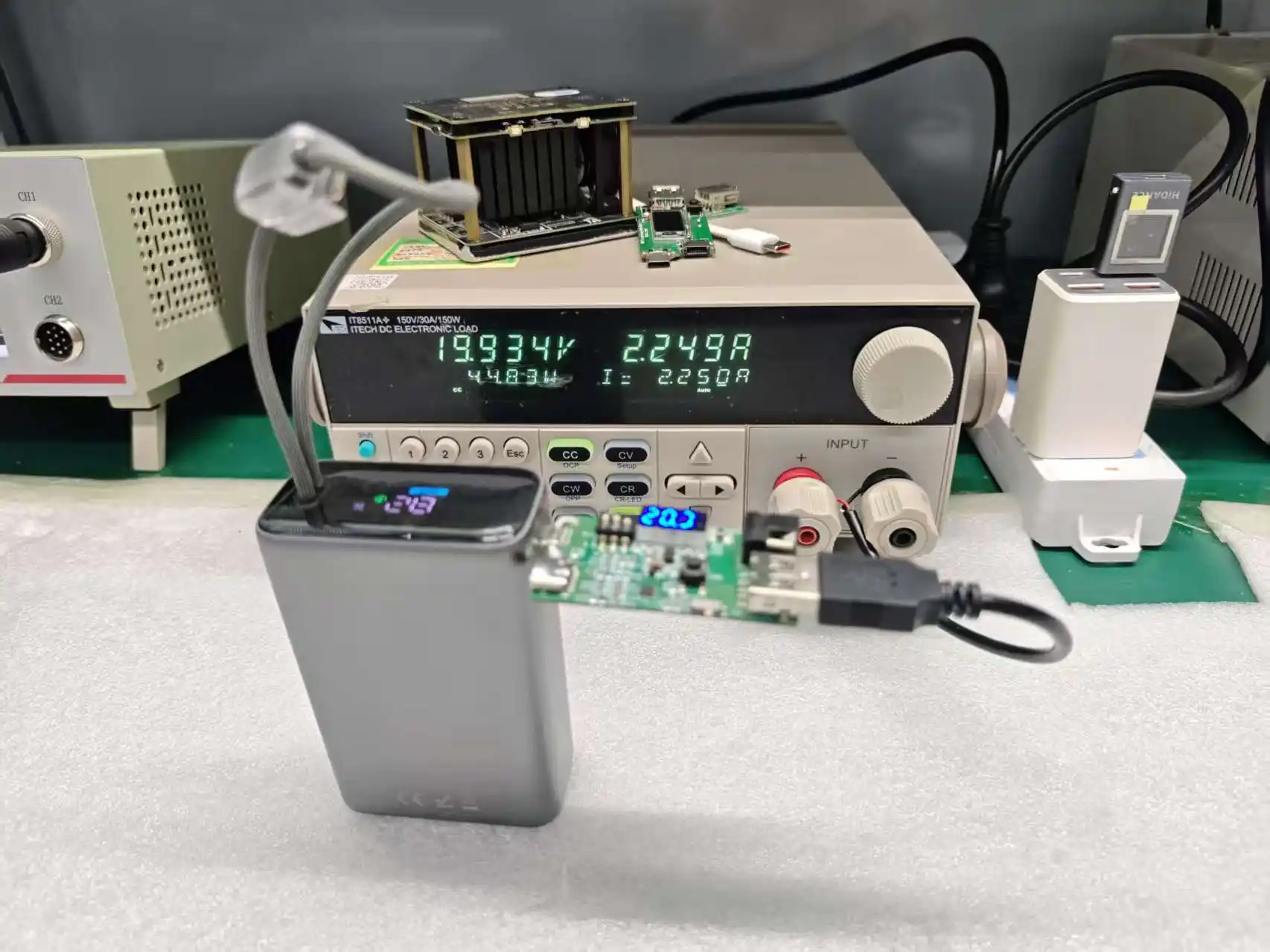
A guest charging overnight needs a phone, not a laptop. A 20W USB-C output covers a typical phone within a single evening charge, which is the window that matters. Higher wattage adds cost, heat, and a larger enclosure without changing the guest's outcome. Keep 65W for the desk charger or the front-desk loaner that a business guest may use with a laptop.
Which features matter more than capacity
Built-in cables decide whether the bank is used. Guests forget cables, and a bank without a Lightning or USB-C tail becomes a paperweight. Look for a USB-C input for recharging the bank, a clear LED or percentage display for housekeeping checks, and a housing that survives cleaning chemicals. A matte finish hides scratches better than gloss.
Skip features that raise loss exposure without improving the stay. A detachable cable is easier to replace but easier to steal. A large color screen adds cost and a failure point. The room does not need either.
Need the fixed-charger comparison first? The hotel charging solutions guide covers Qi2 bedside docks, in-room GaN hubs, and lobby stations. This article covers the owned power bank fleet.
2. Buy, rent, or lend: four deployment models compared
Hotels have four practical charging deployment models: fixed bedside Qi2 docks, fixed GaN hubs, front-desk loaners, and lobby rental kiosks. An owned in-room fleet is a fifth option, and the choice is not about which product is best. It is about who owns the asset, the loss, and the labor.
| Model | Cost basis | Who carries loss | Daily labor | Branding | Best fit |
|---|---|---|---|---|---|
| Fixed bedside Qi2 dock | $9–14 per room at 500 units | Hotel | Low | Strong, fixed | New builds, refurbishments |
| Fixed GaN multi-port hub | $6–10 per room at 500 units | Hotel | Low | Medium | Business rooms, desks |
| Front-desk loaner bank | $4.80–8.00 per unit at 500 | Hotel | High, at check-in | Medium | Small properties, suites |
| Lobby rental kiosk | Zero capex; revenue share | Operator | Low | Medium | Lobbies, conferences, high footfall |
| In-room amenity bank | $4.80–8.00 per unit plus branding | Hotel | Medium, housekeeping | Strong, in hand | Midscale and upscale rooms |
The trade press has already framed the in-room bank as "the new guestroom bathrobe" (Hotel Business). Fixed docks and hubs are covered in the hotel charging guide. This article focuses on the last two rows: a fleet the hotel owns and a kiosk the hotel hosts.
If the property prefers a fixed bedside unit, the Qi2 wireless charger lineup covers the hardware side. The rest of this section compares the operating models.

When a rental kiosk beats an owned fleet
A kiosk shifts the asset, the loss, and most of the labor to the operator. Joos Power, a managed rental provider, reports deployments with Accor, IHG, and Hilton brands, station sizes from 6 to 48 banks, a network return rate of 95%, and zero loss liability for the hotel (per the operator's published materials). The hotel provides floor space and a socket; the operator handles hardware, billing, and replenishment.
That model fits a lobby with high transient traffic and a hotel that does not want another asset on the books. It fits less well when the guest expects the bank in the room. A guest who has to walk to the lobby at midnight is not being served by an in-room amenity.
When an owned fleet wins
An owned fleet wins when the bank is part of the room product: branded, in the drawer, and available without a transaction. It also wins when the hotel wants the guest data and the brand touchpoint. The cost is operational. Someone must count the units, recharge them, replace them, and decide what happens when one disappears.
3. How many hotel room power banks do you need per room?
Plan one bank per room plus 10–20% spares, and two banks in suites and family rooms. The spare pool covers units that are charging, damaged, or missing. A 140-room property with 15% spares needs 161 units before any expansion.
| Rooms | Units at 10% spares | Units at 20% spares |
|---|---|---|
| 90 | 99 | 108 |
| 140 | 154 | 168 |
| 250 | 275 | 300 |
The count is a working number, not a purchasing target. Run one floor or one tower as a pilot and measure how many units are unavailable on a normal Tuesday. That number sets the spare ratio for the rest of the property.
How do you budget for loss?
Assume a loss rate, write it down, and test it in the pilot. A 5–10% annual loss allowance is a reasonable planning assumption for an owned fleet with no controls; it is not an industry statistic and should be replaced with your own count after 90 days.
Illustrative planning scenario: a 90-room city hotel places one bank in every room and opens with 104 units. At the end of month one, housekeeping cannot account for 18 units. The property has no serial list, no checkout count, and no policy for a bank that leaves in a suitcase. The pilot fails on operations, not on product.
Four controls fix that failure:
- 1. Serial registry. Record every unit against a room or a department before it enters service.
- 2. Checkout and check-in count. Housekeeping confirms the unit is present at departure, the same way it checks towels.
- 3. Physical control. Use a lockable dock, a tethered base, or a drawer mount that makes removal visible.
- 4. A written loss policy. Decide whether the front desk charges the guest, absorbs the loss, or asks for a deposit.
Should the hotel charge the guest?
Charging the guest recovers cost and creates a front-desk conversation. Absorbing the loss protects the stay and hides the operational problem. Most properties should start by absorbing small losses and fixing the count, then add a charge only if the measured rate stays high after the controls are in place. A charge policy is easier to defend when the unit is clearly branded and listed in the room directory.
4. Maintenance: the housekeeping SOP that decides your defect rate
A power bank fails in a hotel for three reasons: it was never recharged, it was dropped, or it was charged with the wrong adapter. The SOP should catch the first before the guest does.
A workable routine has four checkpoints:
| Task | Frequency | Owner |
|---|---|---|
| Check the display and swap any unit below 50% | Daily | Housekeeping |
| Recharge low units at the central station; refill from spares | Weekly | Housekeeping supervisor |
| Full charge and discharge check on a 10% sample | Monthly | Maintenance |
| Reconcile serials; retire swollen cells or damaged ports | Quarterly | Operations |
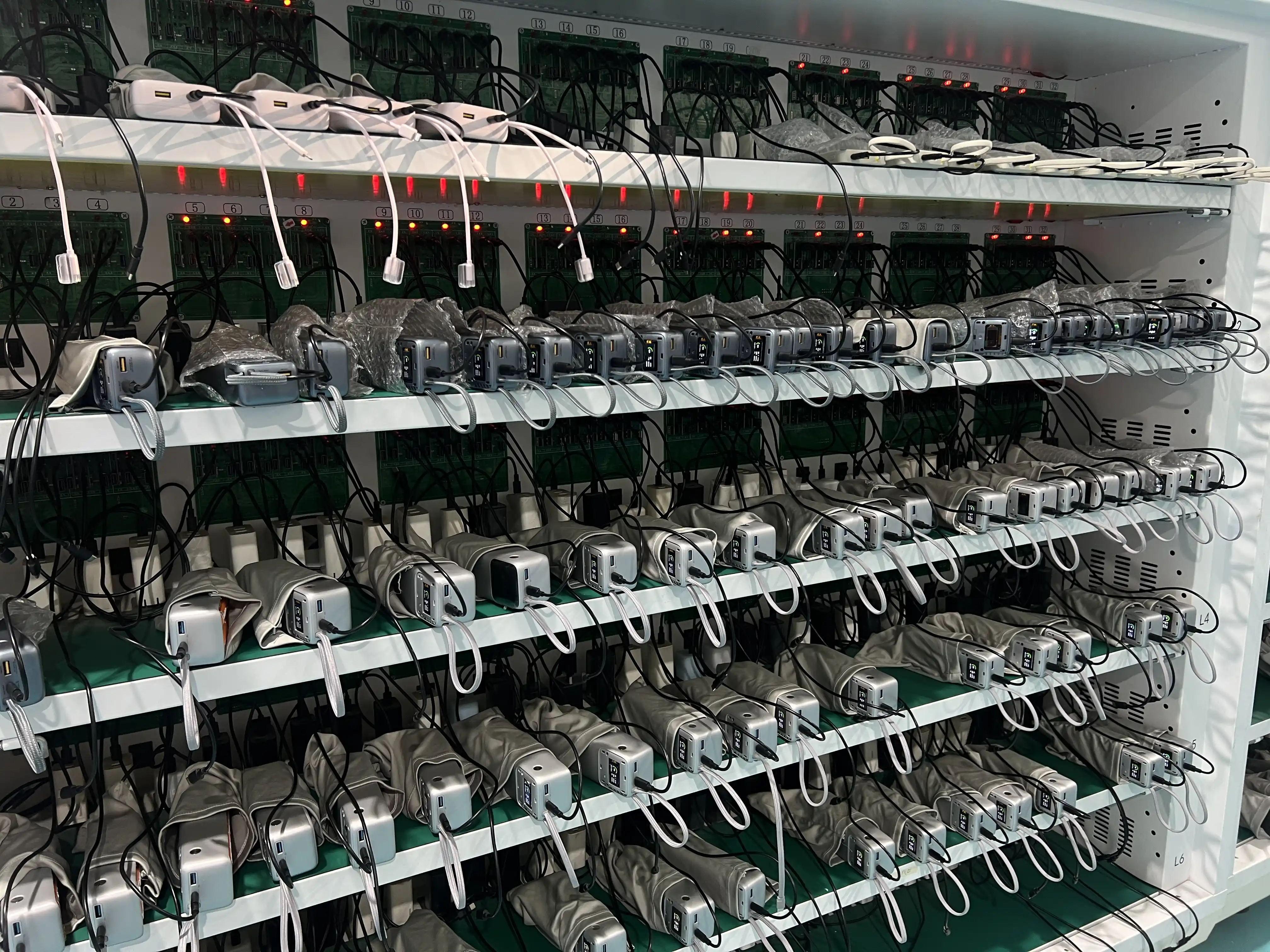
Use a bank rated for at least 500 charge cycles to 80% capacity. That is the floor for a two-year service life in a hotel, where a unit may be used several times a week. Keep the replacement SKU locked: same model, same cable, same firmware. A mixed fleet doubles the spare-parts problem.
Factory controls support the SOP. WOWOHCOOL runs a four-stage QC process (IQC, IPQC, FQC, OQC), a 100% four-hour aging test, AQL 0.65 normal and 0.25 tightened, a production yield above 98%, and a defect rate below 0.3%. Power banks carry a 12-month warranty with defect replacement. Those numbers do not replace the housekeeping routine, but they set the failure rate the routine has to manage.
Set the spec before you set the SOP. The power bank specifications guide explains capacity, conversion loss, and cycle life in procurement terms.
5. Branding: logo, packaging, and the welcome card
Hotel power bank branding has three cost tiers: laser engraving from 500 units, one-color silk screen from 1,000, and UV full-color printing from 3,000. Custom retail packaging starts at 2,000 units, and laser or silk branding adds $0.30–0.80 per unit. The method decides both the MOQ and how long the mark survives cleaning.
| Method | MOQ | Cost adder | Best use |
|---|---|---|---|
| Laser engraving | 500 | $0.30–0.80/unit | Matte housings, durable mark |
| One-color silk screen | 1,000 | $0.30–0.80/unit | Simple logos, flat surfaces |
| UV full-color printing | 3,000 | Quoted per artwork | Multi-color logos, retail packaging |
The model already exists in hospitality. Henn na Hotel's "Anker Room" program, launched in July 2025, gives guests a complimentary Anker Nano Power Bank in the room. That is a brand-owned example, not a hotel OEM program, but it shows the amenity logic: the bank is in the room, branded, and available without a transaction.
For most hotels, laser engraving on a matte housing is the right first step. It survives cleaning, does not add a label that can peel, and keeps the unit looking like part of the room. Put the logo on the face the guest sees in the drawer, not on the cell label.
Packaging matters more for a take-home or retail program than for an in-room amenity. A branded box, a welcome card, and a QR code to the hotel app turn the bank into a guest touchpoint. Keep the certification marks and the model number visible on the product and in the manual; do not cover them with branding.
If the program includes a retail or take-home option, read the private label power bank production guide before choosing packaging and inserts. The MOQ and artwork flow are different from a logo-only room program.
6. Certification and plug standards for US and EU hotels
Certification follows the market where the hotel operates, not the market where the guest was born. A US property needs FCC and UL evidence; an EU property needs CE, RoHS, and battery transport documents. UL2056 is the retail and insurer benchmark rather than a legal requirement, but most US buyers will ask for it. A mixed international guest mix does not change the legal requirement, but it does change the wall adapter you supply.
| Market | Plug type | Voltage / frequency | Bank certification | Wall adapter note |
|---|---|---|---|---|
| US | A / B | 120V, 60Hz | FCC SDoC, UL2056 (UL1642 cell) | DOE Level VI for the adapter |
| EU | C / F | 230V, 50Hz | CE (EMC; LVD for the adapter), RoHS, IEC 62133, UN38.3 | CE-marked adapter, 100–240V input |
| UK | G | 230V, 50Hz | UKCA | BS 1363 adapter |
| Australia | I | 230V, 50Hz | RCM | AS/NZS adapter |
| Japan | A | 100V, 50/60Hz | PSE | 100V adapter |
| Korea | C / F | 220V, 60Hz | KC | KC-marked adapter |
The bank itself usually charges over USB-C, so the plug risk sits with the wall adapter or the dock. Specify a 100–240V adapter for any property with international guests, and keep a small stock of loan adapters at reception.
EU importers also carry duties under the EU Battery Regulation 2023/1542, including producer registration and collection obligations that sit with the entity placing the batteries on the EU market. Confirm who holds that role before the first shipment, not after customs asks.
Do amenity power banks need UN38.3 if they never fly?
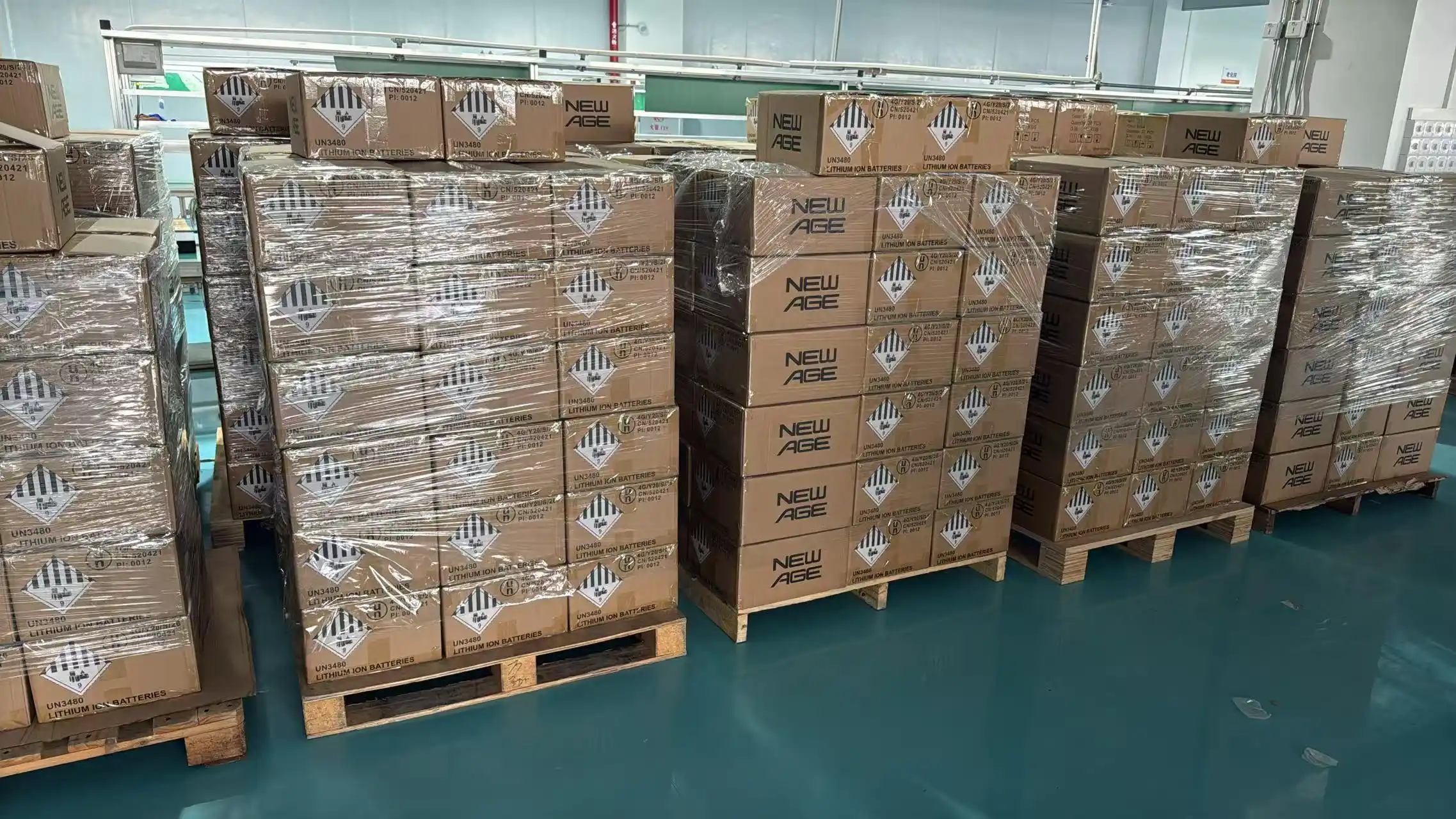
Yes. UN38.3 is a transport test, not a flight requirement. A standalone power bank ships as UN3480, Class 9 dangerous goods, and needs the UN38.3 test summary and an MSDS before it can move by sea, air, or road. From 2026-01-01, IATA DGR 67th edition requires a state of charge of 30% or less for lithium battery air shipments; IMDG Code 42-24 applies the same limit at sea.
Budget the documents as part of the order, not as an afterthought. Current WOWOHCOOL lab references put UN38.3 at about $417 and IEC 62133 at about $347, with a three-to-four-week turnaround. The combined CE + FCC + RoHS + UN38.3 package for a power bank is about $1,708–1,750 per SKU.
Certification scope changes by market. The US and EU charger certification guide lists the reports, costs, and timelines; the lithium battery dangerous goods guide covers UN38.3 packaging and shipping marks.
7. MOQ, lead time, and delivery for a hotel power bank order
MOQ depends on how much of the product you change. Logo, color, and stock packaging on an existing platform start at 500 units. A platform redesign without a packaging change starts at 1,000. Custom packaging or a structural change starts at 2,000; a full OEM program with a new mold starts at 3,000.
Lead time follows the same logic:
| Tier | Sample / design | Mass production |
|---|---|---|
| In-stock ODM (500) | 3–7 days | 25–35 days |
| ODM redesign, stock packaging (1,000) | 25–45 days | 25–35 days |
| ODM with custom packaging (2,000) | 25–45 days | 35–45 days |
| ODM with a structural change (2,000) | 25–45 days | 35–50 days |
| Full OEM, client design (3,000+) | 7–14 days | 30–60 days |
| Full OEM with new tooling | — | 2–4 months end to end |
First orders run on 30% deposit and 70% before shipment. Repeat orders can move to net-30 after three orders. Shipping is EXW, FOB Shenzhen, or DDP; sea freight to the EU runs 25–35 days, and US West Coast runs 15–25 days on a fast vessel or 30–40 days on a slow one.
How to phase a multi-property rollout
Do not place one PO for every property. Start with one floor or one property, confirm the loss rate and the housekeeping routine, then release the next batch. That sequence protects the capital and gives the operator a real number for the spare ratio.
Keep the same SKU, cable, firmware, and packaging across properties. A golden sample signed at the first production run is the reference for every reorder. If a property needs a different plug or a different logo, change the accessory or the print, not the platform.
Compare the full commercial terms. B2B ordering terms covers MOQ, payment, FOB, and warranty in one place.
8. Hotel room power bank cost per room: a three-year model
The purchase price is the smallest line in the model. Loss, replacement, and labor usually decide whether an owned fleet costs less than a rental kiosk.
Illustrative model, not a quotation: a 140-room property buys 161 units (140 rooms plus 15% spares) of a 10,000mAh bank at $5.80–8.00 FOB.
| Line item | Basis | Illustrative cost |
|---|---|---|
| Product | 161 units × $5.80–8.00 | $934–1,288 |
| Laser branding | 161 units × $0.30–0.80 | $48–129 |
| Certification | CE + FCC + RoHS + UN38.3, per SKU | $1,708–1,750 |
| Loss reserve, year 1 | 5–10% of 161 units | $46–128 |
| Labor | Count, recharge, swap | Set by the property |
Over three years, add years two and three of the loss reserve and labor. At a 5% annual loss assumption, the property replaces about eight units a year; at 10%, about 16. Add the labor to count, recharge, and swap units, and the owned model is no longer the cheapest option on unit price alone.
The rental comparison is different. A kiosk typically carries no capital cost and may share revenue with the hotel, but it puts the bank in the lobby, not the room. The right comparison is cost per available room night against the guest outcome you want, not cost per unit.
What moves the number most
Three levers change the three-year cost:
- 1. Loss rate. A serial registry and a checkout count matter more than a lower FOB price.
- 2. Spare ratio. Over-buying spares ties up cash; under-buying creates room downtime.
- 3. Replacement SKU. A locked model keeps spares and accessories compatible across years.
A program that starts at 500 units and scales after the pilot usually beats a program that buys the full fleet before the first count.
9. From brief to mass production: the OEM project flow
A hotel power bank OEM project takes 3–7 days to sample, 25–35 days to mass production for in-stock ODM, and 2–4 months end to end if a new mold is required. Even when you buy an existing platform, the sequence below is the one that avoids rework.
| Stage | Output | Typical time |
|---|---|---|
| Brief and platform selection | Spec, market list, target FOB | Set by the property |
| Sample approval | Room-ready sample | 3–7 days (in-stock ODM) |
| Pilot | One floor or property | Set by the property |
| Certification | Reports and marks | 3–4 weeks |
| Mass production | Finished units | 25–35 days (in-stock ODM); 30–60 days (OEM) |
| Delivery | FOB or DDP | Sea EU 25–35 days; US West 15–25 days fast |
- 1. Write the brief. Room count, suite count, target markets, guest mix, branding, packaging, and whether the bank is an amenity or a retail item.
- 2. Select the platform. Match capacity, output, cable type, and housing to the brief. Do not start with a custom mold unless the room design requires it.
- 3. Approve a sample. In-stock ODM samples run 3–7 days. Test the cable, the LED, the weight, and the finish in the actual room.
- 4. Run a pilot. One floor or one property, with the serial registry and the count routine live from day one.
- 5. Complete certification. Three to four weeks for the standard package; longer for UL or market-specific marks.
- 6. Place the production order. 25–35 days for in-stock ODM, 30–60 days for OEM, plus 2–4 months if a new mold is required.
- 7. Deliver in phases. Release the first batch, measure, then release the next.
The most common rework causes are a late logo change, a packaging change after the sample, and a certification scope that was assumed rather than quoted. Freeze the artwork and the market list before the sample is approved.
Shortlisting a factory? The China power bank manufacturer comparison lists what to verify before a sample order. WOWOHCOOL runs this flow through its OEM/ODM service, from platform selection to certification and phased delivery.
Frequently Asked Questions
What capacity should a hotel room power bank have?
For most rooms, 5,000–10,000mAh with 20W USB-C output and built-in Lightning and USB-C cables. That covers one phone overnight and stays small enough for a bedside drawer. Reserve 20,000mAh and 65W for suites, laptop guests, and front-desk loans, where the higher unit cost and loss exposure are justified. Built-in cables matter more than extra capacity: a bank without them is rarely used.
Which certifications do hotel power banks need for the US and EU?
For the US, FCC SDoC and UL2056, with a UL1642-rated cell. For the EU, CE (EMC, plus LVD for the mains adapter), RoHS, IEC 62133, and UN38.3. A standalone bank ships as UN3480, so the UN38.3 report and MSDS travel with the order. The report must name the exact model and capacity. Budget about $1,708–1,750 for the combined CE + FCC + RoHS + UN38.3 package per SKU.
What MOQ applies to custom-branded hotel power banks?
For most hotel programs, logo, color, and stock packaging on an existing platform start at 500 units. A platform redesign without a packaging change starts at 1,000, while custom packaging or a structural change starts at 2,000. A full OEM program with a new mold starts at 3,000. Confirm which tier the quote assumes before comparing prices, and ask for the tier in writing.
How do hotels stop power banks from disappearing?
Use four controls: a serial registry tied to each room, a housekeeping checkout count, a lockable or tethered dock, and a written loss policy. The registry is the control that makes the other three enforceable. A 5–10% annual loss allowance is a planning assumption, not an industry statistic; replace it with your own 90-day count. Most properties should fix the count before charging guests.
How do we start a hotel power bank OEM project?
Send the room count, suite count, target markets, guest mix, branding, and first-order quantity. We will confirm the platform, the certification scope, the MOQ tier, and a sample date. In-stock ODM samples run 3–7 days, and mass production runs 25–35 days after approval. The room count and the market set the program; the product follows from those two inputs.
Global Procurement & Sourcing Manager · 12+ years in 3C procurement & sourcing
Nina Nico is WOWOHCOOL's Global Procurement & Sourcing Manager with 12+ years in 3C procurement. She specialises in B2B hardware sourcing, OEM/ODM programme management, and supplier verification for charging accessories.
Factory Footprint
ISO 9001 Facility
Shenzhen, China
Export Countries
Engineers In-House
Start a hotel power bank project
Start with the room count and the market, not the unit price. Send your room count, target markets, guest mix, and branding requirements. We will map the specification, certification scope, MOQ tier, and phased delivery before you commit to a fleet.
Sources & References
- Hotel News Resource, "Choosing Charging Amenities for Hotel Guests," September 24, 2026
- Hotel Business, "Are power banks the new guestroom bathrobe?"
- Joos Power, hotel power bank service
- Henn na Hotel, Anker Room launch, July 2025
- IATA, Dangerous Goods Regulations
- UN, Manual of Tests and Criteria, UN38.3
- European Commission, CE marking
- EUR-Lex, Regulation (EU) 2023/1542 on batteries
- FCC, Equipment Authorization
- UL, Product iQ