
Lithium Battery Export from China: Dangerous Goods Packaging Certification Guide for OEM Importers

Global Procurement & Sourcing Manager · 10+ years in 3C procurement & sourcing
March 2026. An importer in Hamburg had 2,000 power banks ready at Shenzhen port. UN38.3 report? Done. MSDS? Ready. Freight forwarder confirmed. Then customs flagged the shipment: « No DG packaging use appraisal certificate. » The container was quarantined. Port storage fees accumulated at $120/day. The vessel sailed without the cargo. The product launch missed the Q2 window. Total cost of the missing document: $18,400 in demurrage, rebooking, and lost sales. Here is the step-by-step process to get this certificate before production starts.
KEY TAKEAWAYS
UN38.3 is a battery safety test. The DG packaging certificate (危包证) is a separate customs-issued export license. One without the other means your cargo stays at the port. In 2026, IATA DGR 67th Edition adds mandatory <=30% state of charge verification and a 3-meter stacking test to UN38.3. Here is the complete compliance roadmap for importers.
- Two certificates, one purpose: UN38.3 (battery test) + DG packaging use appraisal (customs inspection) = export clearance. Sequence matters: UN38.3 must come first
- Customs factory inspection is mandatory: officers physically verify 12 items including UN mark dimensions with ruler, packaging weight on electronic scale, and inner cushioning thickness
- SoC <=30% for air freight: IATA DGR 67th (Jan 2026) mandates state of charge <=30% for all lithium battery air shipments. Airlines conduct random multimeter spot-checks
- Timeline: 8-10 weeks total, UN38.3 (4-6 wk) + MSDS/transport report (1-2 wk) + customs application + on-site inspection (2-3 wk)
- Verify factory capability before ordering: ask for their most recent Use Appraisal Certificate. A factory that has never obtained one will delay your shipment by 8-10 weeks
Table of Contents
1. What Is the DG Packaging Certificate, and How It Differs from UN38.3
Most importers know about UN38.3. Few know it is only the first of two certificates required to export lithium batteries from China. The Dangerous Goods Packaging Certificate is the second, and missing it is the single most common cause of port rejection for battery shipments in 2026.
UN38.3 vs DG Packaging Certificate: Two Different Purposes
| Aspect | UN38.3 Test Report | DG Packaging Certificate (危包证) |
|---|---|---|
| What it tests | Battery cells, 8 destructive tests | Packaging, integrity, labeling, weight |
| Issued by | CNAS/CMA-accredited third-party lab | China Customs officers after factory inspection |
| Scope | Per battery model (cell chemistry, BMS) | Per shipment (packaging + battery combination) |
| Validity | Indefinite (if design unchanged) | Sea/road: 12 months. Air: 3 months |
| Analogy | Battery's safety passport | Shipment's exit visa |
Which Products Require the Certificate?
| Scenario | UN Number | Certificate Required? |
|---|---|---|
| Standalone Li-ion battery >100Wh | UN3480 | Yes |
| Battery packed WITH equipment >2.7Wh (PI966 Section I) | UN3481 | Yes |
| Battery INSTALLED in equipment <=100Wh | UN3481 Section II | Exempt |
| Li-metal battery >2g lithium | UN3090 | Yes |
| Low-power devices (earbuds, <=20Wh) | UN3481 | Exempt |
The key distinction: standalone batteries and batteries packed with equipment (but not installed inside) require the certificate. Batteries inside devices and low-power units may be exempt under SP188, but still need UN38.3 plus the lithium battery handling label.
EXPERT INSIGHT
« The most expensive mistake I see is importers who negotiate pricing, MOQ, and delivery schedule, but never ask about DG certification capability. UN38.3 is the easy part. The customs factory inspection is the bottleneck. Verify before you order, not after production is finished. »
— Nina Nico, Global Procurement & Sourcing Manager, Battery Export Compliance, WOWOHCOOL
2. The Application Process: UN38.3 to Customs Inspection to Certificate
The DG packaging certification involves two sub-certificates from different parties. Both must be valid before customs releases your cargo.
Phase A: Packaging Performance Test (by the Packaging Factory)
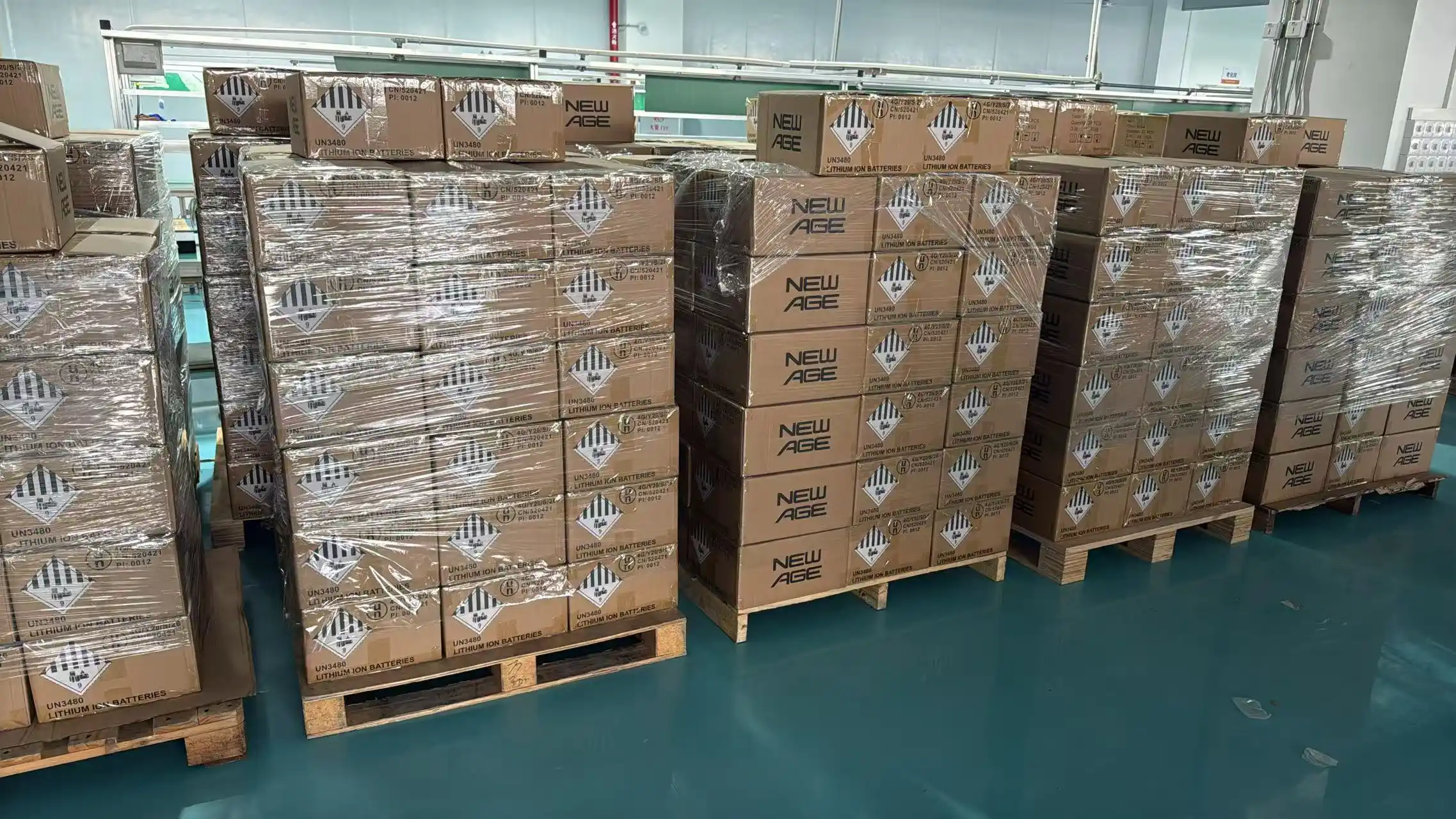
The packaging container manufacturer (not the battery factory) applies to local Customs for a dangerous goods packaging production code. The boxes undergo drop tests, stacking tests, and hydraulic pressure tests. Output: Performance Inspection Result Sheet with a permanent UN mark on the box (e.g., UN 4G/Y15/S/26). Valid 12 months from production.
Phase B: Packaging Use Appraisal (by the Battery Factory)
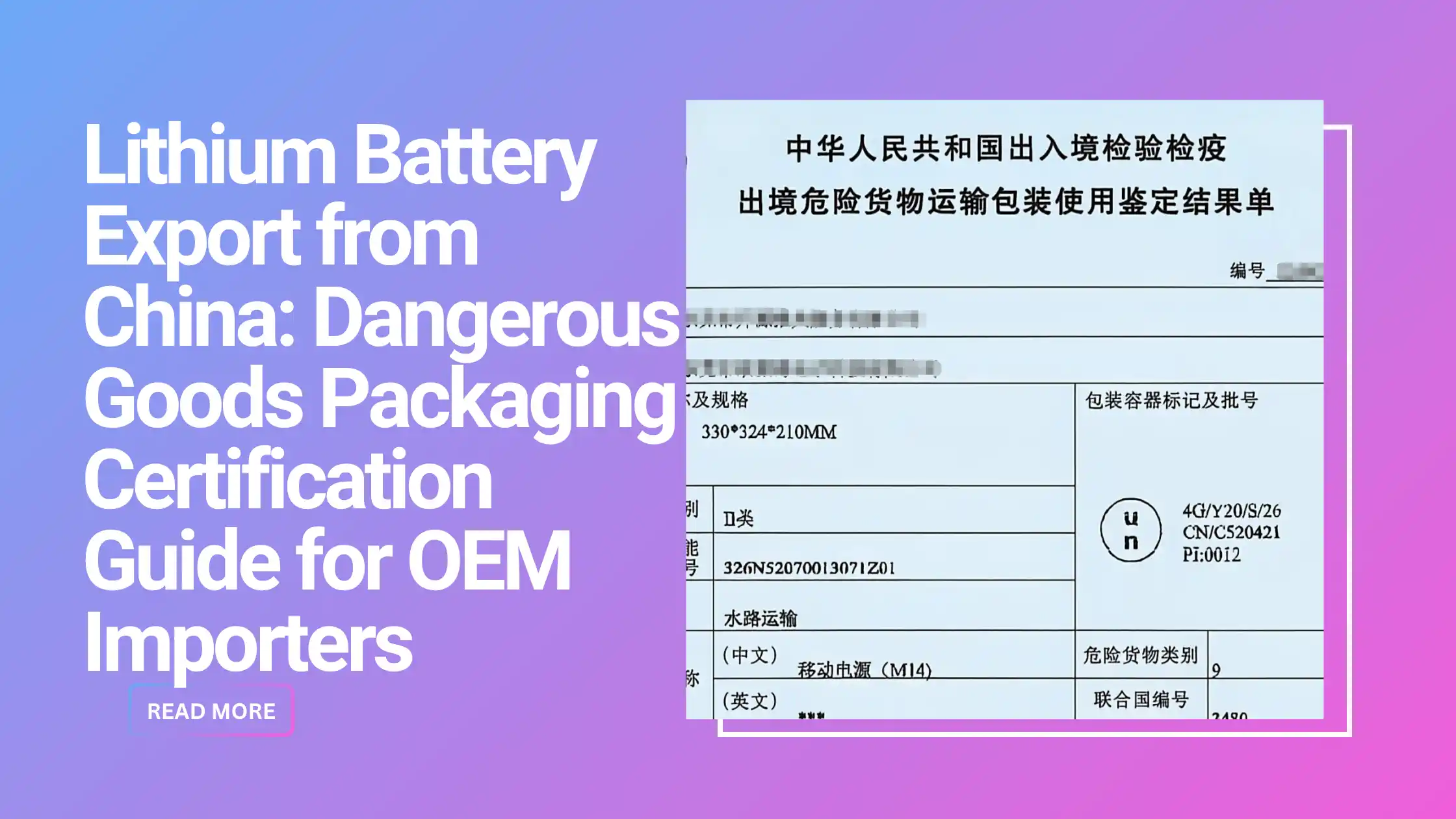
This is the actual 危包证. The battery exporter files via China Single Window (singlewindow.cn) or the Dongguan Customs e-platform. After uploading enterprise info, product specs, and packaging photos, Customs officers schedule an on-site factory visit. They physically verify packaging integrity, UN marks, short-circuit protection, labeling, and weight. Upon passing: Use Appraisal Result Sheet is issued. This is the document your freight forwarder needs.
EXPERT INSIGHT
« The China Single Window application requires photos that match exactly what customs will see on-site. Same angle, same ruler, same scale. If your filed photos show a box measured at 32.5cm and the officer measures 32.3cm, that is a discrepancy that can trigger rejection. Precision matters. »
— Nina Nico, Global Procurement & Sourcing Manager, Battery Export Compliance, WOWOHCOOL
3. The Customs Factory Inspection: 12 Items They Actually Check
Based on the official Dongguan Customs Lithium Battery Packaging Smart Supervision Guide (June 2026), here is the exact inspection checklist, information no freight forwarder or testing lab can provide from the factory perspective.
The 12-Point Customs Photo Standard
| # | Inspection Item | Customs Requirement |
|---|---|---|
| 1 | Packaging exterior | 45° angle photo showing top and side of the box. Environment clean, no surrounding clutter |
| 2 | UN mark / UN number | Ruler at zero gap against the mark, measurement clearly readable. Must verify UN code format (e.g., UN 4G/Y15/S/26) |
| 3 | Hazard label | Ruler measurement of Class 9 lithium battery label dimensions. Label must be complete, un-torn, clearly visible |
| 4 | Box length | Ruler at zero gap against box edge. All measurements in cm. Same ruler type for filed + on-site photos |
| 5 | Box width | Same ruler, same orientation as length measurement. No angle distortion |
| 6 | Box height | Ruler vertical, zero at base. All three dimensions use identical measurement method |
| 7 | Seal / closure method | 45° angle showing both top and side, including the sealed edge. Must match filed photo angle exactly |
| 8 | Gross weight | Electronic scale reading, no glare, no obstruction. Scale unit (kg) must match unit used in product filing. Zero display visible |
| 9 | Inner box with batteries | Single inner box photographed alone. Must show how batteries are placed inside. No confusion with outer packaging |
| 10 | Cushioning / inner material | Ruler measuring cushioning thickness. Cardboard type must be specified. If foam, thickness at multiple points |
| 11 | Inner box product info | 45° angle showing product information face (model, voltage, capacity). Must match product filing details |
| 12 | Net weight | Electronic scale showing product-only weight. Same scale, same unit as gross weight measurement |
Source: Dongguan Customs Lithium Battery Packaging Smart Supervision, Enterprise Operations Guide, June 2026.
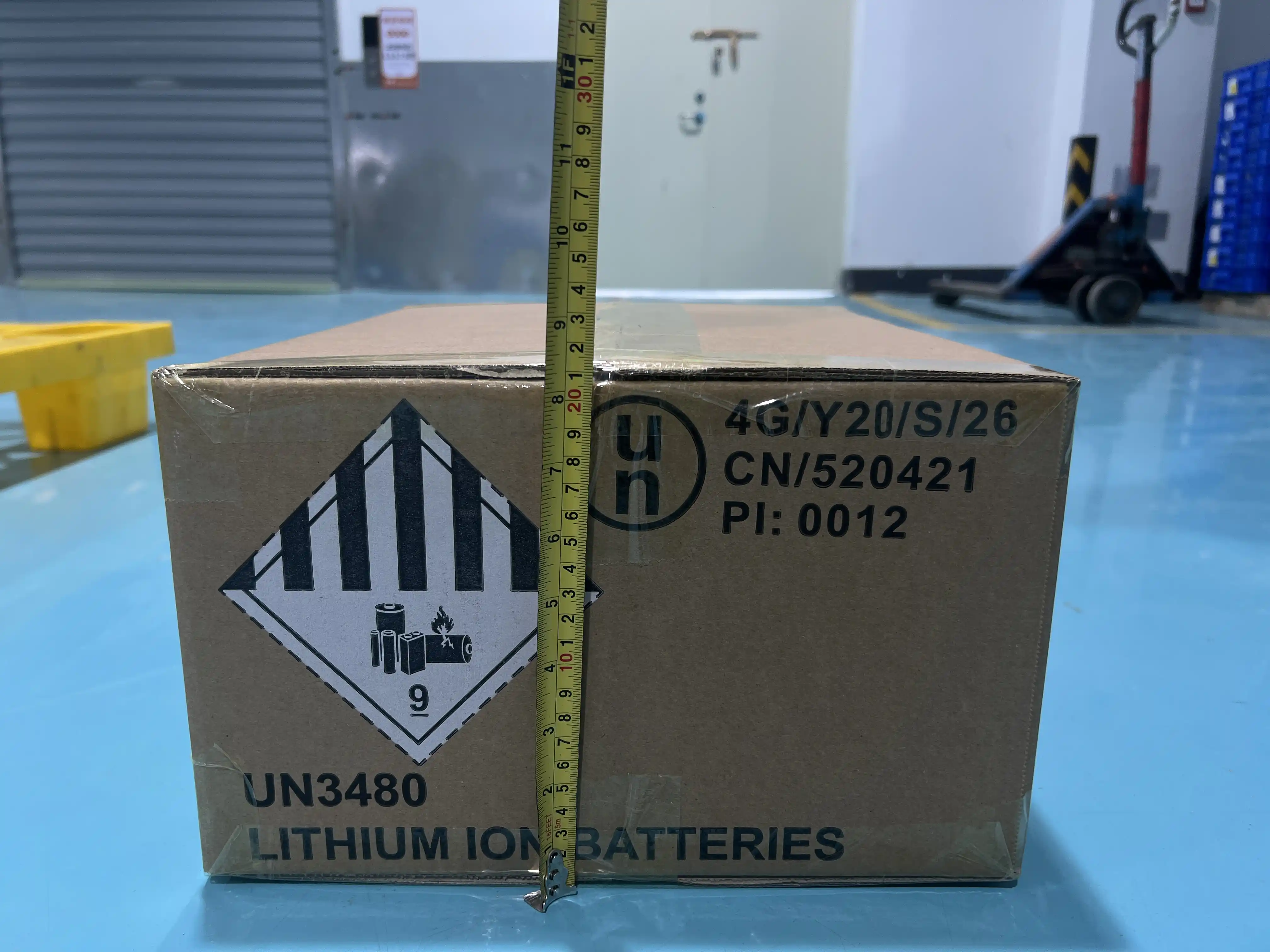
UN mark with ruler measurement, zero gap at mark edge, same ruler filed on China Single Window
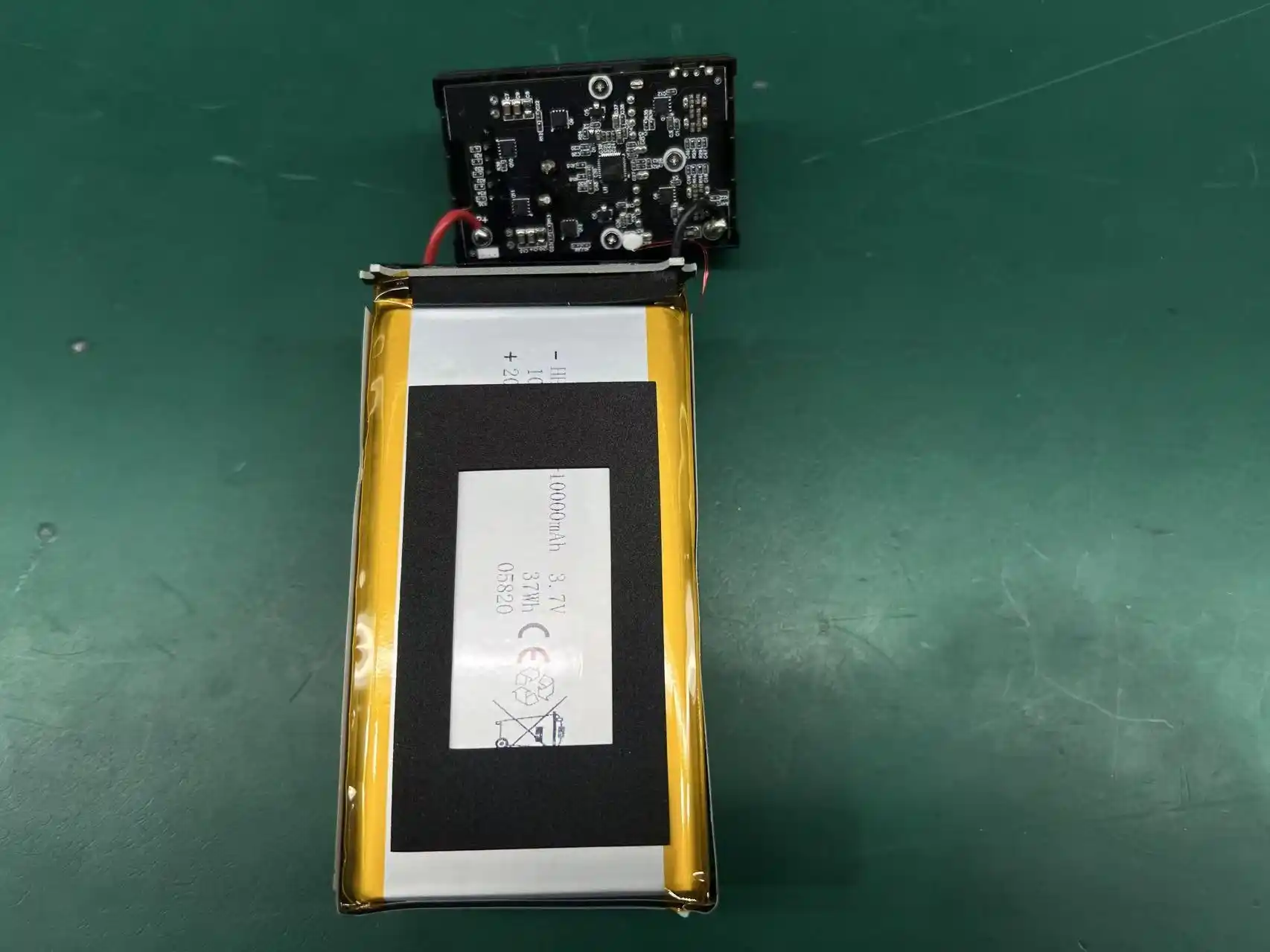
Product label closeup, model, voltage, and rated capacity must match Single Window filing
Critical Rules That Cause Rejection
- Same angle, same ruler, same scale: filed photos and on-site inspection photos must be indistinguishable in methodology. Any deviation triggers a discrepancy review
- Ruler must show zero gap: the 0cm mark must touch the box edge. Gaps between ruler and object = measurement invalid
- Scale unit consistency: if you use kg in the product filing, on-site photos must also use kg. Switching to g or lbs triggers rejection
- Environment cleanliness: cluttered backgrounds, poor lighting, or foreign objects in the photo frame can cause the application to be returned for re-submission
4. Required Documents, Timeline, and Costs
Complete Document Checklist
| Document | Issuing Body | Validity |
|---|---|---|
| UN38.3 Test Summary (Rev.6/7) | CNAS-accredited lab (SGS, TUV, BV) | Indefinite if design unchanged |
| MSDS/SDS (16-section GHS) | Factory or certified regulatory firm | No fixed expiry |
| Transport Condition ID Report | Civil aviation-approved institution | Until Dec 31 of issue year |
| Packaging Performance Certificate | Packaging manufacturer via Customs | 12 months from production |
| Use Appraisal Certificate (危包证) | China Customs after factory inspection | Sea: 12 mo / Air: 3 mo |
Timeline: 8-10 Weeks Door to Port
| Phase | Duration | Can Run in Parallel? |
|---|---|---|
| UN38.3 testing | 4-6 weeks | No, prerequisite for everything below |
| MSDS + Transport Condition Report | 1-2 weeks | Yes, with UN-spec packaging production |
| UN-spec packaging + Performance Cert | 1-2 weeks | Yes, with MSDS/transport report |
| China Single Window application | 3-5 working days | No, requires all above documents |
| Customs on-site inspection scheduling | 3-5 working days | No, sequential |
| Certificate issuance after passing | 2-3 working days | No, sequential |
| TOTAL | 8-10 weeks |
Cost Breakdown
| Cost Item | Amount | Who Pays |
|---|---|---|
| UN38.3 testing (per model) | $500-800 | Battery manufacturer |
| MSDS preparation | $50-150 | Battery manufacturer |
| Transport Condition Report | $100-300 | Battery manufacturer |
| UN-spec packaging (per 100 boxes) | $200-500 | Battery manufacturer |
| Customs inspection + certificate | No direct fee | Included in export process |
| Port storage (if rejected, per day) | $50-150 | Importer (demurrage) |
WOWOHCOOL maintains current UN38.3 reports for all active power bank models. For OEM importers ordering existing models, this eliminates the 4-6 week testing phase, reducing total timeline to approximately 3-4 weeks from order confirmation to DG-certified shipment.
5. How to Verify Factory DG Compliance Before Ordering
What Documents Must You Verify Before Ordering DG Goods?
Five checks: current UN38.3 test summary (CNAS stamp, Rev.6/7), Use Appraisal Certificate (危包证), China Single Window registration, UN-spec packaging inventory, and SoC measurement capability.
You do not need to handle the certificate yourself, but you must verify your factory can. A factory that has never completed this process will add 8-10 weeks to your timeline after production is finished. Here is the 5-point verification checklist:
1. Request the current UN38.3 test summary
For the exact model you are ordering. Verify: CNAS lab stamp, Rev.6/7 compliance, model number match, and test date within validity. If the factory shows you a UN38.3 for a different model and says "it is similar"; that report is invalid for your product.
2. Ask for their most recent Use Appraisal Certificate
A factory that has never obtained a 危包证 cannot suddenly do it for your order. Request a sample certificate from a recent shipment. Look for: issuing customs office (should be Dongguan/Shenzhen), valid date range, and UN number matching your battery type.
3. Confirm China Single Window registration
The factory must have an active enterprise account on the Guangdong Provincial Government Services platform. Without this, they cannot file the packaging use appraisal application. Ask: "Can you log into your Single Window account and show me your enterprise registration status page?"
4. Request photos of UN-spec packaging inventory
A compliant factory has boxes with visible UN marks (e.g., UN 4G/Y15/S/26) in stock. Ask for a real-time photo with today's date. If they say "we will order the boxes after your PO", add 1-2 weeks to your timeline.
5. Verify SoC measurement capability
For air freight: ask "Do you have a documented process for measuring and verifying <=30% state of charge before packing?" A factory that answers "our batteries are shipped at low charge" without a documented measurement process is not IATA DGR 67th compliant.
EXPERT INSIGHT
« We keep current UN38.3 reports for every active model, maintain UN-spec packaging inventory in our Shenzhen warehouse, and handle the full customs inspection process in-house. For an OEM buyer, this means the difference between a 3-week and a 10-week export timeline. Always verify this capability before you place the order, not after the production run is finished. »
— Nina Nico, Global Procurement & Sourcing Manager, Battery Export Compliance, WOWOHCOOL
6. 2026 Regulatory Changes for Lithium Battery Export
| Regulation | Effective | Key Change | Impact for Importers |
|---|---|---|---|
| IATA DGR 67th Edition | Jan 1, 2026 | Mandatory <=30% SoC for all lithium battery air shipments. Applies to UN3480, UN3481 PI966, UN3556 >100Wh | Airlines conduct random multimeter spot-checks. Non-compliant = grounded and returned |
| UN Manual Rev.7 | 2026 | New 3-meter stacking test mandatory in UN38.3 certification | Old Rev.5/6 reports without stacking test are obsolete. Verify your report version |
| IMDG Code 42-24 | Mandatory 2026 | New UN numbers: UN3556 (Li-ion vehicle), UN3557 (Li-metal vehicle), UN3558 (Na-ion vehicle) | UN3171 phased out for new energy vehicles. Stricter stowage/segregation rules |
| UN38.3 Test Summary | 2026 | Signed test summary must accompany every air waybill. Simple labels no longer sufficient | Document must match MAWB exactly, model number, Wh rating, manufacturer name |
For detailed certification guidance across US and EU markets, see our charger certification guide and safety standards reference. For shipping logistics, consult our complete shipping guide.
Frequently Asked Questions
What is the DG packaging certificate and how is it different from UN38.3?
UN38.3 is a battery safety test report proving the cells can withstand 8 destructive tests. The DG packaging certificate is a separate customs-issued document proving your packaging meets dangerous goods transport standards. UN38.3 is the prerequisite; the DG packaging certificate is the export license. Without it, customs will not release your cargo regardless of valid UN38.3. Think of UN38.3 as the battery's safety passport and the DG packaging certificate as the shipment's exit visa.
Which products require a DG packaging certificate for export from China?
Mandatory for: standalone Li-ion batteries >100Wh (UN3480), Li-metal batteries >2g lithium (UN3090), batteries packed WITH equipment >2.7Wh (UN3481 PI966 Section I). May be exempt: batteries INSTALLED in equipment <=100Wh cell (UN3481 Section II / SP188), Bluetooth earbuds <=20Wh (UN3481). Exempt shipments still need UN38.3 + lithium battery mark. New for 2026: UN3556 (Li-ion vehicles) and UN3557 (Li-metal vehicles) replace UN3171.
What does the customs factory inspection actually check?
Customs officers verify 12 items per the official Dongguan Customs photo standard (2026): packaging exterior (45° angle), UN marking dimensions (with ruler), hazard label dimensions, box length/width/height (with ruler at zero gap), seal method, gross weight (electronic scale), inner box with batteries, cushioning material thickness, inner box product info face, net weight, and product model/voltage/capacity label. All factory-submitted photos must match on-site reality exactly, using the same angle, ruler, and scale as the filed application.
How long does the complete DG certification process take?
Full timeline: UN38.3 testing 4-6 weeks, MSDS + Transport Condition Report 1-2 weeks (parallel), UN-spec packaging production 1-2 weeks (parallel), factory application via China Single Window 3-5 working days, customs on-site inspection scheduling 3-5 working days, certificate issuance 2-3 working days. Total: approximately 8-10 weeks from start to export-ready. WOWOHCOOL maintains current UN38.3 for all active power bank models, saving 4-6 weeks of lead time for OEM orders.
What happens if my shipment is rejected at the port?
Port rejection consequences: cargo is immediately quarantined. Port storage fees accumulate daily ($50-150/day per pallet). The shipment misses its vessel/aircraft booking, potentially delaying your product launch by 4-8 weeks. If non-compliance is discovered after declaration, the exporter may face customs investigation, fines up to 3x the declared cargo value, and suspension of export privileges. Worst case: cargo destruction order if packaging poses immediate safety risk. Pre-verification of factory DG capability is the single most important step before placing an order.
Global Procurement & Sourcing Manager · 10+ years in 3C procurement & sourcing
Nina Nico is WOWOHCOOL's Global Procurement & Sourcing Manager with 10+ years in 3C procurement. She specializes in B2B hardware sourcing, OEM/ODM power bank manufacturing, factory audits, supply chain quality assurance, and international trade compliance.
Factory Footprint
ISO 9001 Facility
Shenzhen, China
Export Countries
In-House Engineers
DG-Compliant Power Banks, UN38.3 Certified, MOQ 500
Current UN38.3 for all active models. Customs DG packaging certification handled in-house. Free quote within 24h, samples in 3-7 days, DDP delivery available.
Sources & References
- UN Manual of Tests and Criteria, Section 38.3 — Lithium Battery Testing
- IATA Dangerous Goods Regulations 67th Edition (2026)
- IMDG Code 42-24 — International Maritime Dangerous Goods
- China Single Window — International Trade Platform
- Dongguan Government Services Platform — Customs e-Services
- IAF CertSearch — Verify ISO and Certification Bodies