
Corporate Gift Power Bank: A Procurement Guide for Brand Promotion

Global Procurement & Sourcing Manager · 12+ years in 3C procurement & sourcing
The best corporate gift power bank is not the highest-capacity model. It is the one that fits the recipient tier, the handover and the event date. Start with stock ODM at 500 units, then specify capacity, branding, packaging, compliance and delivery before you compare quotes.
Corporate gifting runs on fixed dates: trade shows, holiday shipments, onboarding kits and client thank-yous. A gift that misses the date becomes storage cost, not brand recall.
This guide turns those choices into a copy-ready RFQ.
Disclosure: WOWOHCOOL manufactures power banks. This guide also covers non-manufacturing routes.
Key Takeaways
Compare corporate gift power bank routes by recipient tier, logo method, packaging and event date. MOQ 500 stock ODM, 3–7 day samples, a 5,000-unit case.
- Define "best" by recipient tier, handover, marking durability, packaging, compliance and event-date feasibility — not capacity alone.
- Stock ODM starts at 500 units; ODM development at 1,000–2,000; full OEM with new tooling at 3,000+. Samples run 3–7 days and stock production 25–35 days.
- A 5,000-unit Techmade order combined two models and four team logo designs, with runs of 500–1,000 units per model and no price increase.
- Core documents are CE, FCC, RoHS, UN38.3, Qi2 where wireless, and ISO 9001. UL, PSE and KC are project-based, not automatic.
- Do not repeat retention or keep-rate percentages without a primary source. Measure program inputs and reorder behavior instead.
Table of Contents
1. What "Best" Means for a Corporate Gift Power Bank
"Best" is a fit question, not a specification contest. A gift power bank has to survive the handover, the recipient's daily carry and the procurement file. Those are different tests from a personal purchase.
Use six criteria to rank any candidate:
| Criterion | Question to ask | Why it changes the choice |
|---|---|---|
| Recipient fit | Will this person carry it, or leave it in a drawer? | Carry behavior decides whether the gift is used or stored |
| Capacity and form factor | Is the size matched to the phone, bag or laptop it serves? | Higher capacity adds weight and volume |
| Marking durability | Will the logo survive daily friction and cleaning? | A worn logo turns a gift into a liability |
| Packaging | Does the handover happen in person or by shipment? | A retail box, a mailer and a premium gift box solve different problems |
| Compliance documents | Can you produce model-matched certificates? | Procurement cannot clear a shipment on a generic claim |
| Event-date feasibility | Does the MOQ and production window fit the date? | A missed date cancels the campaign's purpose |
The common mistake is treating capacity as quality. A 20,000mAh unit can be the right gift for a travelling consultant and the wrong gift for a trade-show giveaway. It is heavier, bulkier and more expensive per recipient. A slim 5,000mAh model that actually travels beats a high-capacity brick that stays at home.
For capacity selection and the difference between rated and usable energy, see choose power bank capacity and mAh vs usable capacity. Both matter more for gift planning than the largest number on the box.
2. Recipient Tiers: Match the Gift to the Handover
A gift program usually has more than one audience. Splitting the order by recipient tier prevents the two most expensive mistakes: over-specifying a high-volume giveaway and under-specifying an executive gift.
| Tier | Recipient | Gift job | Practical direction | Program consequence |
|---|---|---|---|---|
| Tier 1 — High-volume giveaway | Trade-show visitors, conference attendees, broad employee distribution | Reach and recall at low unit cost | Compact 5,000mAh slim; simple logo; stock packaging; highest quantity | Lowest unit cost and the easiest route to a short event window |
| Tier 2 — Client and staff thank-you | Clients, partners, employees, onboarding | A useful daily item with better materials and a retail box | 10,000mAh; Qi2 magnetic or 2-in-1 hybrid; laser or UV logo; retail gift box | Higher unit cost and more artwork coordination per design |
| Tier 3 — Executive and key account | Executives, VIP clients, speakers | Display and material impact, low bulk, presentation first | Smart display, semi-solid-state or 2-in-1 hybrid; presentation packaging; low run per design | Highest unit cost and the least tolerance for a late sample |
These are starting specifications, not rules. Adjust them by budget and by what the recipient actually carries. A sales team that travels weekly may value a 2-in-1 hybrid more than an executive who already owns a charger for every device.
The tier decision also changes the production route. A Tier 1 giveaway can use an existing stock ODM platform. A Tier 3 gift with a new housing or a presentation box may need development time and a higher minimum. For the manufacturing route behind any tier, see custom power bank manufacturing.
3. The Six-Part Corporate Gift Specification
A gift program fails at quotation when the brief is vague. The fix is a one-page specification that every factory quotes against. Copy these six parts into your RFQ.
| # | Field | What to write | What it prevents |
|---|---|---|---|
| 1 | Recipient tier and quantity split | Units per tier, per design and per destination | A single blended price that hides low-run costs |
| 2 | Capacity and form factor | 5,000 / 10,000 / 15,000–20,000mAh; slim, magnetic, 2-in-1 or display | Quoting a model that does not fit the handover |
| 3 | Branding | Method, artwork format, Pantone reference and proof-sample requirement | Logo files that cannot be reproduced |
| 4 | Packaging | Stock logo box, custom folding carton or premium gift box; handover method | Packaging quoted separately after the product price is agreed |
| 5 | Compliance documents | CE/FCC/RoHS/UN38.3, plus UL/PSE/KC/E-Mark where the destination requires them; model-level match | Certificates that cover a "similar model" only |
| 6 | Delivery schedule | Event date, artwork approval date, sample date, production window and shipping method | A production plan that cannot reach the venue |
Write the specification as a table, not a paragraph. Ask every supplier to quote line by line: product, branding, packaging, certification documents, freight and tooling, if any. A single delivered price makes comparison impossible.
Two fields deserve extra attention. First, the quantity split: a 5,000-unit order split across four designs is not the same production problem as one 5,000-unit run. Second, the delivery schedule: the event date is fixed, but the artwork approval date is the variable you control. Move it earlier before you ask for a rush.
4. Which Power Bank Family Fits Each Tier
The shortlist below maps real product families to the three tiers. Each option carries a trade-off in unit cost, MOQ or lead time. None is universally "best."
| Family | Published specification | Best-fit tier | Program trade-off | What it does not solve |
|---|---|---|---|---|
| Slim 5,000–10,000mAh | Compact daily carry; 5,000–10,000mAh | Tier 1 | Lowest unit cost and lightest shipping; stock ODM from 500 units | Presentation-first handover or laptop charging |
| 2-in-1 hybrid charger (WOP67 / WOP69) | WOP67: 10,000mAh, 45W, built-in cable. WOP69: 15,000mAh, 67W, retractable cable, 58Wh | Tier 2 and Tier 3 | One device replaces a wall charger and a power bank; higher unit cost | Cable-free wireless charging |
| Qi2 magnetic power bank | 5,000–20,000mAh; Qi2 15W and Qi2.2 25W; slim profile under 10mm | Tier 2, phone-first recipients | Magnetic alignment, slim profile and daily convenience; requires a Qi2-certified model | Laptop charging or high-capacity travel |
| smart display power bank | 5,000–10,000mAh; up to 40W; aluminum alloy and tempered glass; 3-in-1 hub with Qi2 wireless | Tier 3, executive and onboarding | TFT display and aluminum-glass build create the strongest presentation moment | Lowest unit cost or high-capacity laptop use |
| semi-solid-state power bank | 10,000–20,000mAh; 22.5–45W; thinner cell architecture; published 50% thinner and 30% higher energy density | Tier 3, technology differentiation | A technology story competitors cannot copy from a spec sheet | Budget programs or the lowest unit cost |
The 2-in-1 hybrid is the most versatile gift option for phone-first recipients because it removes a separate charger from the bag. The WOP67 is the compact route; the WOP69 adds laptop-class output and a retractable cable. Both stay under the 100Wh carry-on threshold.
Qi2 magnetic models are the right choice when the recipient uses a recent iPhone or a Qi2 Android phone. The convenience is real, but the factory must show Qi2 certification for the exact model, not a compatibility claim. For the standard and the trade-offs, read Qi2 vs MagSafe.
The smart display and semi-solid-state families carry the executive tier. They justify a higher unit cost through materials, display or cell architecture, not through a vague "premium" label. Use them when the handover is a presentation, not a bulk distribution.
For charging standards and cable requirements, see USB-C PD fast charging. A gift that cannot charge the recipient's phone at a useful speed is a failed gift, whatever the capacity.
5. Factory-Real Constraints: MOQ, Samples and the Event Date
Gift programs are won or lost on the calendar. The production route sets the earliest possible delivery date, and the MOQ sets the smallest viable order.
| Route | MOQ | Sample window | Production window | What it means for a gift date |
|---|---|---|---|---|
| Stock ODM | 500 | 3–7 days | 25–35 days | Fits a short event window if artwork is approved early |
| ODM development | 1,000–2,000 | 3–7 days for a stock sample; development adds design time | Development 25–45 days, then production 35–50 days | Needs a longer planning horizon than a stock model |
| Full OEM with new tooling | 3,000+ | 7–14 days | 30–60 days production; 2–4 months end to end with new tooling | Only for programs planned well ahead |
| Rush production | Project-dependent | — | 15–20 days | A feasibility check, not a promise; capacity and material availability decide |
Plan backward from the event date:
- Fix the event date and the in-hand date.
- Subtract shipping. Express air freight is typically 3–7 days; sea freight is measured in weeks.
- Subtract the production window for the chosen route.
- Subtract the sample window and the artwork approval time.
- Compare the resulting start date with today.
If the start date is already in the past, the program is not a production problem. It is a scope problem. Move to a stock model, reduce the number of designs or choose a simpler package. For the ownership and tooling difference between stock ODM, development and full OEM, read the OEM vs ODM guide.
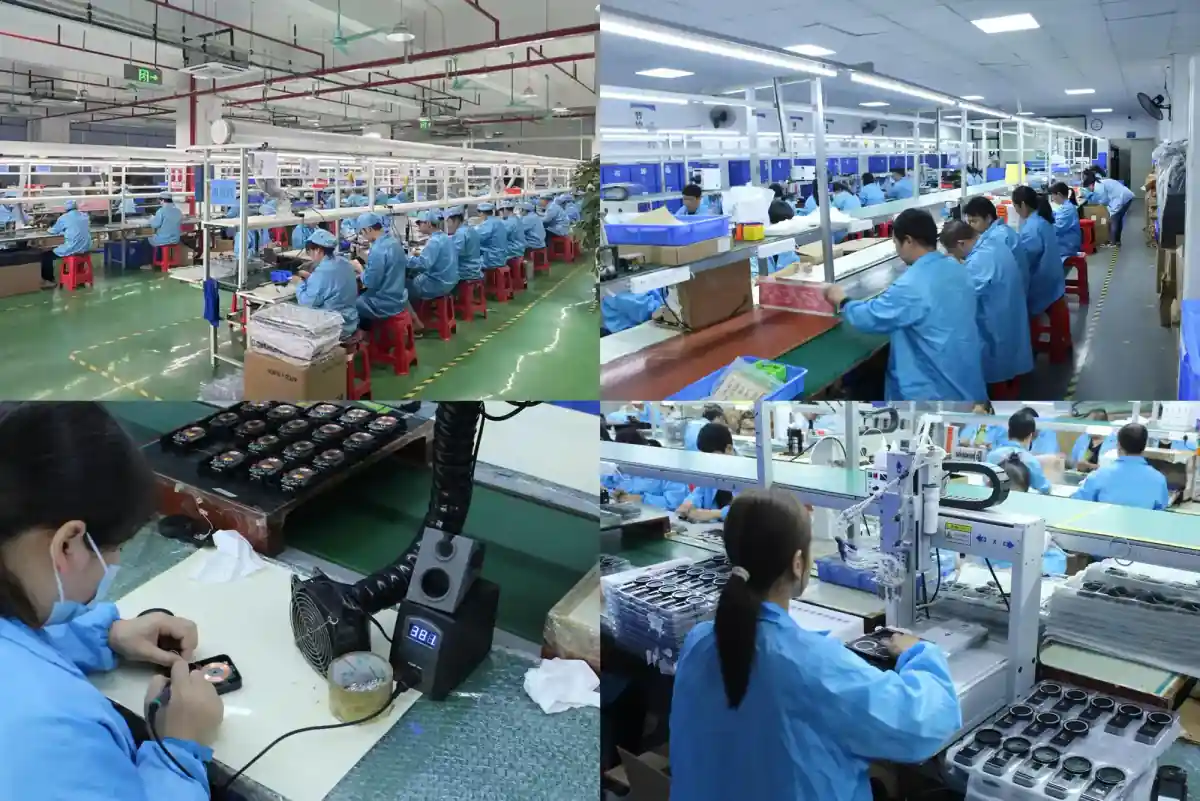
Factory evidence matters here because the dates above are operating windows, not marketing claims. WOWOHCOOL has operated since 2013 in a 5,000 sqm facility with 50+ engineers, a monthly capacity above 1 million units and more than 200 brand customers. Its quality system uses 4-stage QC, a defect rate below 0.3% and on-time delivery above 97%. Those numbers are useful only if the supplier can show the records behind them for your model.
6. Proof: A 5,000-Unit Order With Four Logos
The strongest objection in corporate gifting is not price. It is whether a factory will accept a small run per design inside one order. Most suppliers optimize for long single-SKU runs.
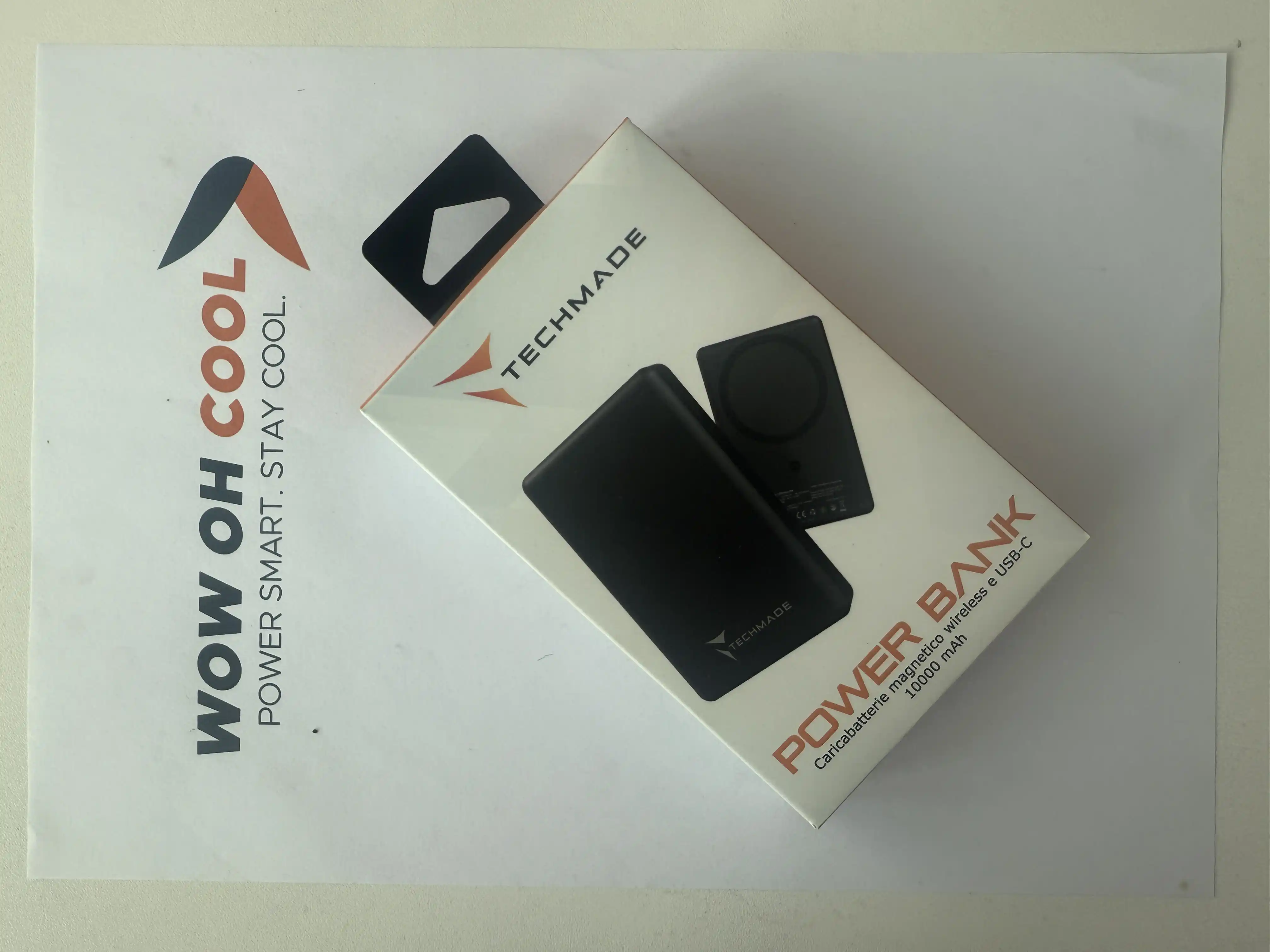
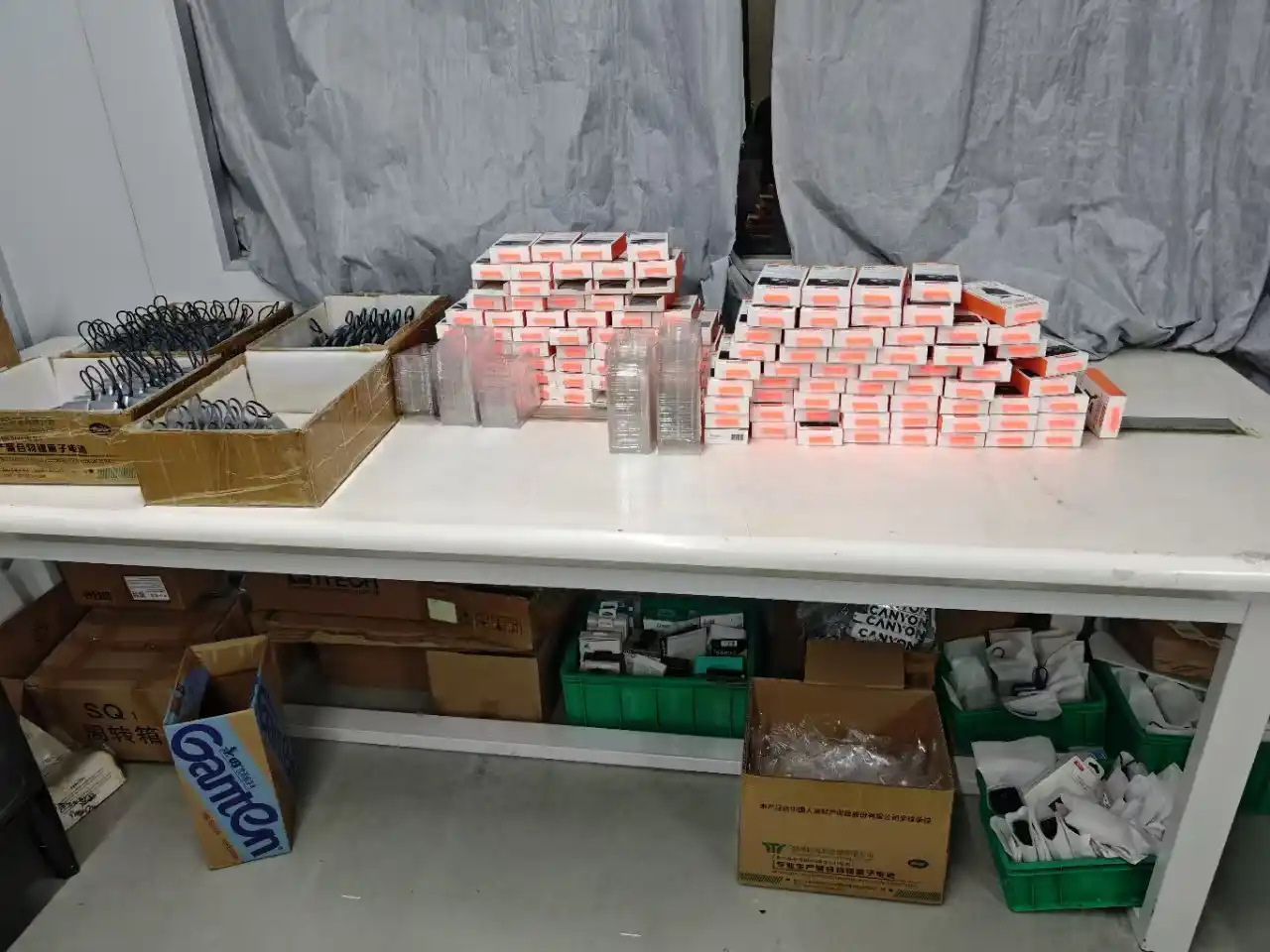
Techmade, an Italian retail chain, needed custom power banks as corporate gifts for Italian national football teams. The order shipped 5,000 units across two models: 5,000mAh and 10,000mAh. It covered four different team logo designs in a single order, with runs as low as 500–1,000 units per model. The price did not increase despite the added complexity.
That combination is the proof a gift buyer needs:
- Multiple designs in one order. Four logo variants were produced together, not as four separate purchase orders.
- Low run per model. The per-model quantity fell to 500–1,000 units, below a standard single-SKU MOQ.
- No price penalty for complexity. The original price held.
Use this case to test any supplier's claim about multi-design gifting. Ask three questions: What is the minimum per design? Does the per-design minimum count toward the total order? What changes the price when the logo count rises? A supplier that cannot answer in writing is not set up for gift programs.
Read the full Techmade corporate gift case study for the order structure.
7. Branding That Survives Daily Use
A corporate gift carries the brand every day. The marking method matters more than the artwork file, because the wrong method wears off in a bag or a pocket.
| Method | Best surface | Durability | Best use | Program note |
|---|---|---|---|---|
| Laser engraving | Metal and coated surfaces | High; permanent monochrome mark | Executive gifts and metal-bodied models | Confirm the mark on the actual surface, not a generic sample |
| Silkscreen printing | Flat plastic surfaces | Medium; can wear with heavy friction | Simple logos and budget lines | Best for one- or two-colour artwork |
| UV digital printing | Flat and curved surfaces | Medium to high; full-colour detail | Multi-colour logos and fine detail | Confirm abrasion testing for the chosen surface |
Per-method MOQ varies. Ask for the minimum in writing for the exact method and model before you lock artwork. Do not assume that a logo method accepted on one family applies to another.
Three controls protect the result:
- Pantone reference. Give a Pantone number, not "brand blue." The factory should match it on the proof.
- Proof sample. Approve a physical sample with the logo before mass production. A screen proof does not show texture or contrast on a curved surface.
- Artwork format. Supply vector artwork and confirm who owns the print files after the order.
For the full production sequence, read private label power bank production. This guide does not repeat the OEM tutorial; it only sets the gift-program requirement.
Packaging follows the same logic. Stock packaging with a logo is the fastest and lowest-risk option. A custom folding carton or a premium gift box adds design, sampling and a higher minimum. Decide by handover method: a box handed to an executive is part of the gift, while a mailer sent to a large trade-show list is logistics. Ask for packaging as a separate quote line so you can compare the trade-off.
8. Compliance Documents and Lithium Shipping
Procurement teams do not accept "certified" as a category. They need the document that covers the model being shipped.
| Document | What it covers | When it applies |
|---|---|---|
| CE | EU market access and applicable directives | Products placed on the EU market |
| FCC | US radio-frequency and electromagnetic compliance | US market electronics |
| RoHS | Restricted hazardous substances | EU market electronics |
| UN38.3 | Lithium battery transport testing | Air, sea and road shipments |
| Qi2 | Wireless charging certification through the WPC | Wireless models only |
| ISO 9001 | Factory quality management system | Supplier qualification and audits |
| UL, PSE, KC | Market- or buyer-specific safety requirements | Project-based, where the destination or retailer requires them |
The core set is CE, FCC, RoHS, UN38.3, Qi2 where wireless, and ISO 9001. UL, PSE and KC are supported on a project basis. Do not present them as standard on every SKU, and do not accept a certificate that names a different model.
For a US-only corporate gift program, FCC is the core requirement. UL may be a buyer or retailer requirement, but it is not automatic for every power bank. For Japan, PSE applies; for Korea, KC. For the EU, CE applies, and UKCA may apply for the UK market. Confirm the destination and the certificate holder before the order, not after the first shipment.
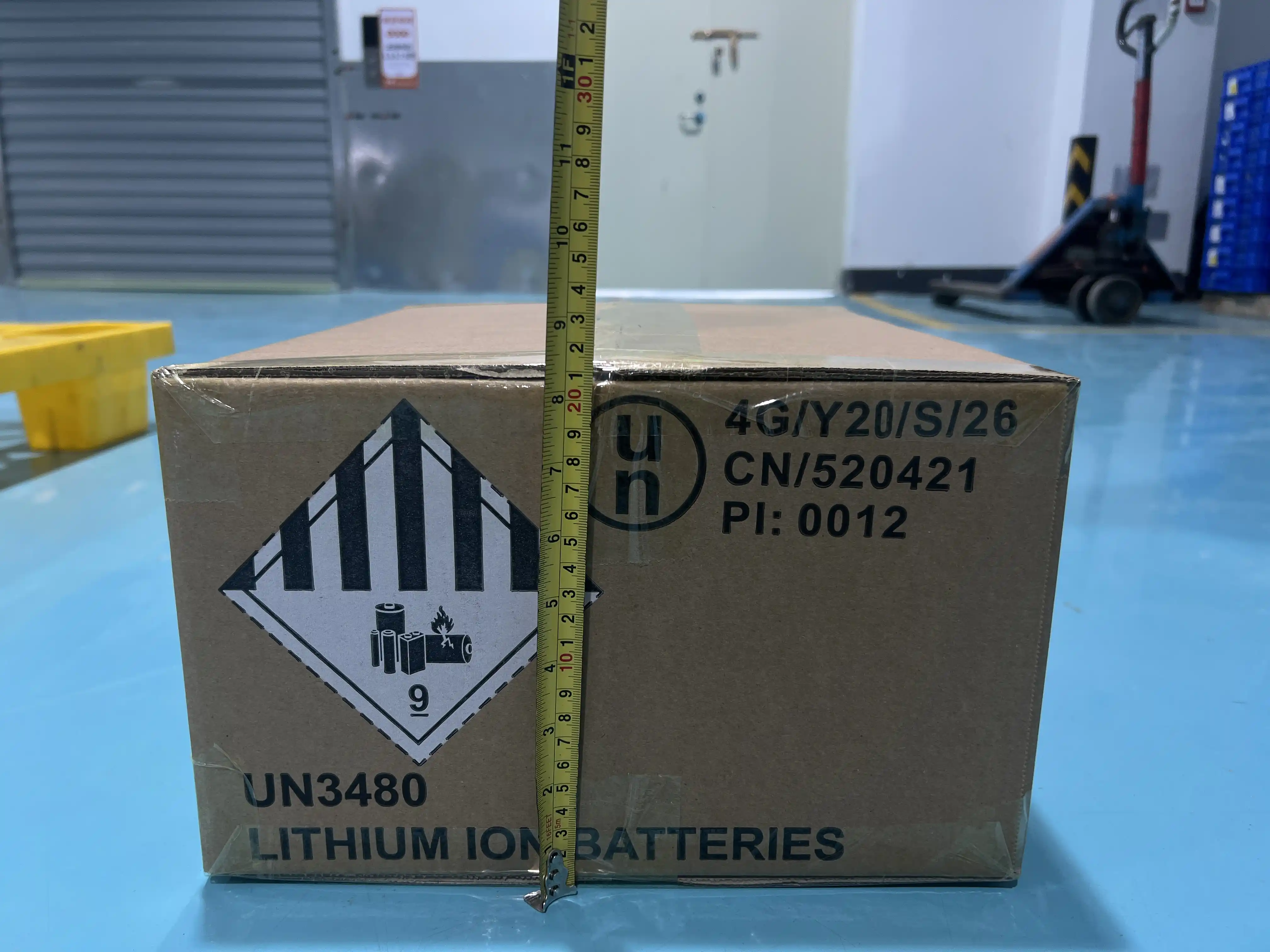
Lithium transport is a separate file. Every shipment needs UN38.3 documentation, and the carrier will ask for it. For air travel, the IATA carry-on threshold is 100Wh; the 15,000mAh WOP69 is 58Wh, so it stays within the limit. Read lithium battery shipping rules and the US and EU certifications guide before you finalize the logistics plan.
9. How to Measure a Gift Program Without Recycled Statistics
Gift-program ROI is difficult to prove, and that vacuum attracts unsourced claims. Many vendor articles repeat the same retention and keep-rate percentages without naming a primary study. A procurement team should not put those numbers in a budget request.
Measure the inputs you control:
| Input | Why it matters |
|---|---|
| Units per tier and per design | Shows whether the budget followed the recipient strategy |
| Cost per recipient | Makes two program designs comparable |
| Artwork approval date | The main controllable cause of delay |
| Delivery date versus event date | The clearest operational pass/fail |
| Replacement rate | Reveals quality or logistics problems early |
| Reorder rate by recipient group | The strongest behavioral signal that the gift was useful |
Then track recipient feedback and reorder behavior by tier. If a client group reorders the same model, that is stronger evidence than a survey question about brand recall. If a giveaway tier shows a high replacement rate, the problem may be the model, the packaging or the shipping method, not the logo.
Brand recall is a research question, not a guaranteed outcome. If you want to test it, define the audience, the question and the timing before the campaign. Do not publish a retention number without a primary source, and do not let a supplier's blog become your evidence.
Conclusion: Specify the Program Before the Product
A corporate gift power bank is a procurement program, not a product pick. The recipient tier sets the specification, the specification sets the route, and the route sets the earliest delivery date.
Start with the six-part RFQ. Split the quantity by tier and design. Confirm the MOQ per design and the production window against the event date. Ask for model-matched certificates and a physical proof sample. Then compare quotes on the same scope.
If you need a factory that can handle multiple designs in one order, review the Techmade case and the OEM/ODM process and RFQ. The right first question is not "what is your best price?" It is "can you meet this specification by this date?"
To request a corporate gift program quote, put four inputs in your message: the quantity split by tier and design, the event date, the branding method and the destination. Those four decide the MOQ route, the sample window and whether the production date is achievable. If you need a physical sample first, request a sample against the same specification.
Frequently Asked Questions
Can we split one order across several recipient tiers or logo designs?
Yes, but each design or run must meet the minimum for the chosen production route. Ask in writing whether the per-design minimum counts toward the total order and what happens if one run falls below it. A factory may quote a blended price, a development route or a higher per-unit cost for the low run. Compare the per-design minimum and the total order quantity separately before you approve the split.
What warranty applies to a corporate gift power bank order?
WOWOHCOOL power banks carry a 12-month warranty. Wireless chargers also carry 12 months, while GaN and car chargers carry 24 months. For a gift program, confirm the warranty start date, who handles recipient claims and whether replacement units ship from the same production batch. Put the warranty term and the RMA contact in the written quotation, because the recipient may contact the brand rather than the factory.
What payment terms and Incoterms apply to a gift program order?
WOWOHCOOL's base payment term is T/T 30/70. Shipping options include FOB Shenzhen, EXW, DDP and Amazon FBA. For a gift program, ask for the Incoterm and destination in the same quote, because DDP changes the landed cost while FOB leaves freight and import duties to you. Confirm the deposit percentage, the balance trigger and whether tooling or sample costs are separate.
Can one gift order ship to multiple destinations or recipient groups?
A gift program can have several destinations, but the quote must separate production quantity from the delivery plan. Give the factory the quantity per destination, the address type (office, event venue or individual recipient) and the in-hand date for each group. Each destination adds packing, labeling and freight lines, and DDP versus FOB changes who pays duties. Ask for one landed-cost quote per destination.
How should we compare quotes from several gift power bank factories?
Put every quote on the same scope, then convert each offer to a landed cost per recipient. Compare model-matched certificates, MOQ by route, sample and production dates, packaging scope, defect and on-time records, Incoterms, warranty and payment terms. Ask for a written specification and a sample timeline against your event date. Do not rank suppliers on unit price alone; a missing certificate or a later delivery date is a program cost.
Global Procurement & Sourcing Manager · 12+ years in 3C procurement & sourcing
Nina Nico is WOWOHCOOL's Global Procurement & Sourcing Manager with 12+ years in 3C procurement. She specialises in B2B hardware sourcing, OEM/ODM programme management, and supplier verification for charging accessories.
Factory Footprint
ISO 9001 Facility
Shenzhen, China
Export Countries
Engineers In-House
Need a Gift Program That Ships on Time?
Share recipient tiers, event date, logo method, packaging and destination. We will map them to suitable power bank models, MOQ and lead time.