
KEY TAKEAWAYS
USB-C PD 3.1 delivers up to 240W through a single cable, covering phones to workstations. PPS adds fine-grained voltage control for battery-safe fast charging. For B2B buyers, sourcing PD 3.1 + PPS chargers with GaN technology ensures universal compatibility and EU regulatory compliance through 2026 and beyond.
- USB-C PD 3.1 delivers up to 240W through a single cable, covering phones (18-45W), tablets (30-65W), laptops (65-140W), and workstations (140-240W). For OEM buyers, a single 140W PD 3.1 charger replaces 2-3 separate chargers in the retail box, reducing BOM cost and packaging bulk.
- PPS (Programmable Power Supply) is mandatory for Samsung and Google Pixel fast charging. PPS adjusts voltage in 20mV steps vs fixed 5V/9V/15V steps, this precision reduces battery heat by 30-40% during fast charge. Chargers without PPS will fail to deliver advertised speeds on Samsung and Pixel devices.
- E-Marker chips are required for USB-C cables carrying >3A or >60W. A cable without a certified E-Marker chip will default to 3A max (60W at 20V) regardless of the charger's capability. OEM buyers: verify the E-Marker chip brand (Cypress, NXP, Realtek) in the BOM, uncertified chips cause compatibility failures and customer returns.
- GaN + PD 3.1 is the 2026 OEM sweet spot: GaN handles 240W in a compact form factor that silicon can't achieve above 100W. Combined with PD 3.1 PPS, it delivers universal fast charging that covers the entire device ecosystem. Sourcing a non-PD 3.1 charger in 2026 is building obsolescence into your product from day one.
Table of Contents
USB-C Power Delivery has become the universal charging standard. Yet many buyers still confuse PD with Quick Charge, misunderstand wattage tiers, or source the wrong chargers for their market. This guide cuts through the jargon to help you source the right USB-C products with confidence.
This guide covers everything B2B buyers need to know about USB-C, from technical specifications to sourcing the right GaN chargers, power banks, and car chargers for your inventory.
PD 3.1's Extended Power Range (EPR) at 240W is opening new applications beyond phones and laptops. High-performance workstations, gaming laptops, monitors, and even industrial equipment can now be powered through a single USB-C cable. The 101-240W power bracket is the fastest-growing segment at 21.95% CAGR (Yole Group, 2025), while the broader PD charger market grows at 4.8%. Asia-Pacific leads with ~35% market share, followed by North America at ~30% and Europe at ~26% (QYResearch, 2025). Key players in the PD IC space include Texas Instruments, Infineon, STMicroelectronics, and Chinese leaders like Southchip and Chipsea.
1. What is USB-C PD 3.1 and PPS? (The Technical Edge)
USB-C Power Delivery (PD) is a fast charging standard developed by the USB Implementers Forum (USB-IF). The latest iteration, PD 3.1, delivers up to 240W, enough for gaming laptops, workstations, and even desktop equipment. PPS (Programmable Power Supply) enables fine-grained voltage control in 20mV increments, reducing heat generation by up to 30%.
Key Advantages of PD 3.1
- 240W EPR - Extended Power Range for workstations
- PPS Technology - 30% less heat generation
- Universal compatibility across all USB-C devices
- Bi-directional power - Device to device charging
Factory Integration
Our latest GaN Chargers use PPS (Programmable Power Supply) to dynamically adjust voltage, significantly reducing heat, a critical factor for high-power desktop stations. USB-IF certification ensures compatibility.
Why PPS Matters: Samsung's 45W Super Fast Charging 2.0 requires PPS to work properly. Without this protocol, high-wattage Samsung devices default to standard charging speeds. Every WOWOHCOOL charger with 45W+ output includes PPS support.
The PD Handshake: How a Charger and Device Negotiate Power
Every PD-certified charger and device complete a four-step handshake on the CC pin within roughly 50 milliseconds before any high-voltage power flows:
- Source advertises all available power profiles (for example 5V/3A, 9V/3A, 15V/3A, 20V/5A, 28V/5A).
- Sink requests the optimal profile for its current battery state and thermal headroom.
- Source accepts the request and switches the bus voltage within ~50 ms, then signals PS_RDY.
- Continuous monitoring renegotiates voltage and current the moment the load changes, for example when a laptop wakes from sleep.
A "PD-rated" charger that fakes this handshake silently falls back to 5V/3A (15W). USB-IF certified products pass interoperability testing against this exact sequence, which is why genuine certification, not a marketing label, separates a 240W EPR-capable supplier from a counterfeit one.
According to USB-IF certification data (USB-IF, 2025), PD 3.1 support in power banks grew 80% year-over-year in 2025. The 140W+ fast charging capability is becoming a key differentiator in the premium segment. This growth trajectory shows no signs of slowing as more devices adopt USB-C as their primary charging port.
2. How Does PD Fast Charging Work Across Different Chargers?
QUICK ANSWER
PD fast charging works identically across GaN wall chargers, power banks, and car chargers. The charger announces its power profiles, the device selects the best match, and power flows within milliseconds. GaN technology enables higher wattages in smaller form factors across all categories.
USB-C Power Delivery is the "universal brain" powering all our product lines. Here's how PD and PPS enhance each category:
GaN Chargers
OEM GaN chargers with PD 3.1 EPR deliver 140W-240W in compact form factors, covering smartphones through gaming laptops from a single product platform. FOB Shenzhen $8-22/unit depending on wattage tier, MOQ 500. CE/FCC/UL certification included.
View GaN Charger OEM Lineup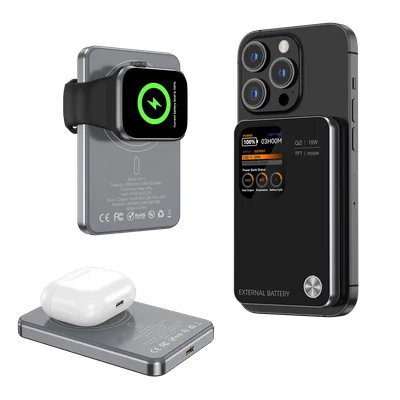
Power Banks
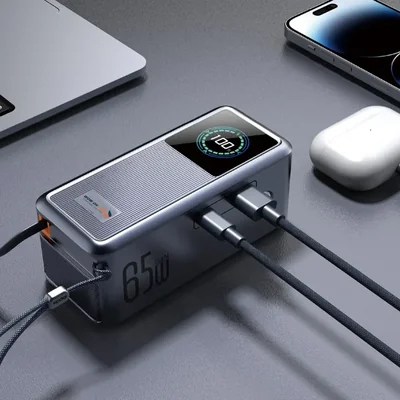
OEM power banks with bi-directional PD 3.1: 65W input recharges a 20,000mAh bank in under 90 minutes, 100W+ output charges laptops at full speed. FOB Shenzhen $4-14/unit at 1,000 pcs across 5,000-27,000mAh tiers, MOQ 500.
View Power Bank OEM Lineup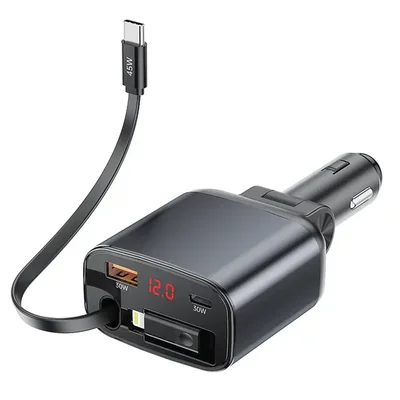
Car Chargers
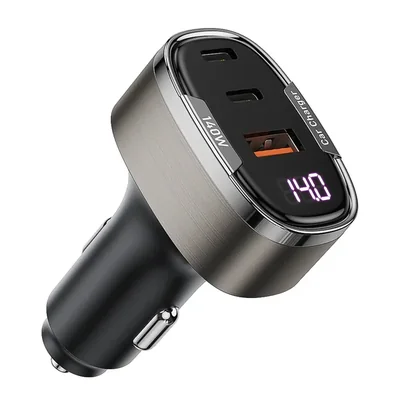
OEM car chargers with PD 3.0/3.1 and PPS: 45-140W dual-port configurations covering smartphones and laptops from a 12V/24V vehicle socket. Retractable cable variants available. FOB Shenzhen $3-8/unit, MOQ 500.
View Car Charger OEM Lineup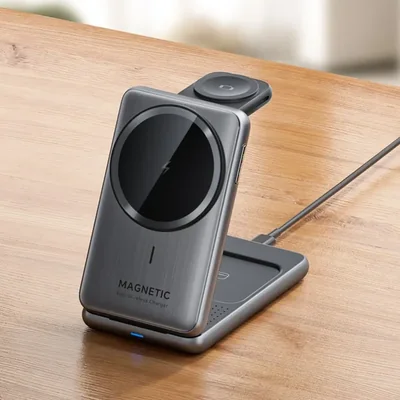
Wireless Chargers
Even wireless needs a brain. Our Qi2 Magnetic Pads require a 20W PD input to deliver a consistent 15W wireless output. No PD input = slow wireless charging.
View Wireless Chargers3. USB-C PD Compatibility Matrix
Google loves structured data. This device compatibility table helps you source the right products for your target market:
| Device Type | Recommended PD Wattage | Ideal WOWOHCOOL Product |
|---|---|---|
| iPhone 15/16 Pro | 27W - 30W PD | 30W GaN Mini Charger |
| Samsung S24 Ultra | 45W PD (PPS Required) | 45W PPS Wall Charger |
| MacBook Air / Pro | 65W - 140W PD 3.1 | 140W 3-Port GaN Station |
| iPad Pro | 30W PD | Dual-Port PD Car Charger |
| Gaming Laptop (2024+) | 100W - 240W PD 3.1 EPR | 240W Desktop GaN Station |
Why PD Matters for Your Brand
PD is the future. EU regulations now require USB-C for all electronic devices by 2026. As a B2B buyer, sourcing PD-certified products ensures regulatory compliance and broad device compatibility.
Real-World Charging Speed: PD Wattage vs Time to Full
Higher wattage only helps until the device hits its own charging cap. This table shows approximate 0-100% charge times when paired with WOWOHCOOL PD 3.1 + PPS chargers and a certified E-Marker cable:
| Device | Battery | 20W PD | 45W PD + PPS | 65W PD | 140W PD 3.1 |
|---|---|---|---|---|---|
| iPhone 16 Pro | 3,650 mAh | ~90 min | ~50 min* | ~50 min* | ~50 min* |
| Galaxy S25 Ultra (PPS) | 5,000 mAh | ~110 min | ~60 min | ~60 min* | ~60 min* |
| iPad Pro 13" | 38 Wh | ~180 min | ~110 min | ~90 min* | ~90 min* |
| MacBook Air 15" | 66.5 Wh | n/a | ~165 min | ~110 min | ~100 min* |
| MacBook Pro 16" | 100 Wh | n/a | n/a | ~180 min | ~90 min |
*Device internal charging cap reached, additional wattage is unused. Times are estimates from a 0% start with screen off; real-world results vary by ambient temperature and background load.
4. Safety & The E-Marker Chip Factor
Professional buyers understand that high-wattage PD requires more than just a powerful charger. Safety mechanisms are non-negotiable.
The 60W Cable Limit
USB-C cables without E-Marker chips are limited to 3A (60W). For anything above 60W, you must use cables with certified E-Marker chips. Using an under-rated cable with a 100W charger is a fire hazard.
- 60W maximum: Standard USB-C cable (3A, no E-Marker)
- 100W maximum: 5A cable with E-Marker required
- 240W maximum: EPR cable with E-Marker required
WOWOHCOOL Safety Standards
WOWOHCOOL ensures all our high-wattage Power Banks and Retractable Chargers are equipped with certified chips to prevent over-voltage and fire risks.
V0
Fire-Retardant Housing
OTP
Over-Temperature Protection
OVP
Over-Voltage Protection
Wondering how to choose a factory that understands these complex protocols? Read our Factory Verification Checklist to learn what questions to ask your supplier about PD compliance and safety certification.
5. Sourcing PD Chargers from China
Understanding PD and PPS gives you a competitive edge when sourcing. Many traders don't understand these protocols, you do. Here's what to verify:
Supplier Verification Checklist
- USB-IF membership: Request certificate. Cross-check the supplier's TID on the USB-IF Certified Products database.
- PPS support: "Do your 45W+ chargers support PPS?" If they don't know what PPS is, keep looking.
- E-Marker compliance: Ask about E-Marker chips in cables for 100W+ products.
- Thermal testing: Request aging test reports. WOWOHCOOL provides 4-hour burn-in test data.
- Regional certifications: CE, FCC, RoHS depending on your target market.
"The most common mistake I see buyers make is assuming all PD chargers are the same," says Snowy May, OEM Technical Lead at WOWOHCOOL. "The difference between a charger with genuine USB-IF certification and one without shows up in compatibility testing, especially with Samsung PPS and MacBook extended power range requirements. Always request the USB-IF TID (Trademark ID) to verify certification."
How to Verify a USB-IF TID in 3 Steps
- Request the TID, ask the supplier for the Test ID (typically formatted as
5XXXorTID-5XXX) for the exact PD product you intend to source. - Search the database, open the USB-IF Certified Products database, filter by Certified PD Products, and enter the TID.
- Confirm the manufacturer, the listed company name must match the supplier's legal entity. A mismatch means the supplier is reselling another factory's certified design, which transfers compliance risk to your brand.
WOWOHCOOL Certifications
Since 2013, our Shenzhen factory maintains:
USB-IF
Member
ISO 9001:2015
Certified
CE/FCC/RoHS
Compliant
See our complete certification guide for details.
6. OEM Outlook: USB-C PD 3.2 & Factory Sourcing Trends
PD 3.1 and EPR
PD 3.1 introduced Extended Power Range for gaming laptops, workstations, and multiple high-power devices from a single charger.
Programmable Power Supply
PPS allows fine-grained voltage/current control, reducing heat in devices and optimizing charging efficiency. Required for Samsung 45W super-fast charging.
According to USB-IF data (USB-IF, 2025), over 4 billion USB-C devices have been shipped globally, with PD 3.1 adoption growing 50% year-over-year. WOWOHCOOL's GaN V and semi-solid-state battery roadmap is aligned with this 240W EPR demand curve, every new SKU since 2025 ships with PD 3.1 + PPS as standard.
240W EPR: Beyond Laptops
The 240W Extended Power Range opens new market segments that were previously impossible with USB charging:
Gaming Laptops
2024+ gaming rigs requiring 180W+
Workstations
Mini PCs, eGPU enclosures
Multi-Monitor
65W+ monitors + 180W laptop
2026 EU Mandate: A Once-in-a-Decade Opportunity
EU regulations mandate USB-C for smartphones (by 2024), tablets (by 2026), laptops (by 2026), cameras, headphones, and game controllers. This regulatory shift creates massive global demand for USB-C PD chargers.
B2B Implications:
- Every brand rushing to convert product lines to USB-C
- Retailers stocking up on compliant chargers before deadlines
- Replacement market explosion as bundled chargers disappear
According to the European Commission, the Common Charger Directive mandates USB-C across all EU member states, directly impacting charger import compliance. The rollout follows two firm deadlines:
| Effective Date | Device Categories Mandated to Use USB-C |
|---|---|
| 28 December 2024 | Smartphones, tablets, cameras, headphones, portable speakers, handheld game consoles, e-readers, keyboards, mice, navigation systems |
| 28 April 2026 | Laptops sold in the EU must support USB-C Power Delivery as the universal charging port |
Strategic Takeaway:
Sourcing PD 3.1 products now positions your brand ahead of the 2026 compliance wave. WOWOHCOOL's certified PD 3.1 lineup, including 240W desktop stations, is ready for immediate deployment.
7. Conclusion: The Future of USB-C PD
USB-C Power Delivery continues to evolve as the universal charging standard. With PD 3.1 supporting up to 240W and GaN technology making chargers smaller and more efficient, the landscape for B2B buyers is full of opportunity. Understanding these technologies helps you make informed sourcing decisions that benefit your brand and customers.
As USB-C adoption accelerates across smartphones, laptops, tablets, and even power tools, PD 3.1 with GaN technology positions your brand at the forefront of the charging market. Products that support Extended Power Range (EPR) up to 48V will be increasingly in demand as more devices adopt USB-C as their primary power port.
According to the USB Implementers Forum (USB-IF, 2025), over 4 billion USB-C devices have been shipped globally, with PD 3.1 adoption growing 50% year-over-year. This installed base represents an enormous addressable market for brands developing PD 3.1 compatible chargers and accessories. For a detailed look at how GaN V (fifth-generation gallium nitride) technology maximizes PD 3.1 performance in compact charger designs, see our GaN V charger OEM manufacturing guide.
Whether you're developing custom charging products or sourcing existing designs, WOWOHCOOL's engineering team can help you integrate the latest PD and GaN technologies into your product line. Contact us to discuss your project requirements.
Related guides: See our US and EU charger certification guide for PD compliance requirements, and the car charger guide for PD 3.1 applications in automotive charging.
WOWOHCOOL FACTORY STAT
WOWOHCOOL is a registered USB-IF member with verifiable TID (Test ID) listings for every PD-certified product on usb.org/products. All PD chargers implement the full CC-pin handshake sequence with Chroma 63600-series load tester verification per production lot. PD 3.1 EPR chargers from 65W to 240W support SPR + EPR dual-mode with PPS (20mV steps, 3.3-21V) and AVS (100mV steps, 15-48V) as standard. MOQ 500, FOB Shenzhen $8-35/unit depending on wattage tier, 25-30 day OEM lead time with CE/FCC/UL certification included.
Frequently Asked Questions
What PD charger wattage should I stock for 2026, 65W, 100W, or 140W?
PD 3.0 SPR (100W max, 20V/5A): covers 95% of commercial laptops and all smartphones. FOB $4-9/unit at 1,000 units, highest-volume OEM tier with 35-45 day inventory turnover. PD 3.1 EPR (240W max, 48V/5A): required for 140W+ laptops (MacBook Pro 16", Dell XPS 17, Razer Blade). FOB $12-16/unit for 140W GaN at MOQ 500. Adds 28V/36V/48V fixed voltages + AVS (Adjustable Voltage Supply). OEM strategy based on Shenzhen factory order data: standardize on 65W PD 3.0 for volume SKUs + 140W PD 3.1 for flagship tier. By mid-2026, ~60% of new laptop models ship with 140W+ USB-C support, and the EU Common Charger Directive (April 2026 laptop deadline) makes PD 3.1 EPR the compliance baseline above 100W. PD 3.2: mandates AVS and FRS for all new >27W certifications since March 2026.
PD 3.0 vs PD 3.1, what's the difference for OEM charger procurement?
PD 3.0 SPR: 100W max (20V/5A), covers 95% of commercial laptops, FOB $4-9/unit at 1,000 units, highest volume. PD 3.1 EPR: 240W max (48V/5A), required for 140W+ laptops (MacBook Pro 16", gaming), FOB $12-16/unit for 140W GaN at MOQ 500. Adds 28V/36V/48V + AVS. Backward compatible. For OEM: PD 3.0 for volume SKUs; PD 3.1 140W for flagship. EU laptop USB-C mandate (April 2026) makes PD 3.1 the de facto standard above 100W.
EU Common Charger Directive — what OEM brands must comply with and when?
Smartphones, tablets, cameras, headphones, etc: December 28, 2024. Laptops: April 28, 2026. Mandates USB-C with USB PD as universal charging port. Eliminates proprietary ports (Lightning, barrel connectors). Non-compliant products face EU border rejection. Impact: 11,000 tonnes e-waste saved annually, €250M consumer savings. USB-A-only chargers and proprietary ports are now obsolete for EU-bound products.
How do I verify PD 3.1 certification when sourcing chargers from OEM factories?
Three steps: (1) Check USB-IF TID at usb.org, must show matching model and power profile. (2) Demand EPR interoperability reports dated 2025+, early 2023-2024 modules had EPR bugs with Dell/HP. (3) Verify bundled cable matches charger's max voltage. Also check dynamic power allocation, 100% full-load testing, and IEC 62368-1 from accredited labs. WOWOHCOOL provides USB-IF TID documentation with every PD 3.1 OEM order.
USB-IF certification, how do OEM buyers verify a PD charger is genuinely certified?
Verify the USB-IF TID (Test ID) at usb.org/products, every certified product has a unique TID. Check that the TID matches the exact model number on your spec sheet, not a "family" certification. A charger labeled "PD-compatible" without a TID is self-certified by the factory and may fail protocol handshakes. USB-IF certification requires passing interoperability testing against 50+ reference devices and costs $5,000-15,000 per model. Genuinely certified products are listed in the USB-IF public registry, if you can't find it there, it's not certified.

Marketing Manager & Founder · 10+ years in consumer electronics
Snowy May is the founder of WOWOHCOOL and a marketing manager with 10+ years in consumer electronics. She specializes in GaN charger architecture, Qi2 wireless charging, PCBA efficiency testing, thermal management, and UL/CE safety compliance for OEM/ODM power products.
Factory Footprint
ISO 9001 Facility
Shenzhen, China
Export Countries
Engineers In-House
Ready to Source PD Fast Chargers for Your Brand?
WOWOHCOOL offers GaN-based USB-C PD 3.1 chargers with PPS support from 20W to 240W. MOQ from 500 units, full CE/FCC/UL certification included.