
GPSR 2023/988 EU Authorized Representative for Charger Importers

Global Procurement & Sourcing Manager · 10+ years in 3C procurement & sourcing
Since 13 December 2024, GPSR 2023/988 requires every non-EU charger and power bank seller to name an EU-established authorized representative. Most importers discover this only when Amazon delists a listing or customs holds a container — and an older 2019/1020 Art 4 duty, which most guides miss, already applied since July 2021. This guide breaks down appointment, technical files, labelling, the real €100–1,500/year cost, and what your factory can pre-build so setup takes days, not weeks.
Key Takeaways
Since 13 December 2024, every non-EU charger and power bank seller must name an EU-established authorized representative under GPSR 2023/988 — but for electronics the same "EU responsible person" duty already applied since July 2021 under Regulation (EU) 2019/1020 Art 4. The representative keeps your technical file for 10 years, appears on your label, and answers market surveillance. Third-party service runs roughly €100–1,500/year; a factory with ready CE documentation turns weeks of setup into days.
- GPSR applies since 13 Dec 2024: Replaces the old GPSD 2001/95/EC; every consumer product, including online and FBA stock, needs an EU-established responsible person.
- Electronics were already covered in 2021: Chargers and power banks are harmonised under LVD/EMC and the Battery Regulation, so the responsible-person duty comes from 2019/1020 Art 4; GPSR Art 17 covers residual general-safety risks.
- 10-year document retention: The representative holds your EU Declaration of Conformity and technical file, and its name plus postal address plus e-contact must appear on the product, packaging, and documents.
- Real cost range: €100–1,500/year for a third-party representative (industry range), plus a per-unit restick for FBA stock already in EU warehouses.
- Factory shortcuts: A factory with model-specific CE documents and test reports delivers the authorized-representative file in days — WOWOHCOOL includes the service with OEM orders at MOQ 500.
Key Figures: GPSR 2023/988 & the EU Responsible Person
* Industry range for third-party authorized representative service; confirm with the provider's quote.
Table of Contents
1. Why GPSR 2023/988 Changed the Rules for EU Charger Sales
The GPSR (Regulation (EU) 2023/988) replaced the 23-year-old General Product Safety Directive (2001/95/EC) and has applied across the EU since 13 December 2024. It is the EU's safety backstop for every consumer product — including chargers, power banks, and any accessory sold to end users — whether you sell through a distributor, a webshop, or FBA. Northern Ireland is covered; Great Britain is not.
What exactly does the GPSR require from a non-EU seller?
Before placing any consumer product on the EU market, the seller must ensure an economic operator established in the EU is responsible for it.
That operator follows a fixed chain: the manufacturer if it is EU-based, otherwise the importer, otherwise a written-mandate authorized representative, otherwise a fulfilment service provider. For a Chinese factory selling OEM chargers into Europe, that chain collapses to two realistic options: you act as the importer and take responsibility yourself, or you appoint an EU authorized representative with a written mandate. Either way, the responsible entity's details must be traceable back from the product on the shelf, and market surveillance authorities must be able to reach that entity.
Do chargers and power banks even fall under the GPSR?
Yes — but with a nuance that decides which legal text actually obliges you. Chargers and power banks are harmonised products: they are already covered by the Low Voltage Directive (2014/35/EU), the EMC Directive (2014/30/EU), and for battery-containing units the Battery Regulation 2023/1542. For products with harmonised rules, GPSR Art 2 and 3 limit its own scope to the risk aspects those rules do not cover. That overlap is exactly why this article treats the GPSR as the top layer on top of your existing CE obligations, not as a replacement for them.
2. Who Must Appoint an EU Authorized Representative as Importer
Direct answer: if you import chargers into the EU from a non-EU country, you are the importer and must appoint an EU-based authorized representative before placing the product on the market.
The obligation follows a fixed economic-operator chain: the manufacturer established in the EU first; if there is none, the importer; if the importer is not the responsible party, the authorized representative (EU-established, written mandate); and as a last resort the fulfilment service provider. For a non-EU manufacturer, an EU-based importer who places the product under their own name can already be the responsible person — many importers do not realise they may not need to buy a separate representative service at all.
| Economic Operator | When They Take Responsibility | Typical Case for Charger Imports |
|---|---|---|
| Manufacturer (EU) | Facility and place of establishment inside the EU | Rare for white-label imports |
| Importer (EU) | Places the product on the EU market under its own name | Your own import company — you can be the responsible person |
| Authorized Representative (EU) | Written mandate from a non-EU manufacturer; keeps the technical file | The typical GPSR service importers buy |
| Fulfilment Service Provider | No other operator exists for the product | Residual case, rarely the primary option |
The 2019/1020 connection: why "GPSR authorized representative" is only half the story
For harmonised electronics, the "EU responsible person" duty is not new in 2024. Regulation (EU) 2019/1020 Art 4 has required every non-EU manufacturer of harmonised products to designate an EU-established responsible person since July 2021. Chargers under LVD/EMC and power banks under the Battery Regulation were therefore already in scope two and a half years before the GPSR applied. GPSR Art 17 mirrors the same structure for the general-safety dimension and extends the labelling duty to every consumer product.
Chargers vs. power banks: GPSR and the battery regulation
If your SKU contains a lithium cell, the Battery Regulation 2023/1542 layers extra obligations on top of the GPSR.
Those additions include country-by-country EPR registration, additional labelling (nominal capacity, chemical composition, crossed-out wheelie bin), and a digital product passport path from 2027. The authorized representative role itself stays the same — one EU entity can cover both regimes — but the technical file your representative must hold is bigger. See our EU Battery Regulation 2023/1542 OEM import guide for the full battery-specific checklist.
Expert Insight
"Most GPSR service pages make the authorized representative sound like a new GPSR-only invention. For chargers and power banks it is the same EU responsible person role that 2019/1020 Art 4 already demanded in 2021. When you compare quotes, ask which regulation the provider anchors the mandate to — a GPSR-only contract may not cover your harmonised CE obligations, and you would end up paying twice."
— Nina Nico, Global Procurement & Sourcing Manager at WOWOHCOOL, specialist in EU regulatory compliance for consumer electronics importers
3. What Your EU Authorized Representative Must Do for Importers
Under GPSR Recital 40 and Art 17, the authorized representative's job is narrow but non-negotiable: hold the technical documentation and EU Declaration of Conformity, cooperate with market surveillance authorities, and provide information on risks and corrective actions. It is an administrative and legal role — the representative does not design, manufacture, or test your product, and it cannot give you CE conformity on its own authority.
- Retain the technical file and the EU Declaration of Conformity for at least 10 years from the last date the product was placed on the market.
- Produce documentation on request to market surveillance authorities within the deadlines the member state sets, normally days, not weeks.
- Communicate product risks — suspected incidents or corrective measures — to the relevant authorities on behalf of the manufacturer.
- Appear on the product, packaging, and accompanying documents with name, registered trade name, postal address, and electronic contact.
What documents must a non-EU charger factory provide?
Five documents: the EU Declaration of Conformity, CE test reports, the manual, a risk assessment, and traceability records.
Concretely, the technical file the representative must be able to produce on demand includes the DoC plus IEC 62368-1 and EMC evidence from an accredited lab, target-market-language safety instructions, and batch or serial identifiers for recall response. These five items close the loop for most charger audits.
| Document | Issued By | Why the Representative Needs It |
|---|---|---|
| EU Declaration of Conformity | Manufacturer | Core file; must be producible on request |
| CE certificates + accredited test reports | Accredited lab (TÜV, SGS, Intertek) | Evidence of conformity (IEC 62368-1, EMC 2014/30/EU) |
| User manual & safety instructions | Manufacturer | Required for safe use in the target-market language |
| Risk assessment | Manufacturer | General-safety analysis under GPSR Art 9 |
| Batch / serial traceability records | Manufacturer | Recall and market-surveillance response |
A factory that keeps these current per model turns the handover from a three-week scramble into a three-day file transfer. If a supplier cannot produce an accredited test report or a model-specific Declaration of Conformity on request, that is a red flag for the whole order — see our China charger factory selection guide for the verification workflow.
Factory Stat
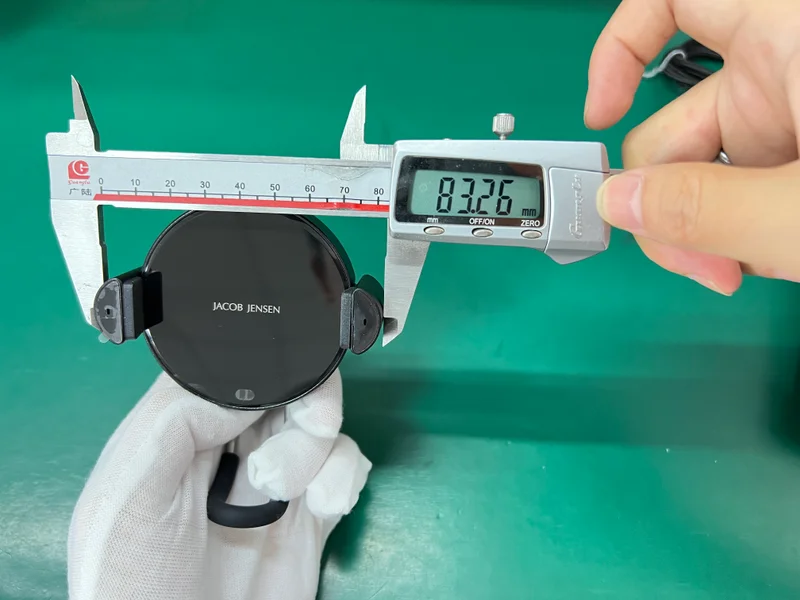
Every WOWOHCOOL charger model ships with a model-specific EU Declaration of Conformity, IEC 62368-1 and EMC test reports from accredited labs, and batch-level traceability records — the complete file your authorized representative is legally required to hold, retained for 10 years.
4. Labelling & Traceability: What Must Appear on the Product
The GPSR (Recital 42) requires every product to carry enough identity for authorities to trace it back to a responsible operator: the manufacturer's name and postal address, a unique model, batch, or serial identifier, and — because the manufacturer is outside the EU — the authorized representative's name, registered trade name, postal address, and electronic contact. These details must appear on the product itself, its packaging, or accompanying documents.
- Manufacturer identity: legal name + postal address + electronic contact of the Chinese factory (your supplier).
- Authorized representative identity: name + registered trade name + postal address + e-contact of the EU entity.
- Unique identifier: model number plus batch or serial number per unit, so a specific recall can be executed.
- Your brand layer: if you place the product under your own brand, you are the importer in the traceability chain.
What about FBA stock already in EU warehouses?
FBA stock sitting in EU warehouses needed relabelling too — marketplaces check existing listings, not only new shipments.
For FBA inventory this usually means a per-unit restick in a fulfilment centre, an often-overlooked cost that lands in the range of €0.20–1.00 per unit depending on label size and labour (industry estimate). The cheaper fix is planning the label into the artwork from day one so the factory prints it at source.
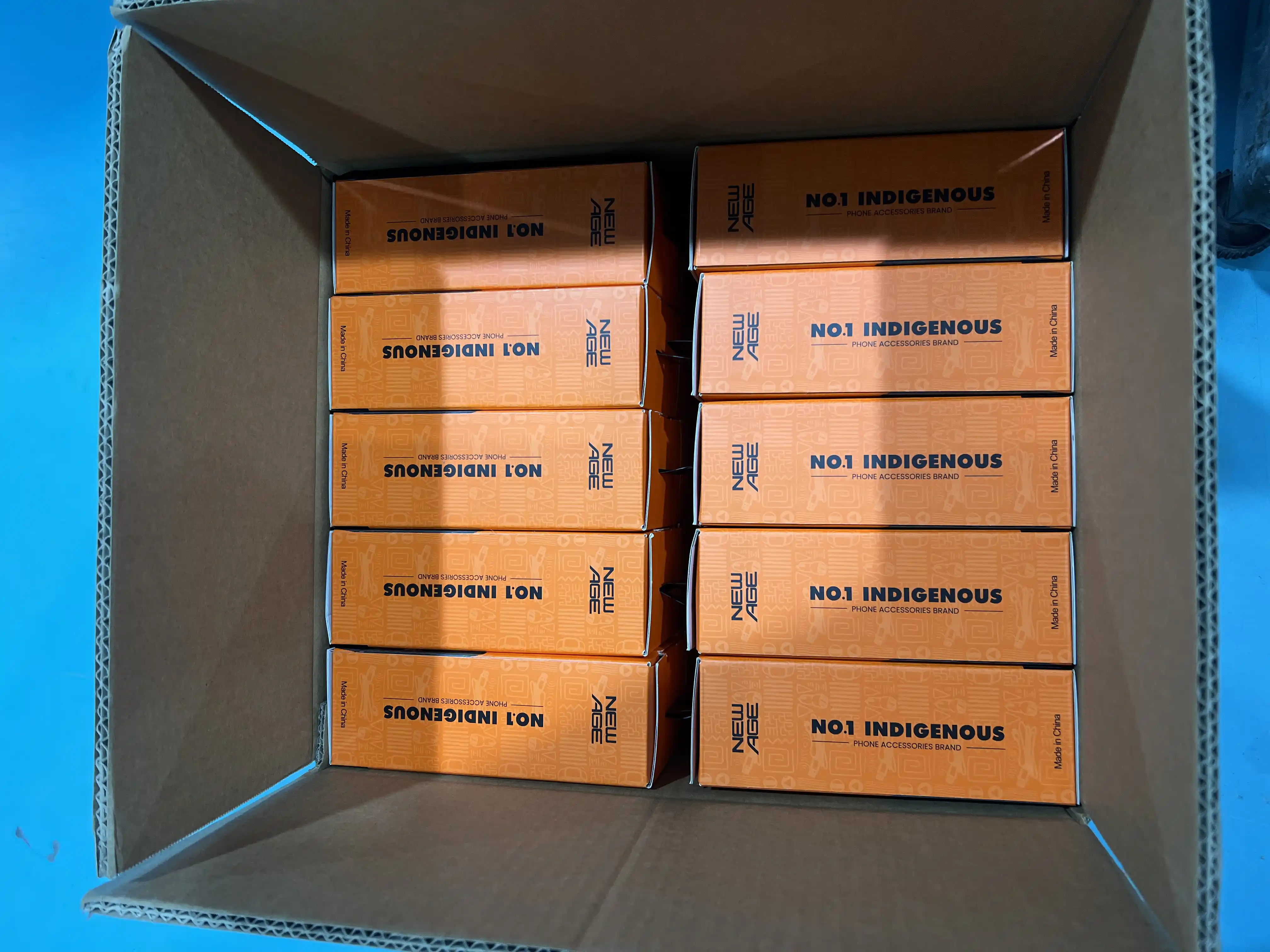
A useful reference point: label close-up from our production line below shows the element set we integrate for EU-bound units — model, manufacturer, capacity, and the responsible-person block — so nothing has to be re-added after arrival.
5. What GPSR Compliance Actually Costs Importers per Year
Third-party authorized representative services are priced either per company or per product/ASIN. A reasonable planning figure for an importer with a small catalogue is €100–500/year at company level, rising to €1,500/year or more for multi-ASIN portfolios (industry range — always confirm with the provider's written quote). The GPSR cost line is usually the cheapest part of EU entry; the expensive part is the technical documentation behind it, which is exactly where a factory can save you money.
| Cost Item | Typical Range | Notes |
|---|---|---|
| Authorized representative service | €100–1,500 / yr | Per company or per ASIN; verify what the 10-year retention includes |
| FBA restick of existing stock | €0.20–1.00 / unit | Only if product is already in EU warehouses (industry estimate) |
| Technical documentation (if not ready) | $2,500–4,500 / model | CE LVD+EMC, RoHS, test reports — one-off, per model |
| EPR registration (battery SKUs only) | €200–600 / country / yr | Battery Regulation layer; not GPSR itself |
How much should an authorized representative cost per year?
For a single SKU or a small brand, a reasonable quote sits around €100–500/year; multi-ASIN portfolios typically run €300–1,500/year or more.
Be wary of a quote far below that range — the service includes holding your technical file for 10 years and responding to authorities, which has a fixed administrative floor. If you import in your own name and are happy to be the responsible economic operator, you may not need a paid service at all.
Put GPSR costs in perspective against the whole landed-cost picture in our OEM import cost guide — tariffs, freight, and customs clearance usually dwarf the authorized-representative line.
6. How to Source and Verify a GPSR Authorized Representative
Because the representative is your legal face before EU authorities, verifying the provider is a five-minute diligence exercise that saves a year of headaches. A legitimate representative can demonstrate physical EU establishment, a written mandate scope, and authority-cooperation experience — if any of those three is vague, treat the quote as unqualified.
- Real EU establishment: a verifiable office address (not a PO box or virtual-mail address) and a VAT number you can check against the national register.
- Contract scope: written confirmation of 10-year technical-file retention, response to surveillance requests within 24–48 hours, and per-SKU pricing.
- Reference from an active importer: a live client in your category who can confirm the representative answers within the promised window.
- Regulatory anchor: confirm the mandate covers both 2019/1020 Art 4 (harmonised CE obligations) and GPSR Art 17 (general safety), not one or the other.
Red flags in an authorized representative contract
Signing a mandate is not a formality. Watch for contracts that cap the representative's authority to "GPSR only", that exclude the technical file from their custody, or that shift authority-cooperation costs back to you per request. A representative that cannot show you a contract template in advance is usually not one you want holding your EU market access.
The same verification discipline applies to the certificates in your technical file — if a supplier hands you PDFs without an issuer you can call, start with our US & EU charger certification guide and check how to validate test reports before they become your liability.
7. How an OEM Charger Supplier Can Streamline Your GPSR Compliance
The single biggest GPSR cost driver for importers is not the representative's fee — it is rebuilding documentation the factory should already have. A supplier with model-specific CE files, accredited test reports, and batch traceability turns your authorized-representative setup into a file transfer; a supplier without them turns it into a paid retesting project that can stretch your launch by four to six weeks.
What we ship with every OEM charger order at WOWOHCOOL (factory-data §2, §6):
- EU Declaration of Conformity per model plus IEC 62368-1 and EMC test reports from accredited labs, retained for 10 years.
- EU authorized representative service included with OEM orders at MOQ 500 — one entity covering 2019/1020 Art 4 and GPSR Art 17.
- Batch-level traceability underpinned by our 4-stage QC process (IQC → IPQC → FQC → OQC) with 100% of units passing a 4-hour aging test before shipment — the traceability records your representative must be able to produce.
- Label integration at source: responsible-person block, model, and batch identifiers printed in the factory, so no per-unit restick after arrival.
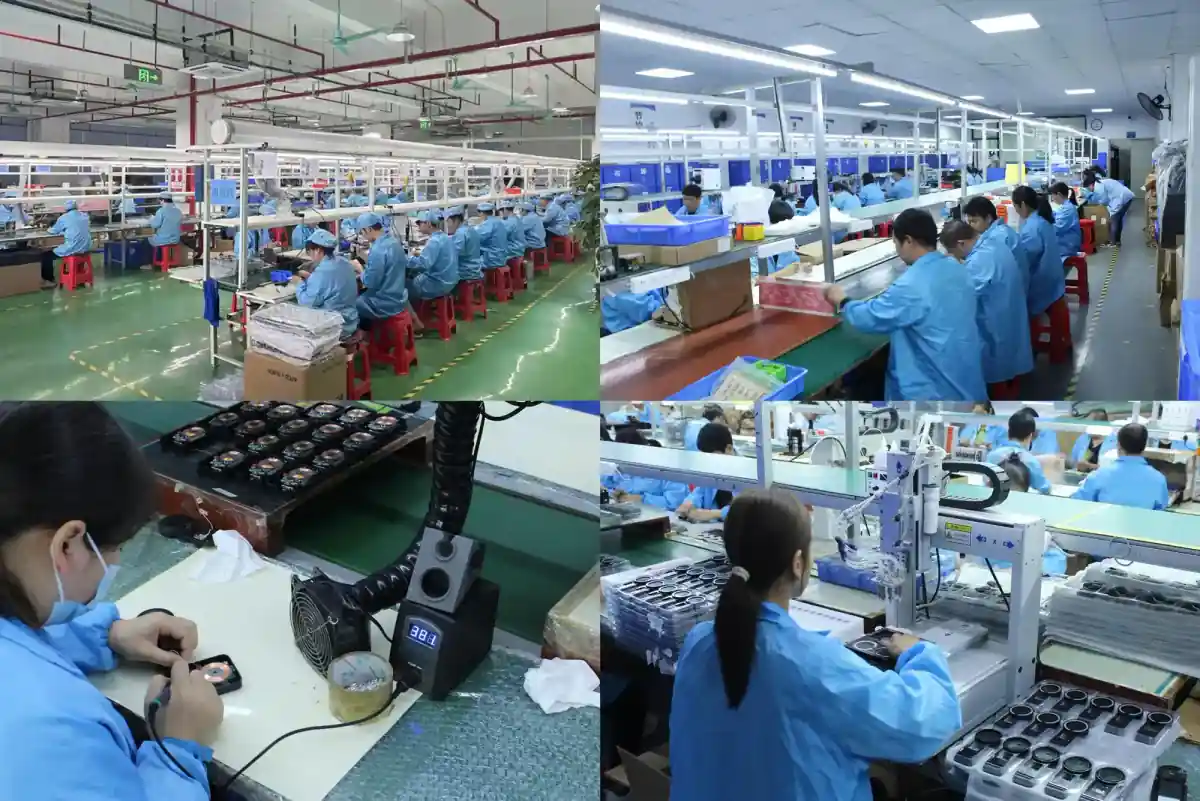
Compliance readiness is a factory-selection criterion, not an afterthought. Add it to the checklist you already use for capacity and pricing — the full verification workflow is in our factory selection guide, and the QC data behind the traceability claims is in our 4-stage QC guide.
Factory Stat
Sourcing chargers from a documentation-ready factory typically removes 2–4 weeks of GPSR setup lead time versus re-testing a bare-bones supplier, and it removes the $2,500–4,500 per-model retesting cost from your launch budget.
Next Steps for Your GPSR Compliance
Direct answer: complete the GPSR ready-to-sell checklist before the first shipment — appoint the representative, update product labels, verify the technical file, and keep the written mandate on record.
The GPSR made an EU-established authorized representative unavoidable for non-EU charger sellers from 13 December 2024 — but for electronics the same responsible-person duty already existed under 2019/1020 Art 4 since July 2021. The practical setup is five steps: confirm your economic-operator role, verify and appoint a representative with a written 10-year mandate, hand over the technical file, print the label block at source, and keep the record current before each shipment.
The cost question rarely ends at the €100–1,500/year service fee — it ends at whether your factory can produce the documents the representative must hold. Choose a supplier that can, and GPSR compliance stops being a project and becomes a box you tick.
Frequently Asked Questions
The most common questions from charger and power bank importers about the GPSR authorized representative, answered with the compliance criteria that actually apply to electronics:
Do charger and power bank importers need an EU authorized representative?
Yes. If the manufacturer is not established in the EU, the importer is the responsible economic operator — either directly under Regulation (EU) 2019/1020 Art 4 (in force since July 2021 for harmonised products like chargers and power banks) or via an EU-established authorised representative under GPSR Art 17 (in force since 13 December 2024). Selling through Amazon, eBay, or FBA does not exempt you: Art 22 requires marketplaces to verify your responsible-person details.
Is a GPSR responsible person the same as the 2019/1020 authorised representative?
For chargers and power banks, yes — it is one role with two legal anchors. 2019/1020 Art 4 obliges non-EU manufacturers of harmonised products to have an EU-based responsible person for conformity obligations; GPSR Art 17 mirrors that duty for the general-safety risks the harmonised rules do not cover. One EU-established entity can cover both, which is why most importers appoint a single authorised representative.
How much does a GPSR authorized representative cost per year?
Industry ranges run roughly €100–500 per year at company level up to €1,500 or more for multi-ASIN portfolios. Some providers charge per product or ASIN. Budget additionally for FBA restick — typically €0.20–1.00 per unit — if you already have stock in EU warehouses. Confirm the quote covers the 10-year technical-file retention and authority-cooperation duties.
What documents must my charger factory provide to the authorized representative?
Five documents: the EU DoC, CE certificates with accredited test reports, the user manual, a risk assessment, and batch traceability records. WOWOHCOOL compiles a complete technical file per model, retains it for 10 years, and releases it to your authorised representative on request.
Can my factory in China be my EU authorized representative?
No. An authorised representative must be physically established in the EU under GPSR Art 17; a Chinese factory remains the manufacturer and cannot hold the role. You can either act as the responsible person yourself as importer, or appoint an EU entity. WOWOHCOOL provides EU authorised representative service with OEM orders (MOQ 500) and supplies the full technical file your representative needs.
Global Procurement & Sourcing Manager · 10+ years in 3C procurement & sourcing
Nina Nico is WOWOHCOOL's Global Procurement & Sourcing Manager with 10+ years in 3C procurement. She specializes in B2B hardware sourcing, OEM/ODM power bank manufacturing, factory audits, supply chain quality assurance, and international trade compliance.
Factory Footprint
ISO 9001 Facility
Shenzhen, China
Export Countries
Engineers In-House
GPSR-Ready Chargers, Factory Direct
Compare product categories or discuss GPSR technical files, authorized representative documentation, CE files, and labelling requirements with our team.
Review the compliance path before you publish listings or ship into the EU.