
How to Spot Rebuilt B-Grade Cells in OEM Power Bank Quotes

Global Procurement & Sourcing Manager · 10+ years in 3C procurement
A European buyer received two quotes for the same 20,000mAh PD 65W power bank: $12.90 and $9.60 per unit at 2,000 pieces. The cheaper factory sent photos of shiny cells, a tidy spec sheet, and a 20% discount story. Our discharge test on their samples told a different story: 17,100mAh delivered against 20,000mAh rated, and fading on the third cycle. The pack was built on re-wrapped B-grade cells. The $6,600 saved on paper would have cost five times that in returns.
Key Takeaways
B-grade cells are rejected production cells sold openly at a discount; rebuilt cells are used cells re-wrapped to look new. Both end up in power bank quotes priced 15-25% below Grade-A, and the gap widens after shipment: field return rates of 5-8% versus under 0.3%. Seven cell-level checks at the quote stage filter most of this risk before you wire a deposit.
- Quote math: Grade-A 10,000mAh FOB $5.80-8.00 at 500 units; generic/B-grade quotes land 15-25% lower.
- 7 checks: cell brand + datasheet, packaging date codes, price sanity, sample discharge test, cycle fade, IR report, UN38.3 cross-check.
- Return economics: Grade-A defect rate under 0.3% vs 2-5% factory defect rate on generic cells.
- Cost anchor: a UN38.3 report costs $1,000-2,500 per cell type, a mismatched report is a red flag in itself.
15-25%
B-grade quote discount
5-8%
Generic-cell return rate
<0.3%
Grade-A defect rate
7
Cell-level checks
Table of Contents
1. Where B-grade and rebuilt cells come from
What cell grading actually means
Every large cell manufacturer runs a grading line at the end of production. Cells that fail the first screen, on capacity deviation, internal resistance, or self-discharge, are downgraded to B-grade and sold at a discount into secondary markets. Nothing about a B-grade cell is hidden: wholesalers list them openly as "Grade B LiFePO4 / Li-ion cells". The fraud happens one step later, when a pack assembler buys them, re-wraps them, and quotes them to you as Grade A (per industry grading conventions, not a standardized rating system).
The rebuilt-cell economy
A rebuilt cell is a used cell re-wrapped to look new, fresh film hides wear, a reprinted date code hides age.: it is a cell with history, pulled from rejected packs, recovered returns, or production overflow, cleaned, re-wrapped in fresh shrink film, and re-labelled with a new date code. Fresh film hides wear; a reprinted date code hides age. On the quote sheet both look identical, which is why quote-stage verification has to rest on documents and measurements, not on photographs.
| Signal | Grade A (first-run) | B-grade / rebuilt |
|---|---|---|
| Quote level (10,000mAh, 500 pcs) | $5.80-8.00 FOB | 15-25% below Grade-A |
| Cell documentation | Brand, model, datasheet on request | "High quality", no model number |
| Batch traceability | Date codes match packaging | Reprinted codes, mixed batches |
| Field return rate | <0.5% | 5-8% |
Expert Insight
"Nobody in the supply chain advertises a rebuilt cell, the incentive runs the other way. Every verification step has to be one the supplier cannot fake with photos: documents with model numbers, sample units you test yourself, and reports that name the exact cell inside your pack."
, Nina Nico, Global Procurement & Sourcing Manager, WOWOHCOOL
2. The 7 cell-level checks before you pay
Run all seven at quote stage, they take under two hours
These checks are ordered by cost: the first four cost nothing but an email, the last three need samples. Together they expose the two fraud patterns, downgraded cells sold as Grade A, and used cells sold as new.
| # | Check | What a passing answer looks like |
|---|---|---|
| 1 | Cell brand + exact model | Named brand and model (e.g. LG, Samsung SDI, Panasonic), matching the quote line item |
| 2 | Datasheet | Original datasheet with capacity, IR, and cycle-life curves for that model |
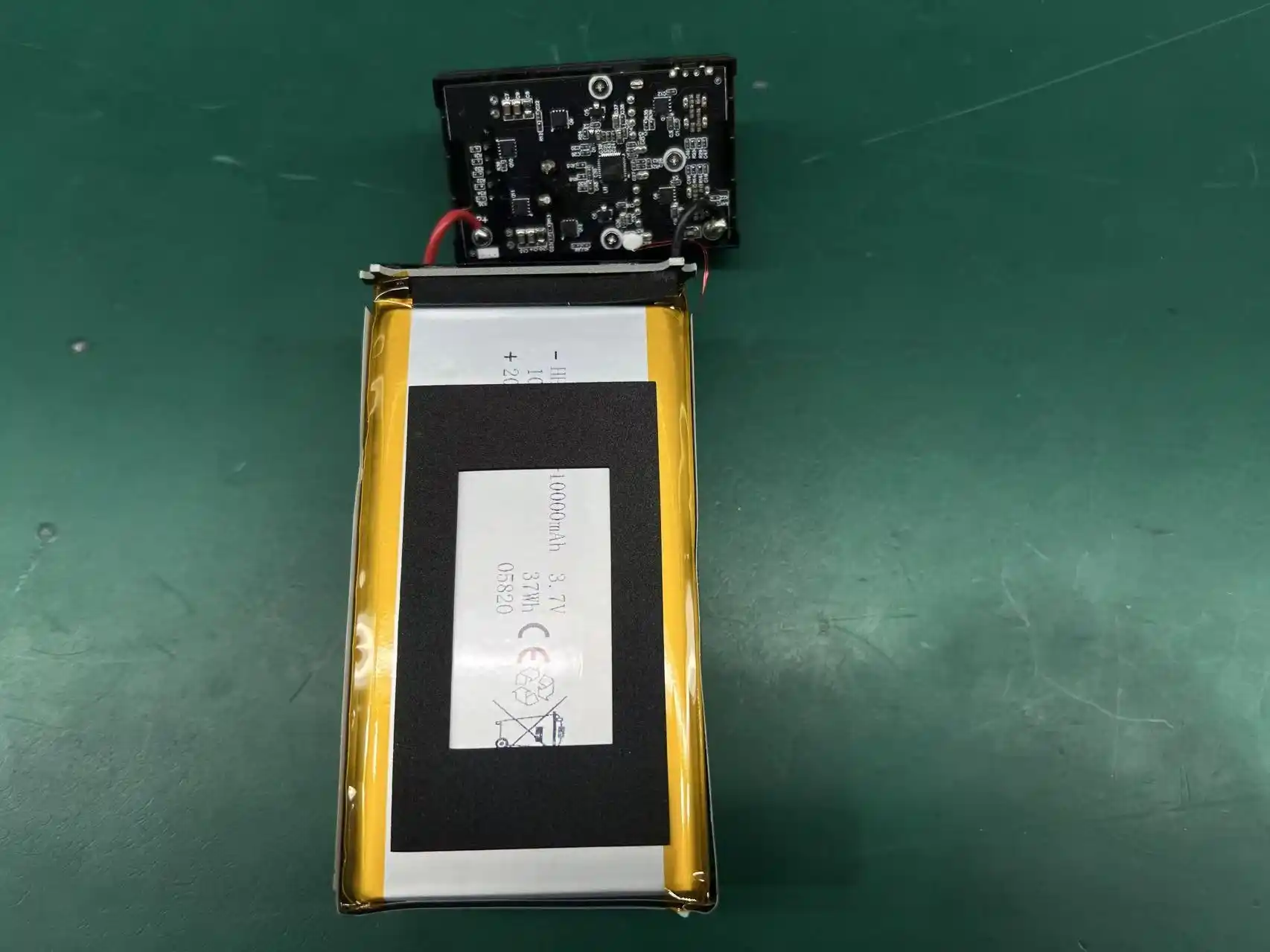
| 3 | Packaging photos with date codes | Cell trays photographed with intact, uniform date codes, not re-wrapped film |
| 4 | Price sanity check | Quote within the Grade-A band; >25% below market means the cells are not first-run |
| 5 | Sample discharge test | Delivered mAh within datasheet tolerance at rated current (see section 3) |
| 6 | Internal resistance report | IR values per cell within the datasheet band, measured on a batch sample |
| 7 | UN38.3 report cross-check | Report names the exact cell model and matches the cells in your samples |
Why checks 1-4 filter most fraud before sampling
A rebuilt-cell operation scales through vagueness: no model number on the quote, no datasheet, "high-quality cells" in place of a brand. Requiring all three in writing costs the supplier minutes and costs you nothing, and the suppliers who stall on checks 1-3 will not pass checks 5-7 either. Treat the price sanity check as the arithmetic backstop: cells are 35-50% of the BOM, so a quote far below the Grade-A band has to be cutting somewhere.
3. The discharge test that catches re-celled batches
Measure delivered capacity, not claimed capacity
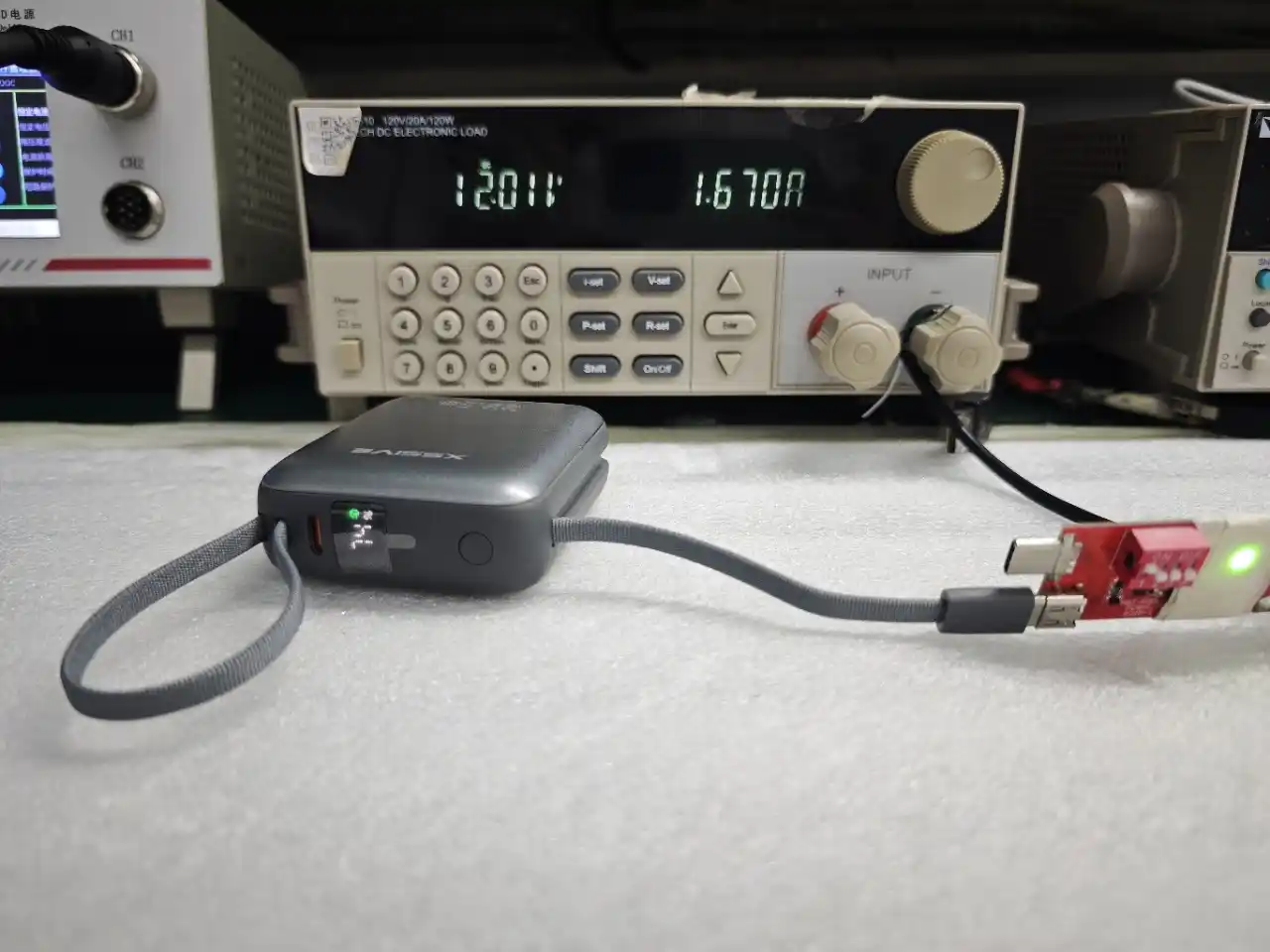
Delivered capacity at the 5V output, not the rated cell figure, is what your buyer experiences. Delivered mAh is always lower than the cell figure because of conversion losses; that gap is normal. What exposes rebuilt cells is the pattern across units and across cycles: Grade-A cells cluster tightly within datasheet tolerance; re-wrapped used cells scatter widely and fade from the first repeated cycle.
The four-step protocol
Five units, three cycles, one datasheet: the discharge protocol takes an afternoon and turns cell grade from a claim into a measurement.
- Sample five units from the supplier's stock batch, not from a hand-picked demo box.
- Charge and discharge at rated current through the 5V output, logging delivered mAh per unit.
- Repeat for three cycles, rebuilt cells lose measurable capacity between cycles; first-run cells do not.
- Compare against the datasheet, a spread wider than the datasheet tolerance band, or visible fade by cycle three, ends the conversation.
In the case that opened this article, the delivered figure came in at 17,100mAh against a 20,000mAh rating, 85.5% delivered before conversion losses were even considered, with visible fade by cycle three. That is the rebuilt-cell signature: not one bad number, but a bad pattern.
4. UN38.3 and documentation cross-checks
One report, one cell type, match all three layers
UN38.3 is the transport safety test every lithium cell must pass before air or sea shipment, and a report costs $1,000-2,500 for a specific cell type. That specificity is what makes it a verification tool: the report names the exact cell model tested. Cross-check three layers, the cell model on the report, the cells physically inside your samples (open one unit if the volume justifies it), and the batch date codes. All three must name the same cell.
The mismatch patterns that matter
Two patterns recur in the field. The first is a borrowed report: the factory shows a genuine UN38.3 document for a well-known cell while the pack contains something cheaper, the paperwork describes a cell you are not buying. The second is a report for an unidentifiable lab, which cannot be traced if customs or your marketplace platform asks. Both fail the same way under scrutiny: ask which laboratory issued the report and which cell model it covers, then compare with what ships. For the transport-side rules your shipment will face next, our guide to dangerous goods packaging certification walks through the full compliance chain.
5. What B-grade actually costs you
The return-rate arithmetic
For a 2,000-unit batch of 10,000mAh units, the B-grade saving on the quote is roughly $2,400 (15-25% off a $5.80-8.00 Grade-A band). Processing a 5-8% return rate means handling 100-160 defective units: return freight, triage, refunds or replacements, and the review damage on a marketplace listing. At realistic handling costs the return bill alone is several times the quote saving, before counting the warranty obligation and the listing's conversion drop.
A trajectory built on Grade-A cells
From 500 units to 10,000+ annually in two years, at a 4.5-star rating across 900+ reviews. The total entry cost was $8,000-18,000, product, branding, certification, and the first batch included. The scaling worked because the return rate stayed near 0.5% instead of eating the margin: cell grade is not a detail of the BOM, it is the assumption the whole business model rests on.
Next steps: make verification a contract clause
The seven checks above work because they turn cell grade from a promise into a documented, measurable property of the shipment: named cell model, matched UN38.3 report, sample discharge numbers you measured yourself. Put the same three requirements into the purchase contract, cell model, traceability, and acceptance based on delivered capacity, and verification stops being a one-time favor. Send your supplier's quote to our team for a free 4h cell-grade review before you wire the deposit.
Frequently Asked Questions
What are B-grade lithium cells?
B-grade cells failed their maker's first quality screen, on capacity deviation, internal resistance, or self-discharge, and are sold at a discount to secondary markets. Rebuilt cells go one step further: they are used or rejected cells re-wrapped to look new.
How much cheaper are B-grade cells in a power bank quote?
15-25% below Grade-A pricing: a 10,000mAh standard unit quotes at $4.35-6.80 instead of $5.80-8.00 per unit at 500 pieces. The saving is smaller than the cost of processing a 5-8% field return rate.
Can a discharge test really expose rebuilt cells?
Yes. Discharging five sample units at rated current and measuring delivered mAh against the rated figure exposes two patterns at once: capacity below spec, and fast fade between repeated cycles. Grade-A cells hold within their datasheet tolerance; rebuilt cells drop measurably from cycle one.
What should I check in the UN38.3 report?
Three things: the exact cell model named, the batch and date codes matching your samples, and an identifiable testing laboratory. A UN38.3 report costs $1,000-2,500 and covers one cell type, a mismatched report means the paperwork describes a different cell than the one shipped.
Global Procurement & Sourcing Manager · 10+ years in 3C procurement · EN, ZH
Nina Nico is WOWOHCOOL's Global Procurement & Sourcing Manager, working with an ISO 9001 OEM/ODM charging accessories factory in Shenzhen since 2013. She helps brands and importers verify suppliers before the first deposit, from cell traceability and discharge testing to factory audits and UN38.3 compliance.
Factory Footprint
ISO 9001
Shenzhen, China
Export Countries
Engineers
Power Banks OEM from 500 Units
Get factory pricing with Grade-A cells, 4-stage QC, and full UN38.3 documentation, from an ISO 9001 factory shipping 1M+ units monthly.