
Korea KC Certification for Power Bank Importers: Safety Confirmation vs Certification

Marketing Manager & Founder · 10+ years in consumer electronics
A power bank clears Korean customs only when three things line up. The right KC scheme. A safety-confirmation certificate in the Korean importer's name. A label that matches the import declaration. Miss any one, and the shipment waits in bond while the launch date moves.
Korea KC certification for power bank importers starts with a choice of legal route. There are three, and the route changes by product. A power bank follows one route. A USB charger follows another. A wireless charger can trigger a third regulator. Most English guides fold all of this into "KC certification." The importer then discovers the difference at the port.
This article separates the routes. It is for the brand, importer, or sourcing team with a factory quote in hand. You need to know what to file, who must hold the certificate, and what Korean customs will check. WOWOHCOOL supports KC documentation for OEM orders, and our certification team works through these steps with buyers before tooling starts.
Need a power bank line that already has the documentation trail? The OEM power bank catalog covers 5,000 mAh to 27,000 mAh models with CE, FCC, RoHS, and UN38.3 files ready for market-specific work.
Key Takeaways
Korea KC certification for power bank importers: B2B rules for safety confirmation vs certification, certificate holder, customs matching, and 2026 changes.
- A power bank is a safety-confirmation product under KC 62133-2, not a safety-certification product. It needs testing and a report, but no factory audit.
- A USB charger or DC adapter is generally a safety-certification product under KC 62368-1. A battery charger with charge-control logic can fall under KC 60335-2-29 instead.
- A foreign factory cannot file in its own name. The Korean importer, or a Korean resident agent, must file, and the certificate model and importer names must match the import declaration character for character.
- Korean customs checks the certificate through 세관장확인 before release. A test report without a matching safety-confirmation certificate is not enough.
- The draft KC 62133-2 revision would add KC 62368-1 whole-unit safety for power banks. The WTO comment period closes on 2026-10-26, and the final effective dates are still undetermined.
Table of Contents
1. Korea KC Certification for Power Bank Importers: Three Schemes
The KC mark is one label. The legal route behind it is not. Korea's Electrical Appliances and Consumer Products Safety Control Act (전기용품 및 생활용품 안전관리법) sets three levels of obligation. Each level assigns a different amount of work to the factory and the importer.
This is the Korea entry in our market-access series. The Japan PSE/METI guide follows the same structure for a different regulator.
| Scheme | Korean name | Who tests | Factory audit | Typical products |
|---|---|---|---|---|
| Safety Certification | 안전인증 | KATS-designated test body | Yes, initial and annual | AC adapters, DC power supplies, many household chargers |
| Safety Confirmation | 안전확인 | KATS-designated test body | No | Lithium-ion batteries and power banks |
| Supplier's Declaration | 공급자적합성확인 | Supplier self-declaration | No | Lower-risk products outside this article's scope |
The distinction matters because the words "KC certified" hide it. A supplier can send a certificate that looks valid and still be on the wrong route for your product. The importer then discovers the mismatch when customs asks for a document the certificate does not represent.
For power banks, the route is Korea safety confirmation. The product sits in the "battery (lithium secondary battery)" category in Enforcement Rule Annex 4. The legal basis for the filing is Article 15 of the Act. The applicable standard is KC 62133-2, the Korean adoption of IEC 62133-2 for portable sealed lithium secondary cells and packs.
That route does not include a factory audit. It does include model-by-model testing, a safety-confirmation report, and a label. The absence of a factory audit is not a loophole. It shifts the burden onto the importer, who must keep the certificate, the model list, and the label aligned with every shipment.
Why the scheme matters before you choose a factory
The scheme decides which documents the factory must prepare and which documents the importer must hold. If you brief a factory for "KC" without naming the scheme, you may get the wrong certificate. It could be a charger-style certificate for a power bank, or a battery report that doesn't cover the finished product.
The correction is cheap before tooling and expensive after. Ask the factory to state the scheme and standard in the quotation, not just the mark. Then ask the test body to confirm the classification in writing for the exact product construction you plan to ship.
2. Power Bank vs Charger: Which KC Scheme Applies?
Power banks and chargers look like one product family to a buyer. Korean law treats them as different categories, and the difference is not cosmetic.
| Product | KC scheme | Standard | Factory audit | Certificate holder |
|---|---|---|---|---|
| Power bank, DC in and DC out only | Safety Confirmation | KC 62133-2 | No | Korean importer or domestic agent |
| USB charger / DC power adapter | Safety Certification | KC 62368-1 | Yes | Korean importer or domestic agent |
| Battery charger with charge control | Safety Certification | KC 60335-2-29 | Yes | Korean importer or domestic agent |
| Wireless charger with a radio function | Safety route plus RRA assessment | KC route plus radio-law conformity | Depends on the safety route | Importer or agent, plus RRA applicant |
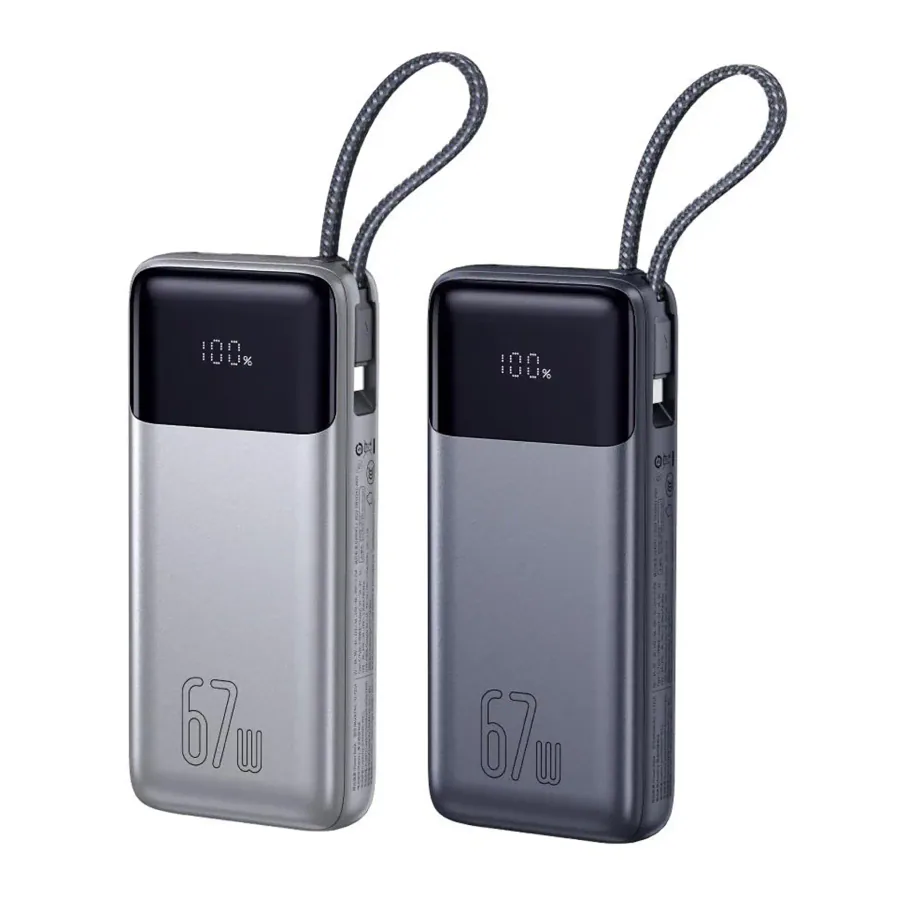
A DC-only power bank follows Korea safety confirmation, not safety certification.
The charger split needs care. KC 62368-1 covers audio, video, information, and communication equipment, including DC power supply units rated up to 1 kVA. Korea retired KS C 60950-1 and KS C 60065 at the end of 2022 and moved these products onto KS C IEC 62368-1. The underlying requirements are covered in more detail in our charger safety certification standards guide.
KC 60335-2-29 covers household and similar battery chargers. KATS Notice 2026-23, issued on 2026-02-05, revised that standard. The previous standard may be applied in parallel until 2027-02-05, after which old certificates must be updated.
The practical dividing line reported by Korean test bodies is charge control. A device that manages charging voltage, current, or an algorithm leans toward KC 60335-2-29. An uncontrolled DC adapter that only supplies power leans toward KC 62368-1. Construction, rated input, and whether the charger is sold with a device can change the answer. The test body's written classification governs. If you are sourcing a GaN charger, the GaN charger OEM line shows the form factors and power ranges we build.
If the product also carries Qi2, the WPC product certification sits on top of the KC route. Our Qi certification guide covers that separate process.
A buyer we will call Elena learned this the expensive way. Her team approved a 10,000-unit power bank program on the strength of a "KC certificate" the factory had used for a wall charger. The certificate was real, and it was for the wrong product. The power bank needed a safety-confirmation report under KC 62133-2. The team paid for a second round of testing and missed the retail window by five weeks.
Building a charger and a power bank under one brand? The Qi2 wireless charger OEM line and the OEM/ODM service team can scope both product routes before certification starts.
3. Korea KC Certification for Power Bank Importers: Who Files?
The most common Korean market-access mistake is not a failed test. It is a certificate in the wrong name.
Enforcement Rule Article 27 requires the manufacturer or importer to file a safety-confirmation report for each model before shipment or customs clearance. The same article allows a foreign manufacturer to appoint a person resident in Korea as its agent to file. That permission is not a shortcut around the importer. It is a defined role with its own paperwork.
| Filing route | What the certificate shows | Who owns the certificate | What the importer needs |
|---|---|---|---|
| Korean importer files | Importer and manufacturer | Importer | Business registration, test report, label artwork |
| Domestic agent files for the foreign manufacturer | Manufacturer, with agent details | Manufacturer; agent has no ownership | Signed power of attorney, agent proof documents |
| Factory tries to file alone without a Korean entity | Not accepted | None | A Korean importer or agent must be appointed |
Two consequences follow. First, a foreign factory cannot simply hand you "its KC certificate" and expect your shipment to clear. A Korean importer KC certificate is tied to that importer, not to the factory. If the certificate is in another importer's name, your import declaration will not match. Parallel imports of a model already reported by another importer need a separate exemption procedure with the safety-certification body.
Second, the model name must be identical across the certificate, the purchase order, the invoice, and the label. Not similar. Identical, down to the characters.
A color or case-only derivative may be grouped under a base model. A change in capacity, cell, or circuit creates a new model and a new report.
Changes to the importer's name or address, or to the cell supplier, must be reported within seven days using Annex Form 16. That deadline is easy to miss after a company rename or a warehouse move, and the certificate can become unusable while the product is already in transit.
Decide the importer of record before tooling
The importer of record is a commercial decision with a certification consequence. If you plan to sell through a Korean distributor, decide whether that distributor will hold the certificate or whether you will appoint an agent. Put the answer in the project brief before the factory prints a label.
A procurement lead we will call Hana changed distributors three months before launch. The new distributor wanted its own name on the certificate. The factory had already printed 8,000 labels with the old importer's details.
The fix wasn't a reprint alone. It required a change notification, a new label batch, and a customs broker briefing. The product was ready; the paperwork wasn't.
4. The Customs Gate: What Must Match Before Release
Korean customs does not treat the KC certificate as a filing formality. Power banks are subject to 세관장확인, the customs-head requirement verification under the Electrical Appliances Act. At import declaration, the safety-confirmation certificate must match the requirement-verification field.
The sequence is fixed:
- 1. Finalize the base model and derivative list.
- 2. Collect the factory technical file, cell specification, BMS specification, and UN38.3 test summary.
- 3. Send samples to a KATS-designated test body for KC 62133-2 testing.
- 4. File the safety-confirmation report and obtain the certificate number.
- 5. Print and attach the KC label with every required marking.
- 6. Book transport as UN3480 dangerous goods where applicable.
- 7. File the import declaration and link the certificate for 세관장확인.
A test report alone does not pass step 7.
Expert insight: A KC certificate is a document with a name on it. If the name is not your importer, the certificate is not yours to use. The certificate must exist, be in the right name, and cover the exact model. If the model name or importer name differs, the shipment is held. If the label is missing, the fix happens in a bonded warehouse, which adds time and cost.
Non-sale imports for research, exhibitions, market testing, or certification can use an exemption certificate (면제확인서) from the Korea Product Safety Management Institute. That certificate must be obtained before customs, not after the goods arrive.
The dangerous-goods side has its own packaging and documentation rules. Our guide to UN38.3 and lithium battery packaging covers that file.
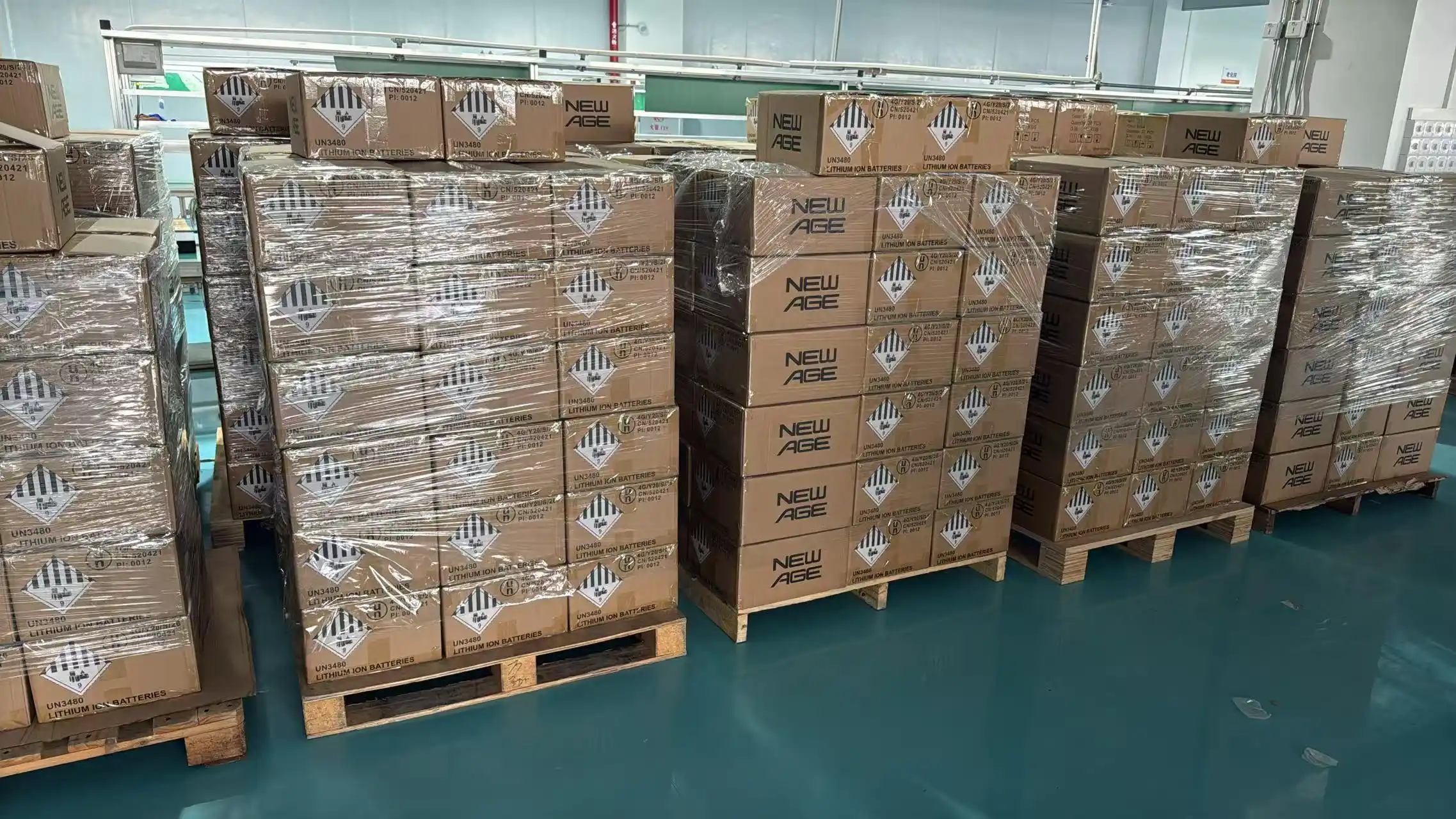
UN3480 labeling and dangerous-goods documents travel with the KC file.
The HS code sits beside this process, not inside it. Korean customs brokers commonly cite HS 8507.60 for lithium-ion accumulators. Duty and VAT treatment depends on the code, origin, and FTA documentation. Our import cost and HS code guide covers the duty side; this article stays on the KC side so the two do not compete.
5. KC Mark Labeling: What Must Be on the Product Before Customs
The label is part of the release gate, not a post-launch design task. Under the Operation Guidelines Annex 23, the product or packaging must carry the following before customs:
- KC mark
- Safety-confirmation report number
- Model name
- Manufacturer and importer name
- Country of manufacture
- Manufacturing date
- Domestic A/S contact
Korean-language manuals and safety warnings are also required. Certification agencies commonly report that machine-translated manuals are rejected, and that the KC mark height is expected to be at least 5 mm. Confirm the final artwork against the current Annex 23 and the test body's instructions, because label reviewers check placement as well as content.

The KC mark, report number, model, and importer name must match before customs.
Three label failures recur:
- 1. The importer name on the label differs from the certificate.
- 2. The model string on the label differs from the invoice by a suffix or space.
- 3. The label is designed for the retail box but not applied to the product body.
The first two are customs holds. The third is a market-surveillance risk after launch. Treat the label artwork as a controlled document with the same version discipline as the packaging dieline.
6. What Changes in 2026 and 2027
Two revisions matter for charging products. One is already in force. The other is still a draft.
KC 62133-2 draft for power banks
KATS notified the WTO of a draft revision on 2026-08-27 under G/TBT/N/KOR/1378, based on KATS Public Notification 2026-248. The comment period closes on 2026-10-26. The draft would:
- Add KC 62368-1 whole-unit safety for power banks and "power-bank-like devices," alongside KC 62133-2.
- Replace the handheld, transportable, and movable categories with a single "portable equipment" definition of 18 kg or less.
- Exclude batteries of 500 Wh or more, drones, automobiles, and products under separate legislation.
- Make the internal short-circuit test a substantive requirement for cells.
- Add overcharge conditions for boost-charging products and a new clause for power-bank-like devices.
The notification does not set final adoption or entry-into-force dates. Industry articles expect 2027 with a grace period, but that expectation is not an official date. Do not put "mandatory July 2027" in a launch plan as if it were confirmed. Put it in the risk column and ask the test body for the latest status.
The practical preparation is the same either way. Confirm the cell and BMS file. Confirm the CB report edition. Ask whether the current power bank certificate will need an amendment or a new application when the final text lands.
KC 60335-2-29 revision for chargers
KATS Notice 2026-23 took effect on 2026-02-05. The previous standard may be applied in parallel until 2027-02-05. After that date, old certificates must be updated. If your charger program runs into 2027, budget the update now rather than treating the transition as a launch-time surprise.
7. What Does Not Apply: RRA/EMC and the USB-C Rule
Two rules are often sold to importers who do not need them. Both deserve a direct answer.
RRA/EMC for a DC-only power bank. Korea's Radio Research Agency excludes simple DC-in and DC-out batteries and power banks from radio-law conformity assessment under Notice Annex 1. A power bank that only takes DC power and delivers DC power does not need an RRA 적합성평가 for that function. A wireless-charging power bank, a Bluetooth power bank, an AC-output inverter, or a product with another radio function does need a separate assessment. The exemption follows the function, not the product name.
The USB Type-C rule for power banks. MSIT Notice 2025-56 requires USB Type-C receptacles for wired charging and data transfer on 13 end-product categories, effective 2026-11-06. The list covers mobile phones, tablets, laptops, digital cameras, headphones, headsets, handheld game consoles, portable speakers, e-readers, keyboards, mice, portable navigation devices, and earphones. Power banks and standalone chargers are not on the list. Only devices receiving a new conformity assessment after the deadline are subject to the rule.
That does not make USB-C irrelevant. It means a supplier should not invoice you for a USB-C KC approval on a power bank as if the rule covered it. Ask which product category the approval is for, and get the answer in writing.
8. Cost, Timeline, and CB to KC Conversion
KC costs vary because the scope varies. A safety-confirmation report for a power bank is a different job from a safety-certification file for a charger with a factory audit.
Our certification cost table lists KC at $1,500-3,000 and 3-5 weeks for a standard file. Agency quotations that bundle the Korean agent, RF testing, or multiple models can run higher. One widely cited agency range for a power bank program is RMB 20,000-40,000, with wireless or Bluetooth variants above that. Treat both figures as planning ranges, not quotes.
| Cost driver | What changes the number |
|---|---|
| Scheme | Safety certification adds factory audit and annual surveillance |
| Radio function | Wireless or Bluetooth adds RRA testing |
| Model count | Each capacity, cell, or circuit change can create a new model |
| CB report | A valid IECEE CB report can reduce repeat testing |
| Korean agent | Agent fees and power-of-attorney work are separate from lab fees |
| Re-tests | Failed safety or EMC tests add both cost and weeks |
The CB-to-KC route is the most reliable saving. An IECEE CB report with the Korean national deviations can cut repeat testing and shorten the timeline. Our CB guidance notes that one IEC 62368-1 test can be recognized in more than 60 countries. The report can be converted to KC, CE, UL, or PSE. That can save 30-50% on repeat testing when the report is current and covers the right edition.
Timeline has two layers. The statutory processing period for a safety-confirmation report is seven days. Testing runs separately, and the overall program commonly takes four to eight weeks when documents are complete. A factory that promises "KC in two weeks" is either quoting a conversion with an existing report or omitting a step.
9. Factory-Side Document Checklist
A KC program moves at the speed of the slowest document. Send this list to the factory before the first sample, not after the purchase order.
| Document | Why the test body needs it |
|---|---|
| Business license and factory name/address | Applicant and manufacturer identity |
| Product description with photos | Scope and construction review |
| Circuit diagram and PCB layout | Safety assessment |
| BOM with critical components | Component certification cross-check |
| Cell specification: maker, model, format, capacity | KC 62133-2 scope |
| BMS specification: overcharge, over-discharge, overcurrent, short circuit | Protection design review |
| Rated input/output voltage, current, capacity in mAh and Wh | Test conditions |
| IEC 62133-2 CB report, if available | Conversion and test reduction |
| UN38.3 test summary | Transport and customs file |
| Korean manual and safety warnings | Label and market-surveillance review |
| Label artwork with KC mark, report number, model, importer, A/S contact | Pre-customs marking |
| Agent power of attorney, if an agent files | Article 27 filing route |
Two checks catch most problems before they reach the lab. First, compare the model list against the purchase order and the label artwork in one pass. Second, verify that the cell in the BOM is the cell in the CB report and the UN38.3 summary. A cell substitution after certification is a change notification, not a production detail.
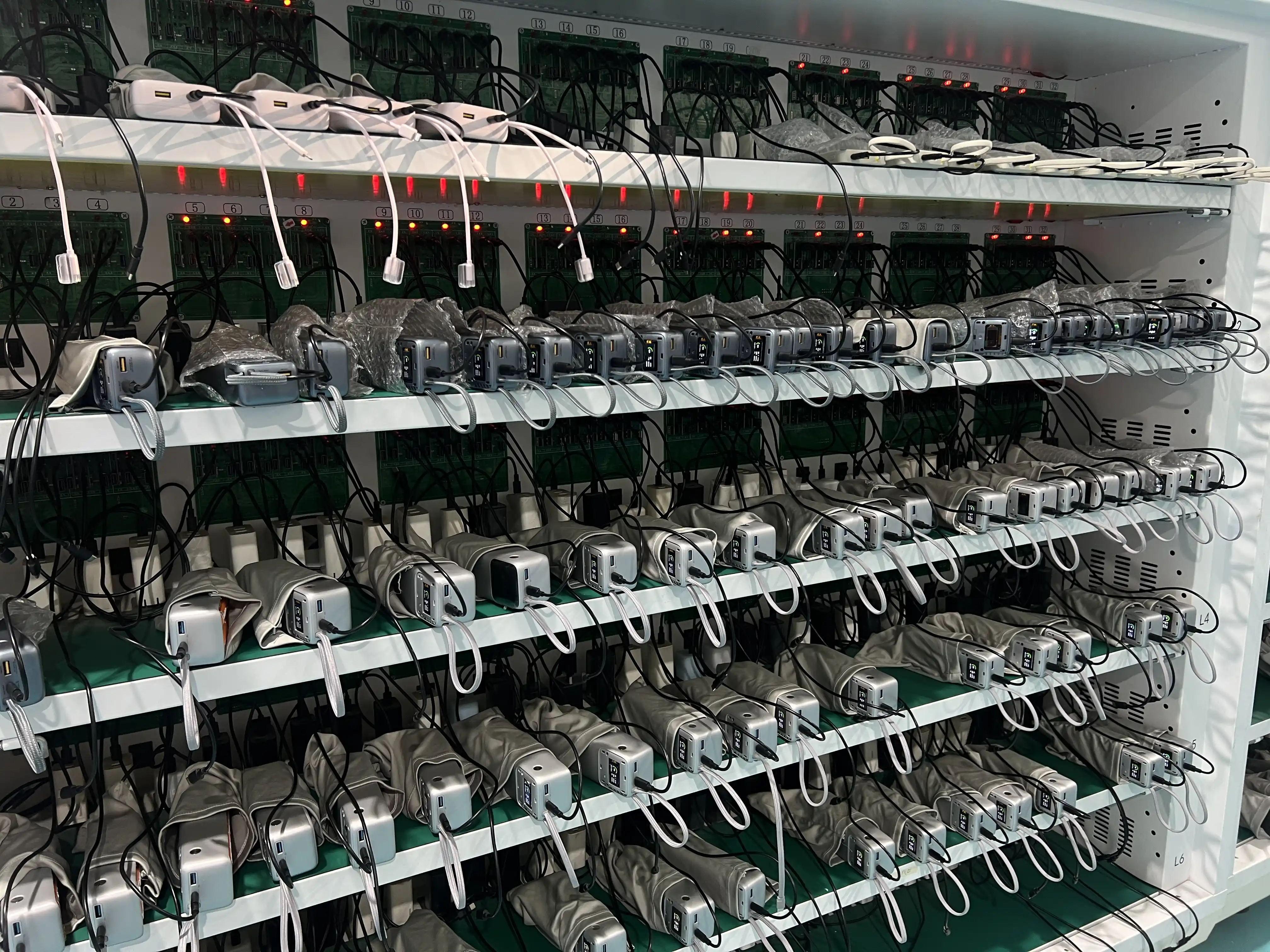
Aging and QC records are part of the factory document package a test body may request.
If you are also verifying the factory's other certificates, our guide to verifying FCC, CE, and UL certificates covers the database checks. The same discipline applies to a KC report: confirm the certificate number, model, and holder in the official system rather than on a PDF alone.
10. Five Failure Patterns That Hold Shipments
These are the patterns we see most often when a Korean launch slips.
- 1. Wrong scheme. A power bank is filed as a charger, or a charger is filed as a battery. The test report exists, but it does not match the legal route.
- 2. Certificate in the wrong name. The factory holds a report from another importer, or the agent files without a signed power of attorney. Customs cannot match the declaration.
- 3. Model mismatch. The certificate says one model string; the invoice, label, or packaging says another. A suffix or a space is enough to trigger a hold.
- 4. Label after customs. The product arrives without the KC mark or the report number, and the fix happens in a bonded warehouse.
- 5. Substitution after certification. The cell, BMS, or circuit changes without a change notification. The certificate no longer covers the shipped product.
A sixth pattern is commercial rather than technical: assuming CE, FCC, or UL substitutes for KC. They don't. Korea runs its own scheme, and a CE certificate is not a Korean market-access document. Our US and EU charger certification guide explains what those marks do cover.
Conclusion
Korea KC certification for power bank importers rewards preparation over speed. The market is reachable for a charger or power bank brand, but the sequence matters. Confirm the scheme first: safety confirmation for a power bank, safety certification for a charger. Then confirm who files, because the certificate must sit with the Korean importer or a properly appointed agent. Then treat the label and the customs match as part of the product, not as paperwork after the product.
The 2026 draft adds a second safety standard for power banks. It doesn't change the sequence. A clean cell and BMS file still matter. So do a current CB report, a Korean manual, and a label that matches the declaration. Those will serve you whether the final date lands in 2027 or later.
If you are planning a Korean launch, send the product specification and target model list to our team. We can confirm the likely scheme, the documents the factory needs to prepare, and the certification path before tooling. Request a quote to start.
Buyer Specification Card
| Item | What to confirm |
|---|---|
| KC scheme | Safety confirmation for power banks; safety certification for chargers |
| Standard | KC 62133-2 for power banks; KC 62368-1 or KC 60335-2-29 for chargers |
| Certificate holder | Korean importer or domestic agent, with matching model list |
| Customs document | Safety-confirmation certificate linked to 세관장확인 |
| Label | KC mark, report number, model, manufacturer/importer, country, date, A/S contact |
| Transport | UN38.3 summary and UN3480 dangerous-goods documents where applicable |
| MOQ and lead time | 500 units ODM stock; 1,000-2,000 ODM development; 3,000+ full OEM; 25–35 days ODM stock production |
| Quality file | 4-stage QC, AQL 0.65 normal / 0.25 tightened, 100% 4-hour aging |
Frequently Asked Questions
Does a power bank need KC certification to enter Korea?
Yes. A power bank needs KC compliance before customs release. The route is safety confirmation under KC 62133-2, not safety certification. The importer or a Korean agent files a safety-confirmation report for each model, and the certificate must match the import declaration. A test report alone is not enough. Korean customs checks the certificate through 세관장확인, and a missing or mismatched certificate holds the shipment.
Is a power bank safety certification or safety confirmation?
A power bank is a safety-confirmation product. It sits in the lithium secondary battery category under Enforcement Rule Annex 4, and the legal basis is Article 15 of the Electrical Appliances and Consumer Products Safety Control Act. Safety confirmation requires testing and a report but no factory audit. A USB charger or DC adapter is generally a safety-certification product under KC 62368-1, which does require a factory audit and annual surveillance.
Can a Chinese factory hold the KC certificate?
A foreign factory cannot file in its own name without a Korean legal entity. It can appoint a Korean resident agent under Enforcement Rule Article 27, or the Korean importer can file. If the importer files, the certificate commonly shows both importer and manufacturer and ownership sits with the importer. If an agent files, the certificate names the manufacturer and the agent has no ownership. A signed power of attorney is required.
Does a DC-only power bank need RRA/EMC approval?
No. Korea's Radio Research Agency excludes simple DC-in and DC-out batteries and power banks from radio-law conformity assessment under Notice Annex 1. A power bank that only takes DC power and delivers DC power does not need an RRA assessment for that function. A wireless-charging, Bluetooth, AC-output, or other radio-function variant does need a separate assessment. The exemption follows the function, not the product name.
What changes under the KC 62133-2 draft?
The draft WTO notification G/TBT/N/KOR/1378 is dated 2026-08-27. It would add KC 62368-1 whole-unit safety for power banks. It would also redefine the scope as portable equipment up to 18 kg, exclude batteries of 500 Wh or more and drones, and make the internal short-circuit test substantive. The comment period closes on 2026-10-26. Final adoption and effective dates are still undetermined, so treat 2027 expectations as unconfirmed.
Marketing Manager & Founder · 10+ years in consumer electronics
Snowy May is WOWOHCOOL's founder and marketing lead, with 10+ years in consumer electronics manufacturing. He writes about charging technology, certification compliance, and factory operations.
Factory Footprint
ISO 9001 Facility
Shenzhen, China
Export Countries
Engineers In-House
Planning a Korean Launch?
Send your product specification and target model list. We will confirm the likely KC scheme, the documents your factory needs, and the path to customs.