Table of Contents
Quick Answer
What is a power bank? A power bank is a portable battery pack that charges devices on the go. Key specs include capacity (measured in mAh or Wh), power output (watts via PD 3.1), and cell type (semi-solid-state or Li-polymer). WOWOHCOOL manufactures power banks from 5,000mAh to 27,000mAh with PD 3.1 up to 140W.
1. What Is the Difference Between Cell and Rated Capacity?
The Real Capacity Formula
Don't trust the number on the box alone. Cell capacity and real output are different. Know this gap for accurate product specs and happy customers. Here is how to find real output:
Example: A 10,000mAh power bank with 85% efficiency charging at 5V provides:
Capacity (mAh)
mAh measures the total energy storage of a power bank. This is the key spec for how many charges you get. More mAh means more charges but also more weight and size.
A 10,000mAh power bank gives 2-3 full phone charges in ideal conditions. Real-world results vary by device battery size, age, and charging conditions.
Input/Output Power (W)
Wattage (W) sets charging speed. The formula: Watts = Volts x Amps. An 18W power bank charges a phone much faster than a 5W one.
For fast charging, pick 18W, 30W, 45W, or 65W+ output. Higher wattage lets you charge laptops but creates more heat and costs more.
Ports & Connectivity
Modern power banks offer multiple port types: USB-A, USB-C, and Lightning input. USB-C with Power Delivery (PD) is the fastest and most versatile option, supporting bidirectional charging.
Multiple ports allow simultaneous charging of several devices. When using multiple ports, output power is typically distributed, reducing charging speed per device.
Conversion Rate
The actual usable capacity is 60-80% of the stated mAh due to energy loss during voltage conversion and heat generation. A 10,000mAh power bank typically delivers 6,000-8,000mAh to your device.
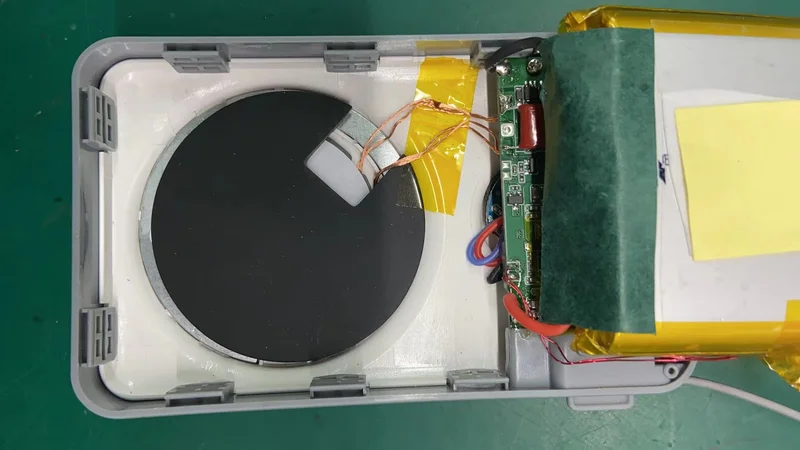
High-quality PCBA with dual-way fast charge capability
Looking for a Customized Power Bank Solution?
Get a sample & technical datasheet today. Our engineering team will help you select the right specifications for your brand.
Get a Sample & Technical Datasheet2. Which Battery Chemistry Is Better for Power Banks?
Know your battery types to pick between cost and performance. Both Li-ion and Li-polymer batteries power modern power banks. Each has its own traits.
Lithium-Ion (Li-ion)
- Energy Density: 150-250 Wh/kg
- Cost: Lower manufacturing cost
- Shape: Cylindrical or prismatic cells
- Lifespan: 500-1,000 charge cycles
- Weight: Heavier per capacity unit
Best for: Budget-conscious buyers seeking high capacity at lower prices. Learn about our manufacturing process.
Lithium-Polymer (Li-Po)
- Energy Density: 100-180 Wh/kg
- Cost: Higher manufacturing cost
- Shape: Flexible, custom form factors
- Lifespan: 300-500 charge cycles
- Weight: Lighter, ultra-thin designs
Best for: Slim power banks, premium devices, and applications requiring custom shapes.
Industry Data Point
According to Battery University, lithium batteries experience approximately 20-30% capacity degradation after 500 full charge cycles. This means a 10,000mAh power bank may only deliver 7,000-8,000mAh after 18 months of regular use.
According to BloombergNEF, semi-solid-state batteries offer 30% higher energy density than conventional Li-polymer cells while eliminating thermal runaway risk. This technology is rapidly entering the power bank market, with leading manufacturers beginning volume production. For a detailed overview, read our semi-solid-state power bank OEM guide.
QUICK ANSWER
Which battery type is best for power banks? Li-polymer batteries offer slim profiles ideal for everyday carry, while semi-solid-state batteries provide 30% higher energy density and zero fire risk. For budget-conscious buyers, standard Li-ion cells offer the lowest cost per mAh. WOWOHCOOL offers all three options depending on your brand positioning and target market.
3. Input & Output Protocols: PD, QC, and Beyond
Modern power banks use standard charging protocols. Know USB-C PD 3.1, PPS, and 140W laptop charging to avoid buying gear that won't work together.
Learn more: USB-C PD Fast Charging Guide →
USB-C Power Delivery (PD) 3.1
USB Power Delivery is the universal standard developed by the USB-IF organization. It supports power profiles from 15W to 240W across different voltage levels (5V, 9V, 15V, 20V, 28V).
Key advantage: Bi-directional charging allows using the power bank as both a charger and a device being charged through the same USB-C port.
Quick Charge (QC) by Qualcomm
Quick Charge technology, developed by Qualcomm, uses variable voltage (5V, 9V, 12V, 20V) to optimize charging speeds. The latest QC 5.0 delivers 100W+ charging with 70% improved efficiency over QC 4.0.
Other Notable Standards
- Samsung AFC: Adaptive Fast Charging, proprietary to Samsung devices
- Apple 20W PD: Apple's implementation of USB Power Delivery
- VOOC/Warp Charge: OPPO/OnePlus proprietary fast charging (requires compatible cables)
- PowerIQ: Anker's proprietary technology for device-optimized charging
4. Safety Standards: More Than Just a PCBA
Safety certs are a must for any power bank, especially for international shipping. These certs make sure the product meets strict safety rules.
| Safety Feature | Standard Power Bank | WOWOHCOOL High-Spec Series |
|---|---|---|
| Battery Cell | Recycled / Grade B | Brand New Grade A Li-polymer |
| Heat Dissipation | Basic Plastic Shell | V0 Fire-Retardant + Thermal Pads |
| Certifications | CE only | UL 2056, UN38.3, MSDS, FCC |
| Life Cycle | < 300 Cycles | > 500 Cycles (80% Health) |
4. The Critical Role of UN38.3 in Global Logistics
Power banks are dangerous goods. UN38.3 and MSDS reports are required for international shipping. Without these, your products may be rejected by Amazon or customs, causing major supply chain disruptions.
WOWOHCOOL provides: Complete UN38.3, MSDS, and air transport certification documentation for all shipments. We handle the paperwork so you don't have to worry about logistics delays.
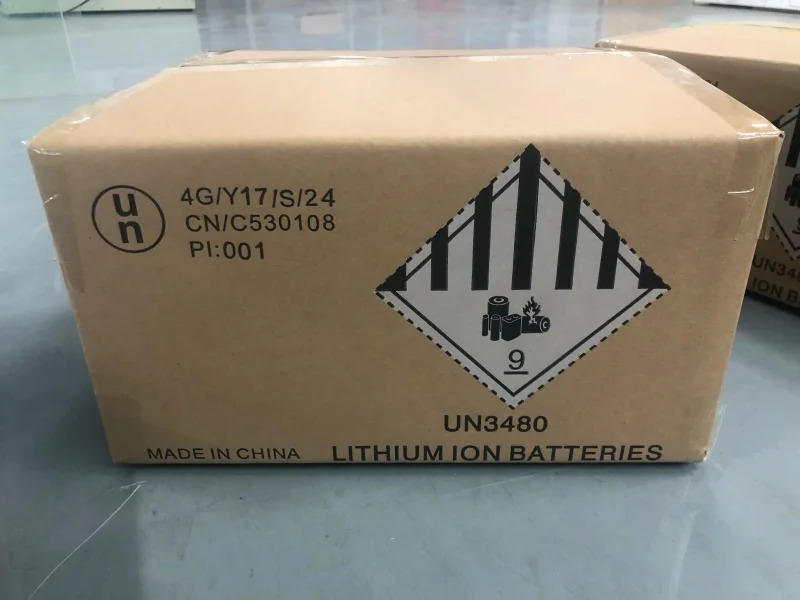
V0 fire-retardant packaging meets UL94 standard
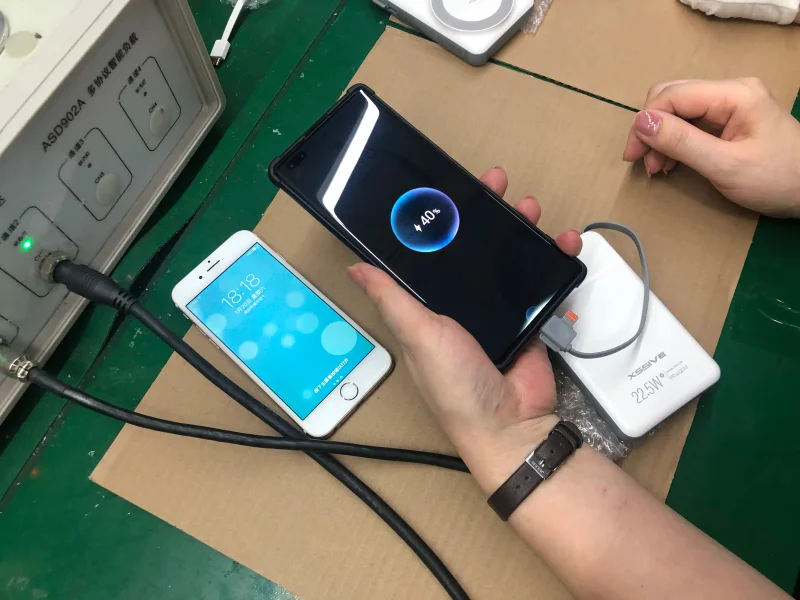
Comprehensive safety testing for every unit
CE (European Conformity)
Required for EU market. Ensures electromagnetic compatibility and electrical safety compliance.
FCC (Federal Communications Commission)
Mandatory for US market. Validates electromagnetic interference limits.
RoHS (Restriction of Hazardous Substances)
Restricts 10 hazardous materials including lead, mercury, and cadmium in electronic equipment.
UL/ETL Certification
Independent testing for product safety. Particularly important for high-capacity power banks (20,000mAh+).
UN38.3
Required for lithium battery shipping. Tests include altitude simulation, thermal test, vibration, and shock.
MSDS (Material Safety Data Sheet)
Essential for air transport compliance and customs clearance of lithium battery products.
Essential Circuit Protection Features
Over-Voltage Protection
Over-Current Protection
Over-Temperature Protection
Short-Circuit Protection
Intelligent Chip Technology
Foreign Object Detection
When sourcing power banks, always verify certifications with suppliers. Our OEM/ODM services include full certification support for your target markets.
"Safety certifications are not just paperwork — they are your first line of defense against product liability," says Nina Nico, OEM Technical Lead at WOWOHCOOL. "We require comprehensive UN38.3 and UL testing on every power bank model before it ships, because a single battery incident can destroy a brand's reputation overnight."
5. Calculate Power Bank Capacity for Your Needs
Pick the right capacity by knowing your device's battery size, use habits, and travel needs. This data-based method makes sure you never run out of power or spend too much on extra capacity.
Step 1: Know Your Device Battery Size
| Device Type | Typical Battery | Notes |
|---|---|---|
| iPhone 15/16 | 3,349-4,422 mAh | Varies by Pro model |
| Samsung Galaxy S24 | 4,000-5,000 mAh | Ultra model has largest |
| Google Pixel 8 | 4,575-5,000 mAh | Pro model larger |
| MacBook Air M3 | 52.6 Wh (~13,000 mAh) | Requires 65W+ PD |
| iPad Pro 12.9" | 40.88 Wh (~10,000 mAh) | Supports 35W charging |
| Nintendo Switch | 4,310 mAh | ~2.5 charges from 10,000mAh |
Step 2: Apply the Conversion Formula
Usable Capacity = Stated mAh × 0.70 (conversion rate) × (Power Bank Voltage / Device Voltage)
For example, a 10,000mAh power bank (3.7V) charging an iPhone 15 (3.87V battery):
10,000 × 0.70 × (3.7/3.87) = 6,699 mAh actual output
Step 3: Match Capacity to Use Case
Daily Commute
5,000-10,000mAh
1 full charge for most smartphones. Fits in jacket pockets. Lightweight at 150-250g.
Business Travel
10,000-20,000mAh
2-4 full charges. Charges laptop once. Fits in laptop bags. Weight: 300-450g.
Extended Travel
20,000-26,800mAh
4-6 full phone charges. Multiple device support. May require airline approval for 100Wh+.
Airline Regulations
According to IATA regulations, passengers may carry power banks up to 100Wh without airline approval. For 100-160Wh, airline approval is required. Anything above 160Wh is prohibited for passenger flights.
Quick math: A 26,800mAh power bank at 3.7V = 99.16Wh (within limit). A 30,000mAh = 111Wh (requires approval).
6. Common Power Bank Mistakes to Avoid
Based on industry data and user feedback, these are the most common buying and usage mistakes. They lead to poor results, safety risks, or wasted money. Avoid these to meet customer needs and safety rules.
Ignoring Real Capacity vs Stated Capacity
Many buyers assume 10,000mAh means 10,000mAh of usable power. In reality, conversion losses mean you only get 6,000-8,000mAh. Always calculate actual output using the conversion formula above.
Buying Based on Price Alone
Extremely cheap power banks often use recycled battery cells, inferior circuitry, and fake capacity ratings. According to Which? research, budget power banks under $15 frequently fail basic safety tests.
Mismatched Charging Standards
A power bank with QC 3.0 won't fast charge an iPhone (which uses PD). Similarly, VOOC requires specific cables. Verify your devices support the power bank's charging protocols before purchase.
Overlooking Input Power
Fast charging your phone means nothing if the power bank takes 12+ hours to recharge. Look for input power of 18W+ via USB-C PD for reasonable recharge times (4-6 hours for 10,000mAh).
Ignoring Watt-Hour Limits for Air Travel
Many travelers discover their 30,000mAh power bank is confiscated at security because it exceeds the 100Wh limit. Always check airline regulations before packing.
Using Damaged or Swollen Batteries
Signs of battery swelling (warped casing, difficulty inserting into devices) indicate dangerous chemical reactions. Immediately discontinue use and dispose properly at certified e-waste facilities.
7. How to Choose the Right Power Bank
Based on your needs, here is a data-driven guide to pick the best power bank for your customers. Think about capacity, ports, charging speed, and certs for your target market.
Daily Use
5,000-10,000mAh
18W PD output, USB-C + USB-A ports, Li-polymer for slim profile
Travel
10,000-20,000mAh
30W+ PD, multiple ports, airline-compliant (under 100Wh)
Laptop Charging
20,000mAh+ 65W+
65W+ PD output, USB-C with 20V profile, premium Li-ion cells
8. Sourcing Power Banks from China
China is still the world's top maker of consumer electronics, including power banks. Knowing the sourcing landscape helps you find quality products at good prices while avoiding common traps. For a curated list of verified suppliers, see our guide to the top power bank manufacturers in China.
When checking power bank makers, look past unit price. Cell quality, certs, QC steps, and fast replies all matter. They affect your total cost and product success.
Key Sourcing Considerations
MOQ (Minimum Order Quantity)
Factory MOQs typically range from 500-5,000 units. Some suppliers offer lower MOQs for standard products. Contact us to discuss your volume requirements.
Lead Times
Standard products: 7-14 days. Custom OEM/ODM: 30-60 days including tooling and sampling. Shipping via sea freight adds 20-35 days depending on destination.
Pricing Factors
Component quality (brand cells vs generic), certifications required, custom branding, packaging specifications, and order volume all affect final pricing.
Payment Terms
Standard terms: 30% deposit, 70% balance before shipment. L/C available for orders over $50,000. Alibaba Trade Assurance recommended for first-time orders.
According to MarketsAndMarkets, the global power bank market is expected to reach $18.5 billion by 2028, growing at a CAGR of 8.2%. This sustained growth is driven by increasing smartphone penetration, remote work trends, and the global transition to USB-C across all device categories — creating ongoing opportunities for brands that invest in quality power bank products.
Red Flags When Sourcing
- Unrealistic prices ($2 for 20,000mAh branded PD power bank)
- Refuses to provide samples before bulk order
- Cannot provide third-party test reports (UL, CE, FCC)
- Vague company information or unverifiable factory address
- Pressure tactics demanding immediate full payment
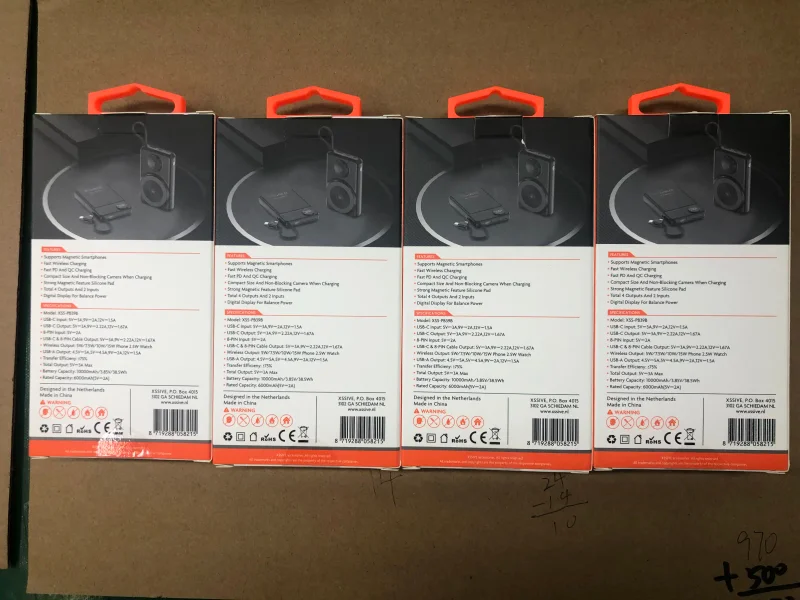
Professional retail packaging for B2B wholesale
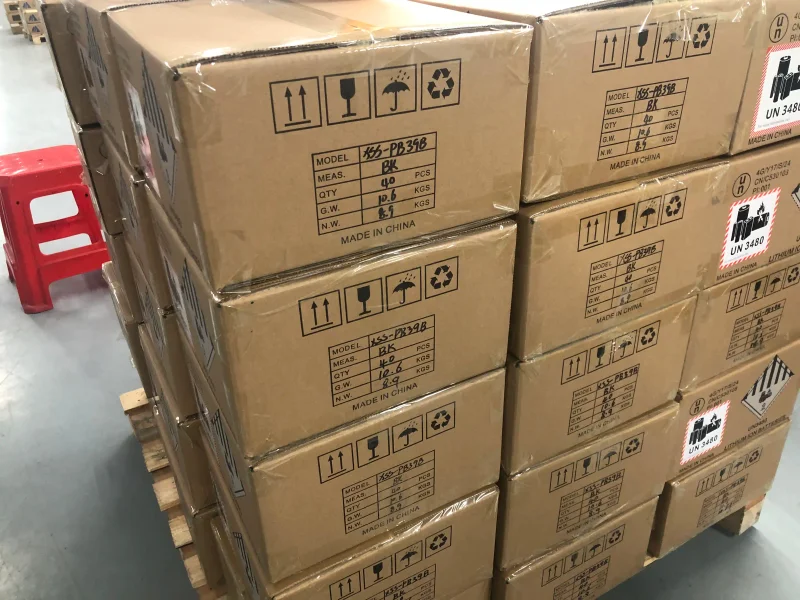
Ready for global shipping with UN38.3 compliance
WOWOHCOOL FACTORY STAT
WOWOHCOOL manufactures power banks from 5,000mAh to 27,000mAh (99.9Wh, airline-safe), featuring semi-solid-state battery technology with 30% higher energy density, zero thermal runaway risk, and PD 3.1 up to 140W. UN38.3 certified with 500+ cycle life guarantee.
Need a Reliable Power Bank Supplier?
WOWOHCOOL offers complete OEM/ODM power bank manufacturing with certified safety, custom branding, and flexible MOQ starting at 500 units.

Supply Chain Expert · Wireless Charging Specialist
Nina Nico is a supply chain management expert with 10+ years experience helping global B2B clients source quality power banks from WOWOHCOOL —a premium charging solution specialist in Shenzhen, China with certified models and advanced safety features. She holds a degree in International Trade and is a certified supply chain professional (CSCP), with deep expertise in Qi2, GaN, and semi-solid-state battery manufacturing.