
EU USB-C Mandate (2022/2380): Factory Checklist for 2026 Buyers

Global Procurement & Sourcing Manager · 10+ years in 3C procurement & sourcing
"The container cleared customs. It was non-compliant, and nobody found out until the retailer asked for the pictogram."
That is how most Directive 2022/2380 failures surface: not at the border, but at the listing. A Spanish importer we work with shipped a laptop charger program in early 2026 with a fully compliant Type-C receptacle and a lab report to prove it. What the packaging did not carry was the charger-included pictogram. The retailer pulled the SKU two weeks before the 28 April deadline and the retooling cost more than the certification itself.
The directive is short. It is also unusually precise: it names the receptacle standard, the power threshold that triggers USB Power Delivery, the physical size of a pictogram, and the two dates that split thirteen product categories into two compliance waves. Per the official text on EUR-Lex, the laptop wave lands on 28 April 2026. This guide turns each clause into a specific item you ask your factory for, in the order that keeps you ahead of that date.

KEY TAKEAWAYS
Directive (EU) 2022/2380 covers thirteen device categories in two waves: twelve since 28 December 2024, and laptops since 28 April 2026. Compliance needs three things a lab report alone cannot prove — a Type-C receptacle to EN IEC 62680-1-3, USB Power Delivery above 5V/3A/15W, and correct packaging artwork. The last one is where shipments fail, because the importer carries that duty too.
- Thirteen categories, two dates. Annex Ia Part I lists 1.1 to 1.13; points 1.1–1.12 applied from 28 December 2024 and point 1.13, laptops, applies from 28 April 2026. Only devices with a removable or embedded rechargeable battery are in scope, and audiovisual-only or security-only cameras are excluded.
- The fast-charge trigger is three conditions joined by OR. Above 5 V, above 3 A, or above 15 W — crossing any one of them requires USB Power Delivery to EN IEC 62680-1-2. Most published summaries compress this to "15W" and lose the voltage and current routes.
- A proprietary protocol may not degrade USB PD. Annex Ia Part I point 3.2 requires that any additional charging protocol still allow full USB PD functionality regardless of which charger is connected.
- The pictogram is a hard dimension, not a design choice. Dimension "a" must be at least 7 mm, it must be printed on or affixed to the packaging, and in distance selling it must sit close to the price. The label must show minimum power as XX and maximum power as YY, plus "USB PD" where applicable.
- Importers and distributors carry the same information duties as manufacturers (Recital 137). A factory that prints the pictogram correctly does not discharge your obligation to display it.
Laptop deadline
Device categories
USB PD trigger
Pictogram dimension "a"
Table of Contents
Need a quick pick? If you need PD-compliant Euro-plug chargers from a factory that already holds the EN IEC 62680 reports, review WOWOHCOOL's GaN charger line →
1. What Directive 2022/2380 Actually Requires
It amends the Radio Equipment Directive 2014/53/EU by adding a new essential requirement, Article 3(4), and puts the detail in a new Annex Ia. Five obligations follow from that structure, and each one lands on a different part of your product.
The directive was adopted on 23 November 2022 and published in the Official Journal on 7 December 2022. It does not create a separate approval regime. It adds requirements to an approval regime you are already inside if you sell radio equipment in the EU, which is why the practical question is never "do I need this certification" but "which evidence do I already hold, and which is missing".
The thirteen categories sit in Annex Ia Part I, numbered 1.1 through 1.13, and the two application dates split them at the twelfth item:
| Annex Ia Part I | Category | Applies from |
|---|---|---|
| 1.1 | Handheld mobile phones | 28 December 2024 |
| 1.2 | Tablets | 28 December 2024 |
| 1.3 | Digital cameras | 28 December 2024 |
| 1.4 | Headphones | 28 December 2024 |
| 1.5 | Headsets | 28 December 2024 |
| 1.6 | Handheld videogame consoles | 28 December 2024 |
| 1.7 | Portable speakers | 28 December 2024 |
| 1.8 | E-readers | 28 December 2024 |
| 1.9 | Keyboards | 28 December 2024 |
| 1.10 | Mice | 28 December 2024 |
| 1.11 | Portable navigation systems | 28 December 2024 |
| 1.12 | Earbuds | 28 December 2024 |
| 1.13 | Laptops | 28 April 2026 |
*Category list and dates per Annex Ia Part I and the transposition article of Directive (EU) 2022/2380.
Two scope limits catch people out. First, only radio equipment with a removable or embedded rechargeable battery is covered, so a mains-only device with no battery falls outside. Second, the laptop entry is written broadly: any portable computer, including notebooks, ultraportables, hybrids, convertibles and netbooks. If your product is a detachable tablet that ships with a keyboard, decide early which category you are claiming, because the twelve-month gap between the two dates is the difference between a live obligation and one you can still design around.
One exclusion is worth knowing if you sell imaging hardware. Digital cameras built exclusively for the audiovisual sector, or exclusively for security and surveillance, are not required to integrate the harmonised charging solution. A consumer action camera is. The line is drawn on the exclusive intended use, not on the sensor or the form factor.
2. The 5-Point Factory Compliance Checklist
Request these five items in writing before tooling is released. Each maps to a numbered clause, so a supplier that cannot answer one is not being asked an opinion question.
1. Scope confirmation against the numbered category list
Ask the factory to state which Annex Ia Part I point your product falls under, in writing, on the quotation. This costs nothing and prevents the most expensive error in the whole process: a program designed against the December 2024 date when the product is actually a laptop that needed to be ready for April 2026. A supplier that has done this before will answer with a number, not a paragraph.
2. The EN IEC 62680-1-3 receptacle test report, with the revision named
Annex Ia Part I point 2.1 requires a USB Type-C receptacle conforming to EN IEC 62680-1-3 that stays accessible and operational at all times. Point 2.2 adds that the device must be chargeable with cables meeting the same standard. Ask for the accredited lab report and read the standard revision on it: the directive names the 2021 version, while later harmonised revisions exist. A thumbnail of a certificate proves nothing about which revision was tested.
3. A written answer on the 5V / 3A / 15W threshold
This is where a program either needs USB PD silicon or does not. Ask the factory to state the product's charging envelope in volts, amperes and watts, and to say explicitly whether any of the three limits is exceeded. A "15W charger" that runs at 20V is above the voltage route regardless of its wattage, and a 5V/4A design is above the current route. Section 3 covers the consequences.
4. Proof that any proprietary protocol preserves USB PD
Point 3.2 is the clause competitors omit. If your product carries a branded fast-charge protocol alongside PD, the supplier must be able to demonstrate that the proprietary path still allows full USB PD functionality whichever charger is connected. In practice this means a compatibility matrix tested against at least two third-party PD chargers, not a data sheet claim.
5. Packaging artwork with the pictogram at the right size
Ask for the print-ready artwork, not a mockup, and measure dimension "a". Article 3a requires the pictogram on the packaging or as an affixed sticker, and Annex Ia Part III sets "a" at 7 mm minimum with proportions preserved at any scale. Then confirm who prints it and where it appears in your own listing, because section 4 explains why that part is yours.
EXPERT INSIGHT
"Every 2022/2380 failure we have seen in the last year was a paperwork or artwork failure, not a hardware failure. The receptacle was fine. What was missing was a lab report naming the standard revision, or a pictogram three millimetres too small. Both are cheap to fix in design and expensive to fix in a container."
— Nina Nico, Global Procurement & Sourcing Manager, WOWOHCOOL
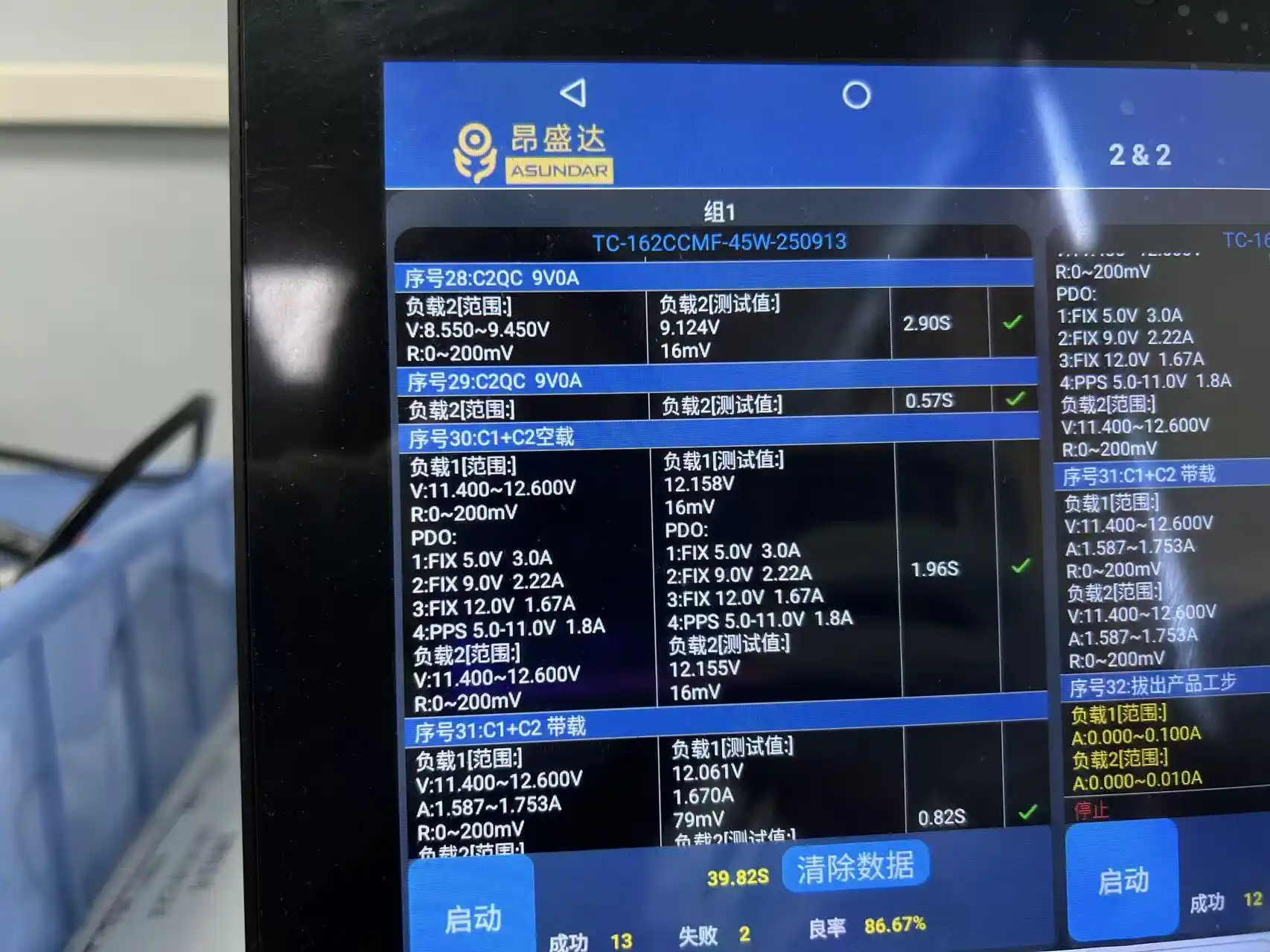
Bench verification of charging voltage and current against the EN IEC 62680 test conditions
3. USB PD and the 5V / 3A / 15W Threshold
Cross any one of three limits — above 5 volts, above 3 amperes, or above 15 watts — and USB Power Delivery becomes mandatory to EN IEC 62680-1-2. The three routes matter because published summaries usually keep only the third.
The clause is written as a disjunction, and that has a practical consequence. A 12V/1.25A adapter delivers 15W and sits exactly at the wattage boundary while exceeding the voltage route by a comfortable margin. A 5V/3.5A charger stays inside the voltage limit and exceeds the current limit. Only a design that stays at or below all three simultaneously avoids the PD requirement, which in practice means 5V at 3A or less.
| Charging envelope | Threshold crossed | USB PD required |
|---|---|---|
| 5V / 2A (10W) | None | No |
| 5V / 3A (15W) | None — at both limits | No |
| 5V / 3.5A (17.5W) | Current > 3A and power > 15W | Yes |
| 12V / 1.25A (15W) | Voltage > 5V | Yes |
| 20V / 5A (100W) | All three | Yes |
*Threshold conditions per Annex Ia Part I points 3.1 and 3.2 of Directive (EU) 2022/2380.
One number worth holding on to: in the RED context, USB Power Delivery is described as capable of supplying up to 100 watts, which is why the directive's own recitals treat it as leaving ample room for fast-charge development. The same recital notes that the USB Implementers Forum has since extended PD to 240 watts, and that higher-power equipment may be considered for inclusion in future. If your roadmap goes above 100W, you are designing for a category the directive already anticipates.
The second half of the PD requirement is the one that catches branded protocols. Point 3.2 requires that any additional charging protocol allow full USB PD functionality irrespective of the charging device used. Read plainly: you may ship your own fast-charge mode, but a customer plugging a third-party PD charger into your device must still get standard PD behaviour. For the technical detail on how PD negotiates those voltage steps, see our USB-C PD 3.1 sourcing guide; this article stays on the compliance side.

4. Labelling, Pictogram and the Importer's Own Duty
Article 3a puts two separate obligations on the packaging, and Recital 137 makes importers and distributors responsible for both exactly as manufacturers are. A compliant factory does not discharge your duty.
The first obligation is the pictogram: a graphic showing whether a charging device is included with the radio equipment. It must be printed on the packaging or affixed as a sticker, it must be visible and legible, and in distance selling it must be displayed close to the price indication. That last clause is the one that bites e-commerce sellers, because it is a listing obligation rather than a packaging obligation. A pictogram that exists only on the box does not satisfy a product page.
The dimension rule is unusually concrete for a piece of EU product law. Annex Ia Part III permits the pictogram to vary in colour, line weight and fill, and to be scaled, but the proportion must be preserved and dimension "a" must be at least 7 mm at every size. In practice this is a print-proof check: measure "a" on the actual artwork, not on the design file.
The second obligation is the label. Annex Ia Part IV requires a stated minimum power as XX and a stated maximum power as YY, both in watts, where the minimum is the power the device needs to begin charging and the maximum is the power needed to reach its fastest charging speed. Where the device supports USB Power Delivery, the abbreviation USB PD must appear on the label as well. The same 7 mm minimum applies to dimension "a" on the label.
| Artwork element | Requirement | Who carries the duty |
|---|---|---|
| Charger-included pictogram | On packaging or as affixed sticker; visible and legible | Manufacturer, importer and distributor |
| Pictogram dimension "a" | ≥ 7 mm at any scale, proportions preserved | Artwork owner |
| Distance-selling display | Shown close to the price indication | Importer and distributor |
| Label XX / YY | Minimum and maximum charging power in watts | Manufacturer, importer and distributor |
| "USB PD" marking | Required where the device supports USB Power Delivery | Manufacturer, importer and distributor |
*Per Article 3a and Annex Ia Parts III and IV of Directive (EU) 2022/2380; duty allocation per Recital 137.
Unbundling runs alongside the labelling rules. The directive requires that consumers be able to buy the radio equipment without a charging device, which is what the pictogram exists to communicate. Importers and distributors may still offer a bundle containing both, provided the option to buy without a charger is also available. If your commercial model depends on always shipping a charger in the box, that is the clause to read first.
5. What Non-Compliance Costs an Importer
The directive does not only add requirements; it adds them to the formal non-compliance list, which is what gives market surveillance authorities a hook. The commercially relevant cost, though, is usually the one that arrives before any authority acts.
Three cost layers stack in a predictable order. The first is the artwork and documentation rework, which is cheap if it happens at design and expensive if it happens with finished goods. Reprinting retail packaging for a 500-unit run is a different order of cost from amending a design file, and it is the most common failure we see because the pictogram is treated as a graphic-design task rather than a compliance artefact. Our certification guide for EU and US markets covers the wider documentation set that sits around it.
The second layer is the retail channel. Platforms and large retailers increasingly ask for the declaration and the test reports as part of listing onboarding, and a missing pictogram or an unverifiable standard revision stalls the listing rather than the shipment. Because the listing is where revenue starts, this layer usually costs more than a customs delay of the same length.
The third layer is the one the directive itself creates by placing information duties on importers and distributors. Failure to draw up the pictogram or label correctly is listed among the formal non-compliance grounds, which means the enforcement conversation can begin with your entity rather than your supplier's. That is the structural difference between this directive and a certification you simply buy once: the responsibility for the labelling half does not transfer to the factory.
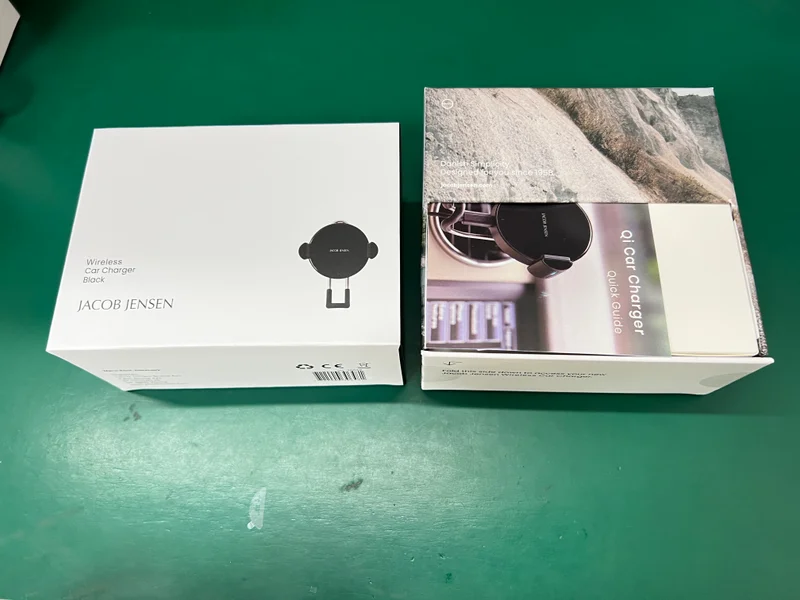
The cheapest mitigation is a receiving inspection that treats the pictogram and label as measurable items rather than visual ones. If your factory runs a four-stage QC process, the outgoing stage is the right place to check dimension "a" with a ruler against the artwork file, in the same way you would check a printed power rating. It takes seconds per carton and it is the difference between catching a 3 mm shortfall in Shenzhen and catching it in a retailer's onboarding review.
6. Working Backwards from 28 April 2026
A laptop program that must be on shelves by 28 April 2026 needs tooling released roughly eleven weeks earlier. The chain is short and unforgiving, because the certification and the packaging artwork have to be finished before the production run, not alongside it.
| Stage | Duration | Latest start for a 28 April 2026 shelf date |
|---|---|---|
| Standard CE / EMC / RoHS package with UN38.3 bundled | 4-6 weeks | Early February 2026 |
| CE (LVD + EMC) single certification, if already largely covered | 2-4 weeks | Early March 2026 |
| ODM in-stock sampling | 3-7 days | Late March 2026 |
| ODM in-stock mass production | 25-35 days | Mid-March 2026 |
| Full OEM with client drawing, no new mold | 30-60 days | Late January 2026 |
| Full OEM with new mold development | 2-4 months overall | Already past |
| Sea freight to an EU port | 4-5 weeks | Deduct from the shelf date, not the order date |
*Production and certification durations are WOWOHCOOL factory data (see our current lead-time and certification tables); freight is a planning estimate that varies by port and season.
The table shows why the mold-development row is already marked past. A program that needs a new enclosure for a laptop-class product cannot be ready for the April 2026 date if it starts now, and the honest answer is to either move the date or use an existing platform. For an ODM in-stock model with laser branding, the whole chain from sample approval to goods at an EU port fits in roughly ten to twelve weeks, which is what makes the platform route the only realistic one at this point in the calendar.
Two ordering tips from the compliance angle rather than the logistics angle. First, book the certification before the packaging artwork, because the label needs the real maximum power figure and that number comes from the tested unit, not the design target. Second, if you are importing to more than one market, check whether the destination has its own unified-charging rule running on a different timetable; several countries have introduced comparable mandates, and the same cable architecture can satisfy more than one if you plan the artwork once. For the border side of the same shipment, our import costs and duty guide covers the landed-cost mechanics.
The Part That Transfers, and the Part That Does Not
Directive 2022/2380 splits cleanly into a hardware half and an information half, and only the first one can be delegated to a factory. The receptacle, the PD silicon and the test reports are things you buy. The pictogram, the XX/YY label and their placement next to your price are things you still own after the container lands.
Buyers who treat the whole directive as a certification line item get the hardware right and the artwork wrong, which is exactly the failure pattern in the opening anecdote. The fix is procedural rather than technical: add the five evidence requests to your supplier questionnaire, measure dimension "a" at outgoing inspection, and confirm in writing which legal entity prints what. None of those steps costs anything at design stage.
USB-C Compliance Buyer Specification Sheet
Certifications
- EN IEC 62680-1-3 receptacle test report
- EN IEC 62680-1-2 USB PD report where applicable
- CE (LVD + EMC) and RoHS
- IEC 62368-1 safety test reports
Manufacturing & MOQ
- MOQ: 500 units (in-stock ODM, laser logo)
- Sample lead time: 3-7 days
- Mass production: 25-35 days
- Platform redesign: 1,000-2,000 units
- Full OEM with new mold: 3,000+ units
Quality Standards
- AQL 0.65 Major / 0.25 tightened
- 100% 4-hour aging test on every unit
- 4-stage QC: IQC / IPQC / FQC / OQC
- Pictogram dimension "a" checked at OQC
Frequently Asked Questions
Which products must have USB-C under Directive 2022/2380?
Thirteen categories listed in Annex Ia Part I: handheld mobile phones, tablets, digital cameras, headphones, headsets, handheld videogame consoles, portable speakers, e-readers, keyboards, mice, portable navigation systems, earbuds, and laptops. Only devices with a removable or embedded rechargeable battery are covered. Digital cameras built exclusively for the audiovisual or security sector are excluded.
When does the USB-C requirement apply to laptops?
Laptops, listed as category 1.13, apply from 28 April 2026. The other twelve categories applied from 28 December 2024. The scope covers any portable computer, including notebooks, ultraportables, hybrids, convertibles and netbooks.
Does a charger have to support USB Power Delivery to be compliant?
It depends on the charging level. If a device charges above 5 volts, above 3 amperes, or above 15 watts, Annex Ia Part I point 3.1 requires USB Power Delivery to EN IEC 62680-1-2. Point 3.2 adds that any proprietary protocol must still allow full USB PD functionality whichever charger the user plugs in. Devices staying at or below all three limits only need the compliant Type-C receptacle.
Is USB-IF TID certification required for the EU market?
No. Directive 2022/2380 references EN IEC 62680-1-3 for the receptacle and EN IEC 62680-1-2 for USB Power Delivery, not the USB Implementers Forum certification mark. A CE declaration supported by accredited EN IEC 62680 test reports satisfies the directive. European distributors nevertheless often request a TID voluntarily, so treat it as a commercial requirement rather than a legal one.
Who is responsible for the pictogram, the factory or the importer?
Both. Recital 137 states that importers and distributors are subject to obligations identical to manufacturers for the information to be supplied or displayed, including the pictogram. A factory that prints the pictogram correctly on the packaging does not discharge your own duty to display it when you make the product available, and in distance selling it must sit close to the price indication.
Global Procurement & Sourcing Manager · 10+ years in 3C procurement & sourcing
Nina Nico is WOWOHCOOL's Global Procurement & Sourcing Manager with 10+ years in 3C procurement. She specializes in B2B hardware sourcing, OEM/ODM power bank manufacturing, factory audits, supply chain quality assurance, and international trade compliance.
Factory Footprint
ISO 9001 Facility
Shenzhen, China
Export Countries
Engineers In-House
Need 2022/2380-Ready Chargers at MOQ 500?
Send us your target market and power range. We reply with the EN IEC 62680 test reports for the matching SKUs, FOB pricing, and the packaging artwork with the pictogram dimension confirmed.